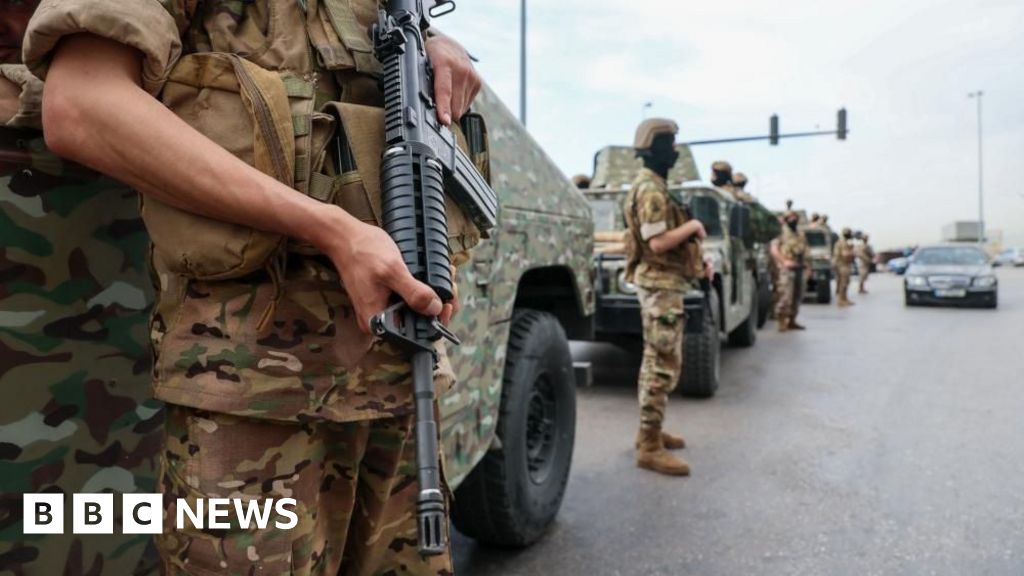
Israel and Lebanon agreed to a 45-day extension of their fragile ceasefire, with follow-on political talks set for June and a security track launching at the Pentagon on May 29. Despite the extension, violence has continued: Lebanon said Israeli strikes killed 22 people on Wednesday, and the conflict has killed at least 2,896 people in Lebanon since it began, while Israel says 18 soldiers and four civilians have died. The article points to elevated regional geopolitical risk, ongoing cross-border attacks, and no durable settlement yet in place.
The immediate market read is not peace but delayed escalation: a 45-day extension mainly reduces tail-risk pricing in the next few sessions without changing the underlying incentive structure. That matters most for regional risk proxies—oil, defense, shipping, and EM sovereign credit—because the ceasefire is being used to buy time for both sides to rearm, reposition, and negotiate from a stronger battlefield posture. The second-order effect is that any further reduction in civilian displacement or border violence could temporarily ease pressure on Lebanon’s remaining logistics and banking system, but the longer this drags on, the more it entrenches a de facto partition of the south and raises reconstruction costs.
The hidden market issue is duration. A June political track and late-May military track create two catalyst windows: one for headline de-escalation risk over the next 2-3 weeks, and one for failure-to-progress risk into early summer. If talks stall, the market will likely reprice from “managed conflict” to “open-ended attrition,” which is much worse for Lebanese assets than for Israeli equities because Lebanon bears the physical damage, capital flight, and refugee burden. Conversely, even a partial enforcement mechanism along the border would be bullish for Israeli domestic cyclicals and modestly supportive for local bank sentiment, while doing little for Lebanese recovery absent outside financing.
Consensus is probably underestimating how asymmetric the economic damage is. Repeated destruction in border areas is not just a military variable; it is a land-value reset that suppresses future private investment, insurance availability, and municipal tax bases for years. That creates a path dependency where any ceasefire extension can actually increase the eventual reconstruction bill by allowing further degradation of fixed assets if verification mechanisms remain weak.
AI-powered research, real-time alerts, and portfolio analytics for institutional investors.
Request DemoOverall Sentiment
strongly negative
Sentiment Score
-0.55
For global portfolios, the more interesting trade is not a directional war bet but a volatility and dispersion trade: reduced near-term headline risk can coexist with rising medium-term tail risk. That favors buying cheap convexity into the next negotiation milestones rather than chasing spot moves on each announcement.
