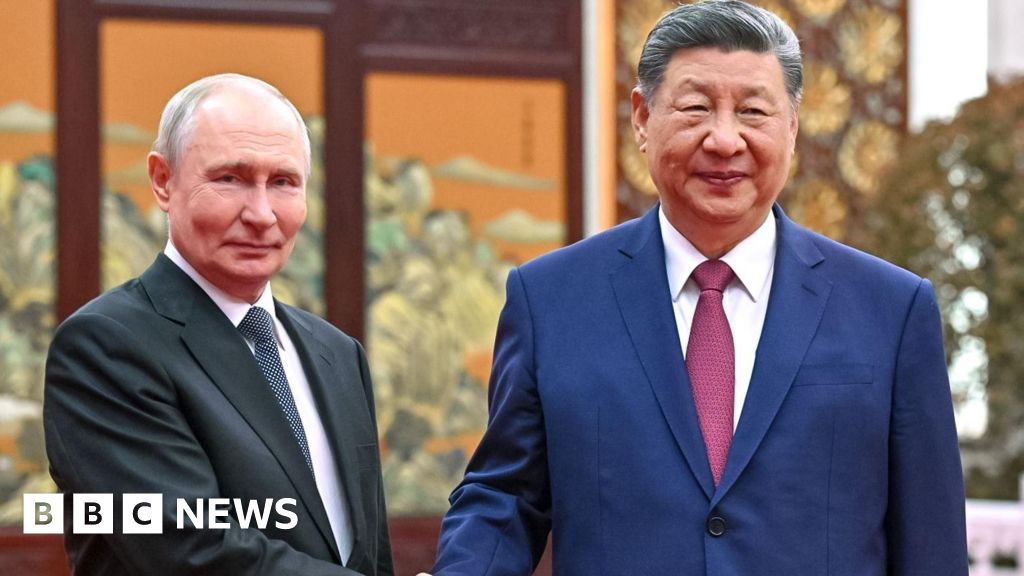
Russia and China signaled closer strategic alignment, but no final agreement was reached on the Power of Siberia 2 pipeline. The Kremlin said the two sides reached only a "general understanding" on project parameters, leaving pricing and China's appetite for Russian gas unresolved. The article highlights geopolitical posturing and the limits of the relationship, with modest implications for energy markets rather than an immediate price-moving event.
The key market read is not that the Russia-China relationship is weakening; it is that Beijing is turning the alliance into an options market. By delaying a hard commitment on the pipeline, China preserves leverage on gas pricing, avoids locking in a single-source Siberian supply chain, and keeps pressure on LNG import alternatives. That is negative for Russian upstream monetization and for any near-term rerating of transport, engineering, and steel-linked beneficiaries tied to the project.
The second-order effect is on global gas trade flows. If the pipeline remains a political talking point rather than a signed capex program, Europe does not get an immediate new Russian export outlet, which keeps the medium-term LNG market tighter than bears expect. That supports Atlantic Basin LNG pricing and upstream cash flows, but it also means China can continue arbitraging between spot LNG, pipeline imports from Central Asia, and domestic coal, limiting the upside for any single supplier.
The broader geopolitical signal is that Moscow is still structurally dependent on Beijing, but Beijing is not willing to underwrite Russia at the expense of its own energy security. That lowers the probability of a near-term strategic energy bloc that would materially shift shipping, defense procurement, or sanctions enforcement regimes. The timeline matters: this is a months-to-years story, not a days-to-weeks catalyst, unless there is a sudden financing or sanctions workaround.
Consensus may be overestimating the bullishness of the symbolism. The market should treat the summit as confirmation of asymmetric bargaining power rather than a policy breakthrough. The contrarian angle is that a non-deal is actually mildly bullish for non-Russian LNG and for incumbent non-Russian gas suppliers, because it preserves structural demand for flexible cargoes and keeps Russian molecule expansion constrained.
AI-powered research, real-time alerts, and portfolio analytics for institutional investors.
Request DemoOverall Sentiment
neutral
Sentiment Score
-0.05
