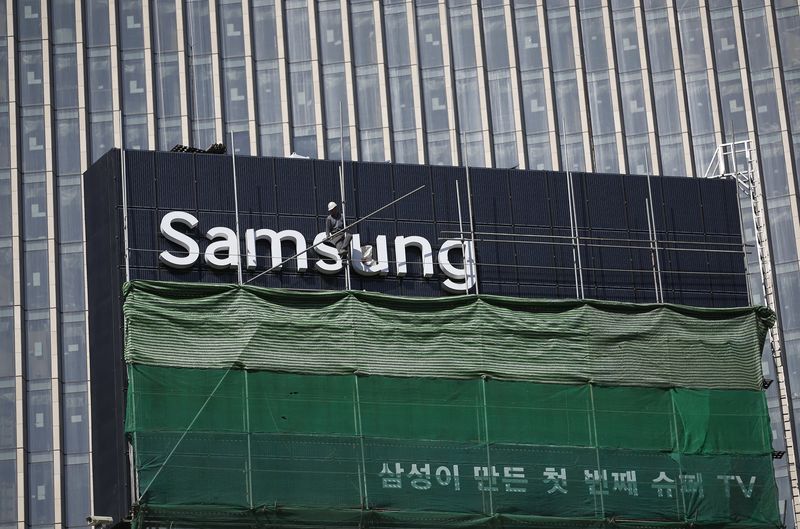
Samsung Electronics' largest labor union said it will proceed with an 18-day strike involving nearly 48,000 workers after management rejected proposals in government-mediated talks. The dispute centers on performance-based bonuses and compensation, raising the risk of operational disruption at the world's largest memory chipmaker. Samsung shares fell nearly 4% after the report, while South Korean officials warned a prolonged strike could weigh on an export economy where semiconductors account for roughly 35% of total exports.
This is less about a single labor dispute and more about a potential choke point in the global memory supply chain. Samsung sits at the high end of the DRAM/NAND cost curve discipline story: even a short disruption can tighten spot availability, but a multi-week stoppage mainly hurts scheduling, yield optimization, and customer confidence rather than immediate shipped volume. That asymmetry matters because memory buyers typically only reroute a portion of demand in the near term, so any lost output can translate into higher pricing with a lag of 1-2 quarters.
The first-order loser is Samsung’s own margin profile, but the second-order winner is broader memory pricing power, especially for peers with cleaner labor relations and less direct disruption risk. If the strike meaningfully affects advanced-node or packaging-related workflows, downstream OEMs may pre-buys wafers and modules, which would support ASPs for both DRAM and NAND into the next cycle leg. That creates a subtle relative-value setup: the market can punish Samsung for execution risk while simultaneously re-rating other memory names on tighter supply expectations.
The bigger risk is not the strike duration alone; it is management signaling that labor rigidity is becoming a recurring governance discount. In an export-led economy where semis are a material macro lever, even modest delays can amplify concerns about Korea’s industrial reliability and widen the valuation gap versus U.S. and Taiwanese peers over the next 3-6 months. If talks resume quickly, the selloff can reverse fast, but the market will likely keep a governance discount until it sees uninterrupted production data.
Consensus may be underestimating how quickly customers diversify away from single-supplier concentration when operational uncertainty rises. Even if volumes normalize, a prolonged strike can accelerate qualification work at alternative suppliers and reduce Samsung’s bargaining power in future contract rounds. That creates a medium-term competitive cost that is larger than the headline earnings hit.
AI-powered research, real-time alerts, and portfolio analytics for institutional investors.
Request DemoOverall Sentiment
moderately negative
Sentiment Score
-0.45
