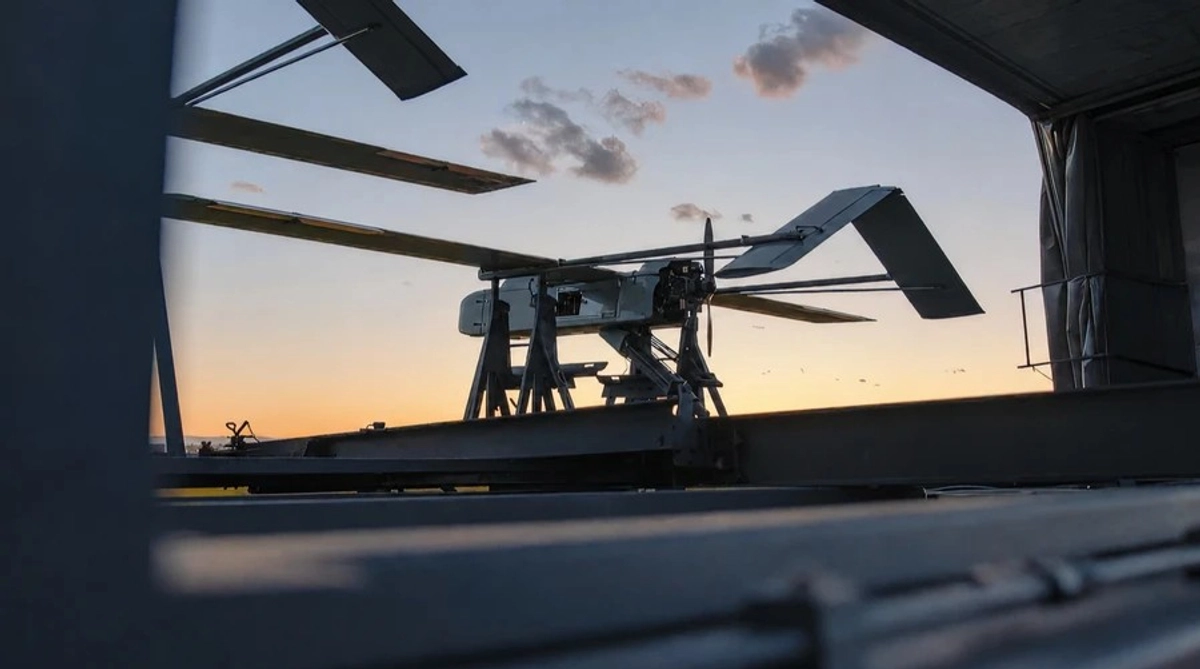
Ukrainian forces say the 412th Nemesis Brigade has destroyed or struck 83 Russian air defense systems as of 2 May 2026, with roughly every third mid-range drone sortie resulting in a hit. The article highlights how mid-range drones are degrading Russian air defense density, disrupting logistics, and pushing critical infrastructure and air-defense assets deeper into the rear. It also points to near-term technological improvements, including longer range, heavier warheads, and better guidance, which could further expand strike depth.
The market is underpricing how quickly this shifts the economics of layered air defense. Once low-cost, mid-range drones can reliably force radar shutdowns, missile expenditure, and dispersal, the marginal value of dense point-defense collapses: defenders are pushed into a lose-lose of either exposing emitters or conserving missiles. That is structurally bearish for legacy SAM-heavy doctrine and raises the value of systems that combine mobility, passive sensing, and cheap interceptors rather than expensive missile salvos.
Second-order, this is not just a battlefield story; it is an infrastructure relocation tax. The threat window expands from the front line to logistics nodes, fuel storage, rail-adjacent depots, and command facilities deeper in rear areas, which increases transport distance, inventory buffers, and duplication of critical assets. Over 3-12 months, that means higher operating friction for any force dependent on centralized supply chains, and it also creates demand for hardened infrastructure, distributed storage, and decoy systems on both sides.
The most important contrarian point is that this is not a “drones replace artillery/HIMARS” thesis; it is a force-multiplier thesis constrained by production and targeting quality. The bottleneck is no longer operator skill but payload inventory and munitions variety, so the slope of impact depends on industrial scaling, not tactical creativity. If Ukraine’s domestic drone supply curve steepens, the next leg is not more hits per sortie but a broader target set, which is what turns tactical nuisance into operational depth and forces a repricing of rear-area security assumptions.
For equities, the cleanest read-through is not defense primes broadly, but the companies exposed to counter-UAS, sensors, electronic warfare, and expendable interceptors. Legacy missile-centric winners can get the first-order demand bump, but the medium-term beneficiary set likely shifts toward lower-cost, high-volume, software-enabled defense layers. In energy and logistics, the risk is not commodity price shock; it is localized throughput impairment and capex reallocation into redundancy and protection, which is slower-burning but more durable.
AI-powered research, real-time alerts, and portfolio analytics for institutional investors.
Request DemoOverall Sentiment
neutral
Sentiment Score
0.10
Ticker Sentiment
