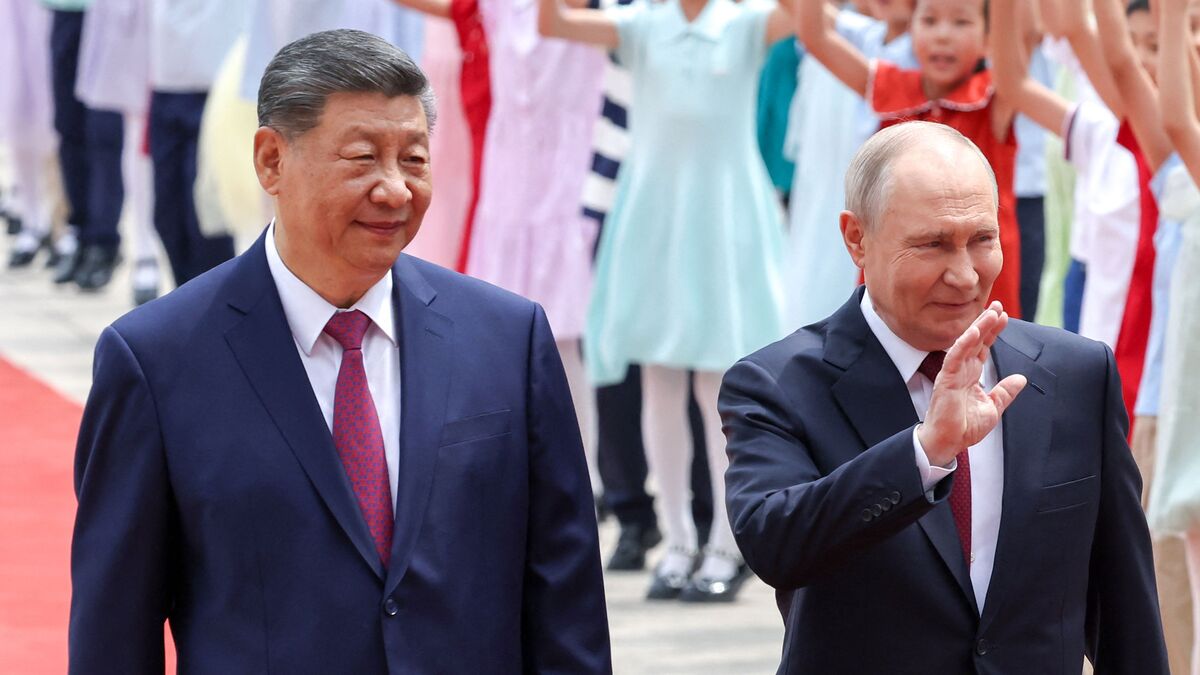
Xi Jinping urged the US not to resume strikes on Iran, saying a comprehensive ceasefire is imperative and that restarting war is "even more unacceptable." The warning comes after Donald Trump threatened renewed attacks in the coming days, raising the risk of a wider Middle East escalation. The article is mainly geopolitical, with potential market-wide implications for risk assets, energy, and defense.
The immediate market read is not about the rhetoric itself, but about the implied ceiling on escalation. When the two largest external patrons of the opposing camps are both signaling discomfort with renewed strikes, the probability distribution shifts from a clean military continuation toward an unstable, diplomacy-driven pause. That generally supports a short-term compression in geopolitical risk premia across energy, shipping, and defense, even if it does not eliminate headline volatility.
The second-order effect is that the winners are likely to be more tactical than strategic. Any easing in Middle East risk tends to unwind the fastest in crude-linked equities and airfreight/logistics, while defense and cybersecurity names may lag for a few sessions but retain structural support if negotiations fail and the ceasefire narrative breaks. The bigger medium-term consequence is that repeated signaling from major powers can constrain U.S. policy flexibility, raising the bar for future kinetic action and increasing the odds of sanctions/diplomacy tools instead of direct force.
The market may be underestimating how quickly a failed follow-through can reprice risk. If the next 1-2 weeks produce no durable de-escalation framework, investors will likely re-add a conflict premium much faster than they remove it, because supply-chain and insurance markets price instability with far less patience than headline traders. Conversely, a genuine pause would pressure the most crowded geopolitical longs and could rotate capital into cyclicals and transports within one to three months.
Contrarian takeaway: consensus may be too focused on the binary of strike/no-strike and not enough on the strategic signaling effect. Even absent immediate hostilities, repeated public resistance to escalation lowers the expected value of military leverage, which can be bearish for defense order urgency near-term but bullish for assets that benefit from lower oil and lower global volatility. The asymmetric setup is not in chasing the headline, but in positioning for either a fast risk-off unwind or a sharp relief rally if diplomacy gets legs.
AI-powered research, real-time alerts, and portfolio analytics for institutional investors.
Request DemoOverall Sentiment
mildly negative
Sentiment Score
-0.15
