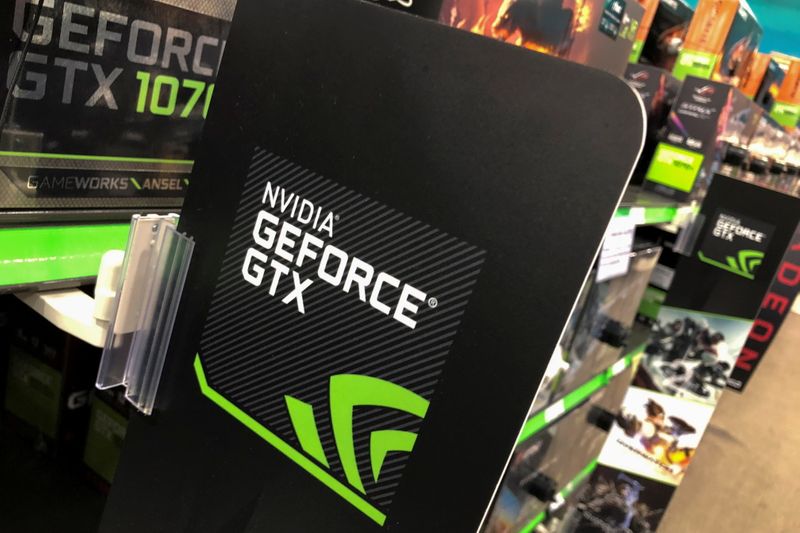
NVIDIA fell 3.68% as investors took profits after a roughly 20% run since May 5, with expiry-driven repositioning adding pressure ahead of Q1 FY2027 earnings on May 20. The move came despite BofA raising its price target to $320 from $300, as the broader market also weakened with the NASDAQ down 1.40%, the S&P 500 down 0.99%, and the Dow down 0.83%. Elevated options exposure and uncertainty around China-related chip sales and next week’s guidance were key drivers.
The important read-through is that NVDA’s tape is being driven less by fundamentals than by positioning reflexivity: with deep-in-the-money calls rolling off, a lot of the incremental upside inventory has to be de-risked before the print. That means post-expiry behavior matters more than the headline pullback today; if the stock can hold up after dealer gamma comes down, the move higher could re-accelerate because the market will no longer be leaning on a mechanically supportive options structure.
Near term, the biggest threat is not a bad quarter so much as guidance that fails to monetize the China reopen narrative fast enough. The market has likely already priced a meaningful share of the policy optionality, so even an in-line report can disappoint if management does not signal a stronger shipment ramp or margin protection into the July quarter. That makes the next 1-2 weeks a classic event-risk window where implied volatility may still be cheap relative to the true dispersion of outcomes.
Second-order winners and losers matter here: any supplier leveraged to NVDA build rates, especially advanced packaging, HBM memory, and AI networking, will likely trade as a proxy for whether hyperscaler capex remains intact. Conversely, if NVDA guides conservatively, the market could punish the entire AI complex via multiple compression rather than through fundamental downgrades, creating a better relative-value entry point in the ecosystem than outright long exposure in the name itself.
The contrarian view is that the pullback may already be doing some of the work the earnings event needs to do. After a 20% sprint, the stock is no longer priced for perfection so much as for continued narrative extension, and any incremental good news on China or product mix may be enough to restore trend-following demand. The more asymmetric setup may be to own volatility rather than direction: the market is likely underestimating how large the move can be if guidance beats, but overestimating the durability of the current squeeze if it does not.
AI-powered research, real-time alerts, and portfolio analytics for institutional investors.
Request DemoOverall Sentiment
mildly negative
Sentiment Score
-0.32
Ticker Sentiment
