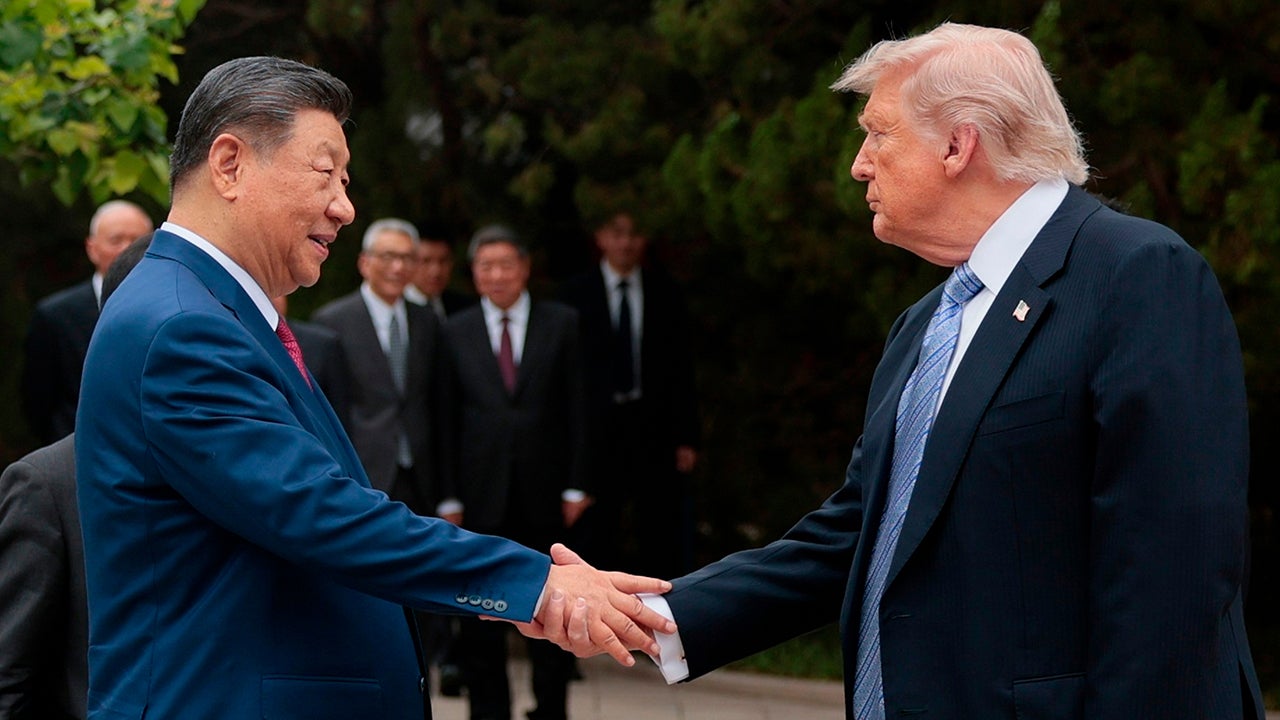
The article centers on escalating Iran-related geopolitical तनाव, including a U.S. blockade of Iranian ports that has redirected 75 commercial ships and forced a broader disruption to regional trade and energy flows. Trump said Xi Jinping offered to help end the conflict and would not supply military equipment to Iran, while CENTCOM said Operation Epic Fury degraded Iran's regional power projection in less than 40 days. The Strait of Hormuz remains a key risk, with China warning there is no point in continuing the conflict and U.S. officials signaling ongoing military pressure.
The market is treating this as an energy-spike story, but the deeper setup is a geopolitics-driven logistics reprice: the U.S. can constrain seaborne flows, yet it cannot fully suppress Eurasian land routes without escalating into a China-facing confrontation. That means the near-term winners are not just upstream energy assets, but also non-U.S. shipping, transshipment, and select inland rail operators that can arbitrage route dislocation while headline risk keeps ocean freight insurance and demurrage elevated.
The bigger second-order effect is on duration of disruption. If Beijing is even partially willing to pressure Tehran while keeping the land corridor open as a fallback, the conflict becomes less of a binary supply shock and more of a rolling, lower-grade embargo that supports a persistent risk premium in crude rather than a one-time spike. That is bullish for front-month volatility and for producers with rapid hedge books, but less favorable for refiners and airlines if crude retraces only after options markets have already repriced the tail.
The underappreciated loser is any asset whose thesis depends on a quick normalization of Gulf shipping. Ports, container lines with Middle East exposure, and Asian industrials reliant on stable energy input prices face a sequencing problem: the first move is a sharp rerating of insurance and routing costs, while the second move is margin pressure if overland volumes grow enough to keep sanctions enforcement noisy and prolonged. The fact pattern also raises the probability of more aggressive secondary sanctions and export-control messaging over the next 1-3 months, which would spill into freight, metals, and equipment procurement chains.
Consensus is likely overpricing a clean de-escalation because diplomatic signaling does not remove the structural asymmetry: the U.S. can interdict, but it cannot easily shut the China-Iran land escape valve. That argues for owning volatility and relative-value exposure rather than outright directional beta; the best risk/reward is in expressions that benefit from sustained friction, not a single weekend headline.
AI-powered research, real-time alerts, and portfolio analytics for institutional investors.
Request DemoOverall Sentiment
moderately negative
Sentiment Score
-0.45
Ticker Sentiment
