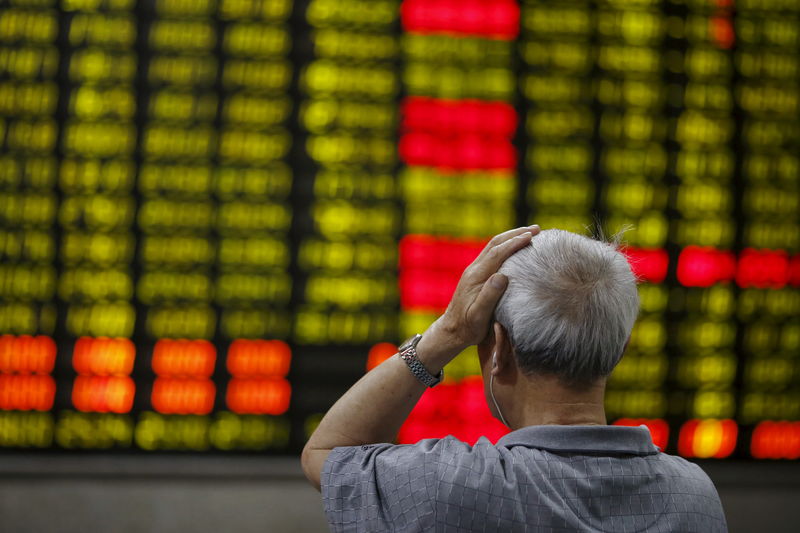
Asian equities fell broadly as higher bond yields, geopolitical तनाव around the U.S.-Iran standoff, and caution ahead of Nvidia’s earnings pressured risk assets. Japan’s Nikkei 225 lost 1.5%, South Korea’s KOSPI dropped more than 2.5%, and Samsung fell over 4% after union talks broke down. China left the 1-year and 5-year LPR unchanged at 3.00% and 3.50%, while oil stayed above $110 per barrel and markets awaited Fed minutes for rate guidance.
The market is repricing the durability of the AI capex cycle rather than the concept itself. When rates back up while the market is leaning into an earnings event, the first-order hit is to high-duration semis, but the second-order effect is broader: hyperscaler budgets become more scrutinized, and any sign of commentary skewing from “accelerating” to “optimizing” can compress multiples across the AI complex for weeks, not just a day. NVDA is the pivot because it is the cleanest read-through on whether the marginal dollar of AI spend is still expanding or simply rotating among vendors.
The more interesting setup is that the market may be mixing three different risks into one tape: yield sensitivity, geopolitics, and earnings quality. Elevated oil and bond yields are not just macro noise; they raise the discount rate and threaten margin guidance for software, internet, and hardware names with long-dated cash flows. That argues for treating any Nvidia-led bounce as conditional on either a yields reversal or a very strong guide on supply, demand visibility, and gross margin durability.
China’s rate hold is a signal of policy exhaustion, not stabilization. With domestic demand weak and property still impaired, the real second-order effect is that Asian exporters tied to electronics and capital goods remain hostage to external demand rather than local stimulus, which makes the region more vulnerable if U.S. tech sentiment rolls over. In that sense, the most fragile part of the trade is not just NVDA itself but the crowded “AI beta” basket that has been financed by momentum and low-volatility assumptions.
The contrarian read is that expectations may be high, but positioning is not necessarily universally maxed out; a strong print could trigger a sharp covering rally because investors are underexposed to near-term earnings upside after the recent rate shock. The key is that upside likely needs to come with order commentary and margin resilience, not just headline beats. If guidance is merely in-line, the market may punish the stock because the hurdle rate has moved higher faster than consensus estimates have.
AI-powered research, real-time alerts, and portfolio analytics for institutional investors.
Request DemoOverall Sentiment
mildly negative
Sentiment Score
-0.35
Ticker Sentiment
