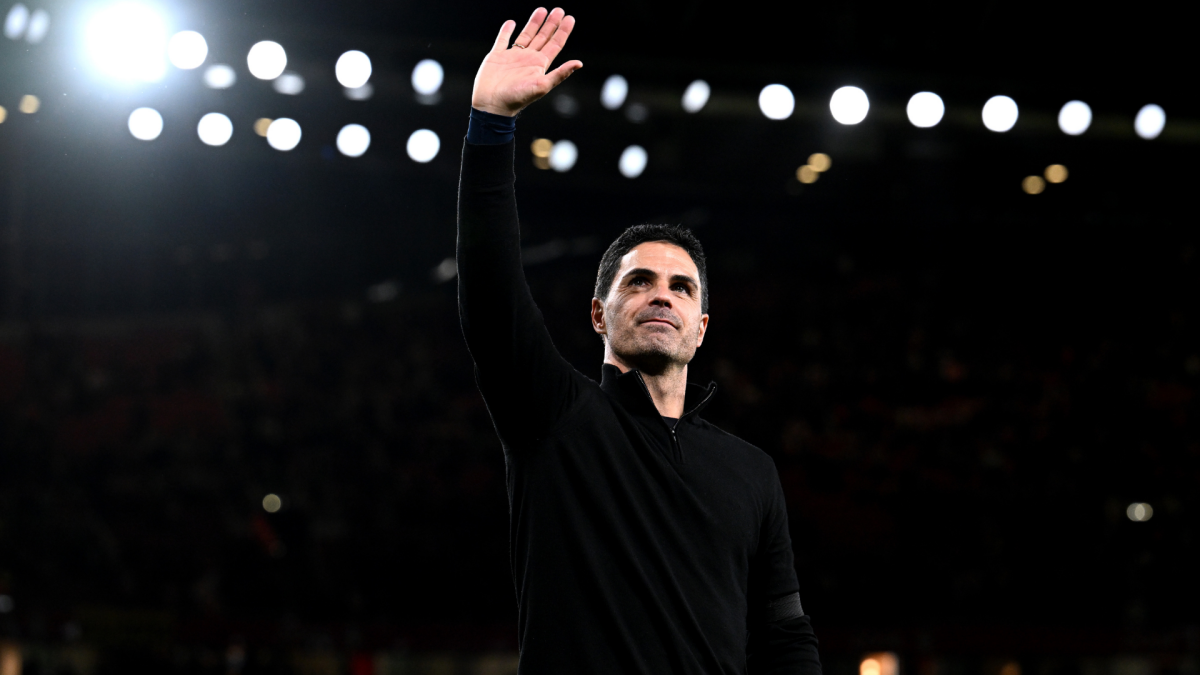
Arsenal ended a 22-year Premier League title drought, securing the championship after a seven-year rebuild under Mikel Arteta. The article highlights more than $1 billion of total spending, nearly $350 million on seven permanent signings before the season, and expected summer departures as the club looks to sustain its title run. Positive for club momentum and brand value, though the piece is primarily narrative rather than market-moving.
The economic takeaway is not the title itself; it is the proof that a top club can re-rate its cash-generation profile through governance discipline, not just star acquisition. Arsenal’s path suggests a multi-year compounding loop: improved sporting performance lifts commercial demand, which expands payroll capacity, which then sustains performance. That is the same flywheel European football capital allocators should care about, because it materially lowers the probability of a one-cycle peak-and-collapse profile that usually destroys equity value in clubs.
From a competitor lens, this is awkward for legacy brands that have leaned on history rather than operating execution. Manchester United is the clearest relative loser: Arsenal now looks more credible as the North London/English football “project premium” asset, while United remains trapped between global monetization and weak sporting conversion. The more important second-order effect is on player market pricing: Arsenal’s long-horizon, relationship-driven recruitment raises the value of clubs with stable coaching structures and punishes sellers that need immediate liquidity, because premium targets will increasingly opt for the highest-certainty environment rather than the highest bid.
The contrarian risk is that success can mask balance-sheet fragility. A title run and Champions League income help, but the squad is still expensive, aging in key areas, and dependent on a manager with unusually high control over culture and selection. If results wobble for even 8-12 weeks next season, the same intensity that created cohesion can become the point of failure, especially if contract renewals or forced sales start to hit.
For investors, the right frame is not to chase the football headline but to price the persistence of the earnings uplift. The market usually overestimates how much of a club’s commercial step-change is durable after one trophy, and underestimates how quickly wages can re-accelerate. That asymmetry argues for selective long exposure to clubs with operating leverage and governance clarity, while fading institutions where brand strength is not matched by sporting process.
AI-powered research, real-time alerts, and portfolio analytics for institutional investors.
Request DemoOverall Sentiment
strongly positive
Sentiment Score
0.75
Ticker Sentiment
