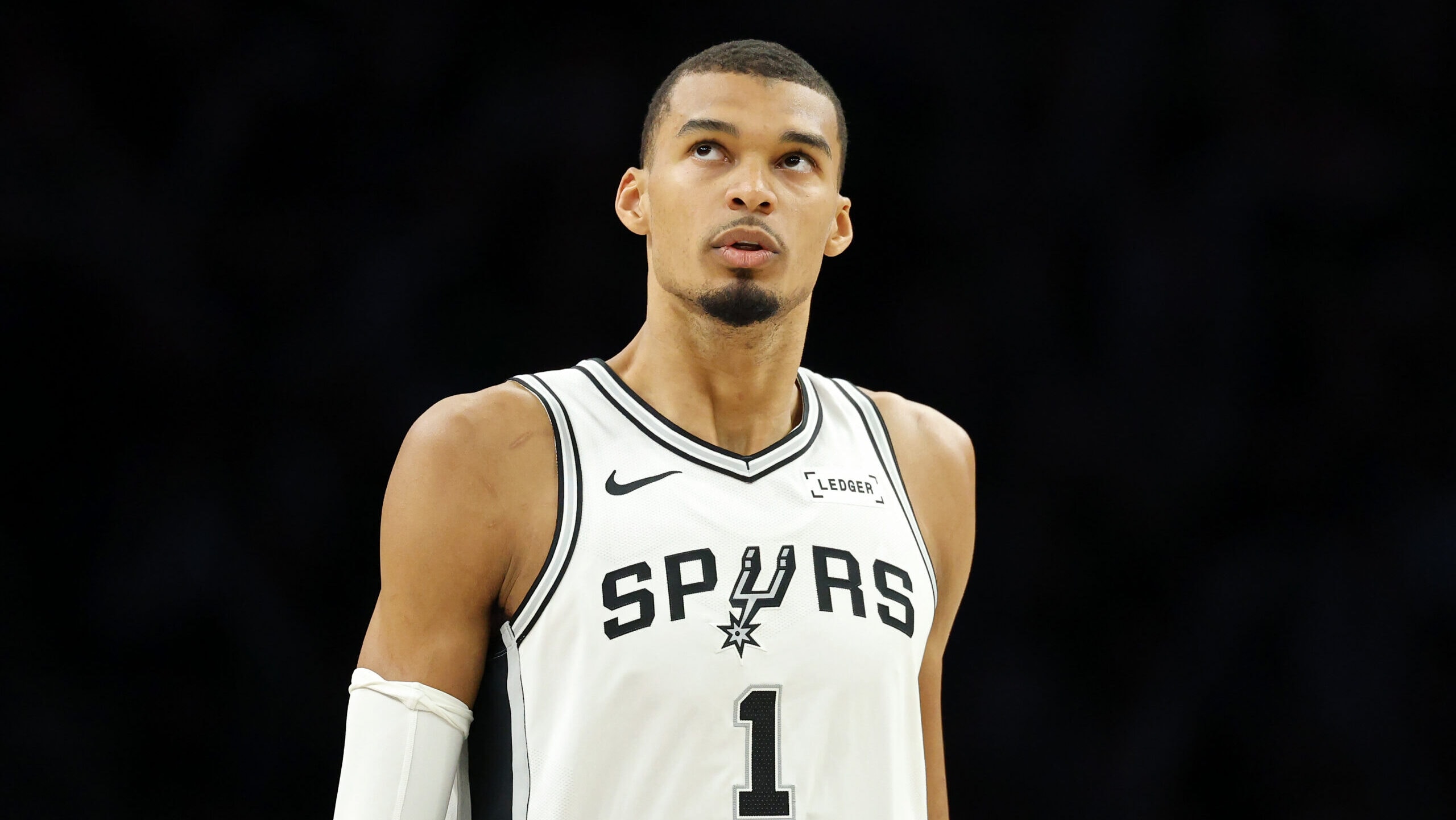
Victor Wembanyama was ejected early in Game 4 after a Flagrant 2 upgrade for elbowing Naz Reid above the neck, swinging momentum toward Minnesota. He finished with 4 points, 4 rebounds and 3 fouls in 13 minutes, and the Timberwolves converted the ensuing free throws to take a 38-34 lead en route to a 114-109 win. The article is sports-focused and has limited direct market impact.
The immediate market takeaway is not just the ejection itself, but how quickly officiating volatility can alter expected outcomes in a tightly priced playoff series. In sports-media terms, that raises the probability of a longer, more contentious series, which is usually supportive for local and national broadcast inventory, in-game wagering handle, and highlight-driven engagement. The second-order effect is that controversy itself can outperform clean competition in terms of audience retention, even if it suppresses on-court quality in the near term.
For the teams and their broader ecosystems, the winner is the entertainment stack: broadcasters, live sports advertisers, and sports-betting operators benefit from higher minutes watched and more event-driven volatility. The loser is the team that loses star availability or rhythm, because the tail risk is not only one game but a momentum reset that can linger into the next 1-2 games if discipline concerns force a more passive approach. In a series where one side can weaponize physicality, the strategic adaptation is to test whether officials tighten the whistle in the next matchup; that can materially compress offensive efficiency for the star-driven side.
The contrarian angle is that the knee-jerk read of "discipline hurts the star team" may be overdone if the market is already assuming a short-lived emotional overreaction. If the suspension/disciplinary risk does not extend beyond one game, the volatility premium could fade quickly and the star club’s pricing may mean-revert once the next game restores normal rotation minutes. The real risk is asymmetric only if the incident changes how aggressively the opposing front line can pressure the paint in future games without being punished, which would have a larger impact than the one-off ejection itself.
AI-powered research, real-time alerts, and portfolio analytics for institutional investors.
Request DemoOverall Sentiment
mildly negative
Sentiment Score
-0.12
