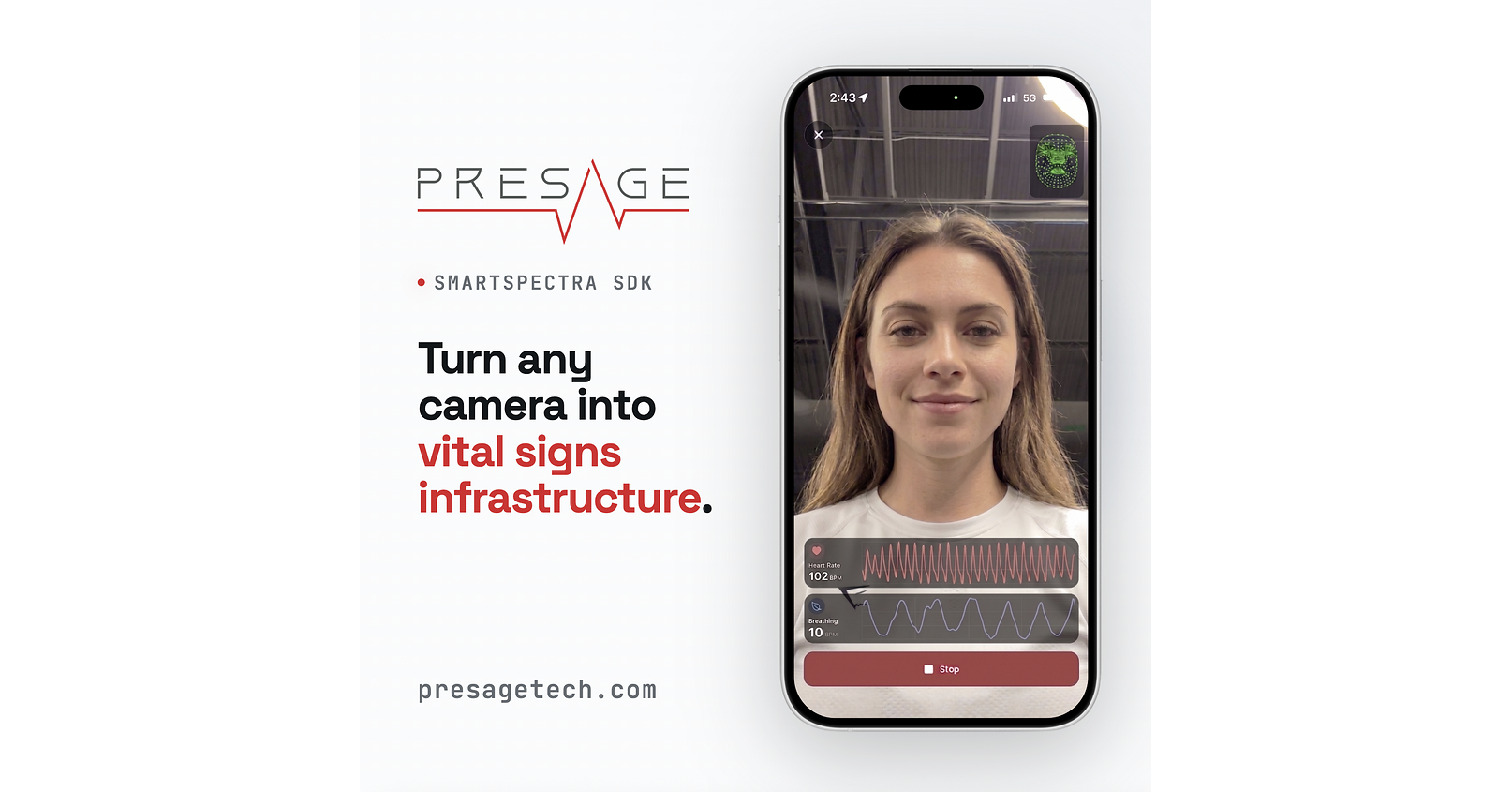
Presage Technologies announced FDA 510(k) clearance (K254169) for its SmartSpectra Vital Signs Monitor 1.0 SDK on iOS and Android, offering camera-based contactless heart rate and breathing rate. The company is making the cleared metrics available at zero cost for hospitals, clinics, and educators, with reported measurement accuracy of RMSE 1.32 BPM (heart rate) and 1.75 BrPM (breathing). The FDA clearance and free access approach are positive for adoption prospects, though it is not described as directly moving broader market prices.
The investable takeaway is not revenue at Presage; it is that the smartphone is becoming a regulated sensor, which incrementally strengthens the platform owners with the largest installed bases. Apple and Google gain ecosystem stickiness, higher health-data capture, and a cheaper path to feature differentiation, but this is a long-duration option on engagement rather than a near-term P&L driver.
The more important second-order effect is pressure on the moat of hardware-first remote patient monitoring and screening vendors. For pre-screening, triage, and low-acuity check-ins, a camera-based workflow can compress customer acquisition cost and remove a procurement step, which matters most in emerging markets, public health, and consumer wellness. That said, hospitals will not replace validated cuffs, ECG patches, or continuous wearables for clinical monitoring; reimbursement, auditability, and liability remain the gating items.
The contrarian risk is that the market overestimates the commercial path from 510(k) clearance to reimbursement and enterprise adoption. Clearance for two vital signs does not validate the broader roadmap into blood pressure waveforms or HRV, where accuracy and workflow friction are harder problems. Near-term this is a sentiment event; over 6-18 months it only matters if major OEMs or RPM platforms embed it natively and show paid conversion. Falsifier: no enterprise contracts or insurer-backed use cases within 2-3 quarters, or any FDA/clinical pushback on real-world performance across device, lighting, and skin-tone conditions.
AI-powered research, real-time alerts, and portfolio analytics for institutional investors.
Overall Sentiment
mildly positive
Sentiment Score
0.30
Ticker Sentiment
