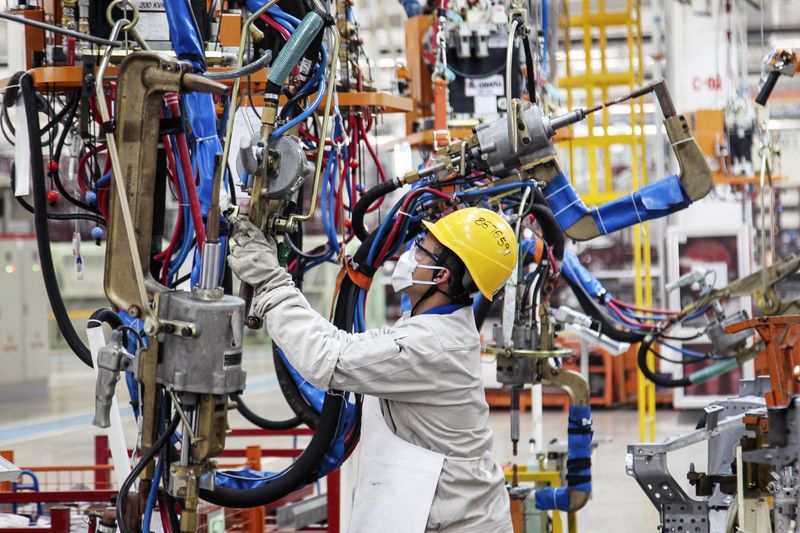
China's industrial profits rose 21.1% year over year in May, easing from 24.7% in April, while January-May profits were up 18.8%, indicating continued support from export demand despite weak घरेलestic demand. AI-related computer, communications and electronics manufacturers posted a 103.9% profit surge over January-May, but auto manufacturers saw profits fall 19.8% amid pricing pressure and intense competition. The data highlights resilience in China's manufacturing sector, but persistent property weakness, subdued consumption and geopolitical tensions remain headwinds.
The key read-through is not just “China industrials are improving,” but that the profit pool is being concentrated in export-linked, AI-adjacent manufacturing while domestic cyclicals remain under pressure. That combination usually favors the largest, most globally integrated suppliers and the logistics/port nodes tied to external demand, while intensifying margin compression in domestically exposed autos, lower-end industrials, and upstream inputs that lack pricing power. The divergence also implies that any policy response from Beijing is more likely to be targeted liquidity/credit support than a broad demand reflation, which limits the upside for broad China beta.
For BIDU specifically, the data is mildly constructive only through second-order sentiment: stronger China industrial profits can stabilize risk appetite and incremental ad spend expectations, but it does not solve the core issue that domestic consumption remains weak and AI capex is being concentrated in a few winners. If anything, stronger earnings at hardware and equipment firms may reinforce the market’s belief that China’s AI cycle is hardware-led first and application-led later, which is a mixed setup for a name like BIDU unless monetization begins to accelerate. The more important catalyst over the next 1-3 months is whether policy easing turns from rhetoric into funded end-demand support; without that, equity upside can remain narrow and factor-driven.
The contrarian view is that the market may be underestimating how long export strength can offset domestic weakness. If global AI infrastructure spending stays hot for another two quarters, China’s industrial earnings momentum could persist even with sluggish household demand, extending the relative outperformance of selected tech supply-chain names and pressuring shorts that are positioned for an immediate macro rollover. The main risk to that thesis is geopolitical escalation or supply-chain disruption, which would hit the same export-heavy winners that are currently masking the domestic slowdown.
AI-powered research, real-time alerts, and portfolio analytics for institutional investors.
Request DemoOverall Sentiment
neutral
Sentiment Score
0.05
Ticker Sentiment
