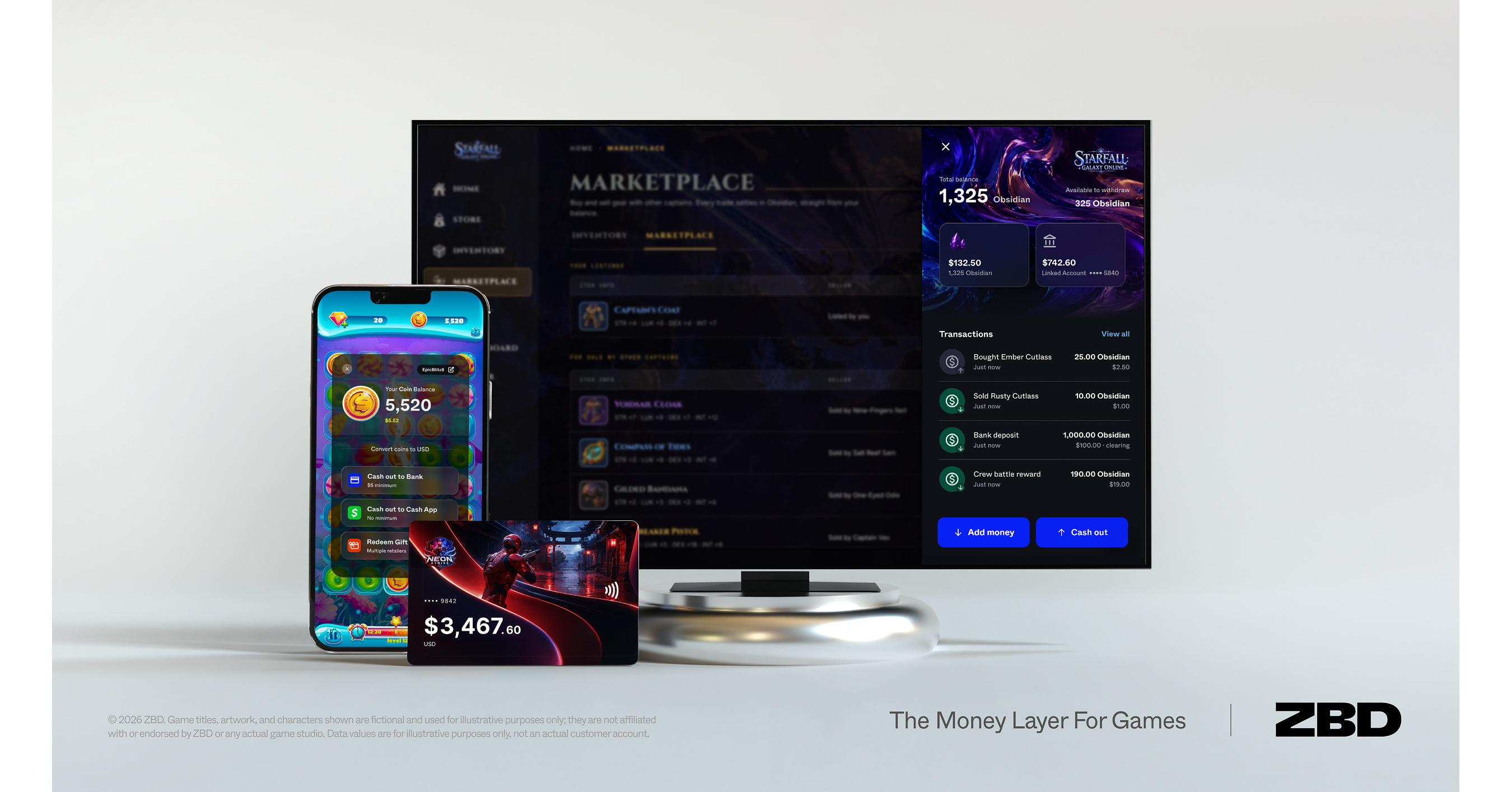
ZBD announced a full embedded payments platform for games, covering embedded accounts, payouts, rewards, and branded white-label debit cards, positioning it to power a two-way money lifecycle in PC/console titles. The company says it has raised $90M (incl. Square Enix) and is licensed across most US states and the EEA, with existing mobile deployments reaching millions of players. Named adopters include 1047 Games (payouts), Joygame (rewards), and others, suggesting early traction but no direct financial results reported, limiting near-term market impact.
This is more of a monetization architecture story than a near-term revenue event. The real economic lever is not take-rate on payments; it is whether studios can tighten the loop between engagement, referrals, and cash-out enough to lift retention and lower paid-acquisition dependence. That creates a potential winner-take-most dynamic for live-service publishers with high-frequency user interaction, while generic payment vendors and standalone reward platforms risk being relegated to plumbing.
Near term, the market should discount this heavily because there is no disclosed revenue contribution yet and the product only matters if cohorts actually improve. The first thing to watch is whether publisher KPIs show higher D30/D90 retention, payer conversion, or lower fraud/chargeback costs; if not, the economics collapse into a compliance-heavy feature with weak ROI. Regulatory friction is a real tail risk over the next 3-12 months because embedded cash-out and branded cards pull studios closer to money-transmitter, KYC, and app-store scrutiny.
The contrarian view is that the addressable market may be narrower than the press release implies. Most studios will resist owning balances and payouts unless the uplift is immediate and measurable, so adoption may cluster in a handful of high-LTV titles rather than becoming an industry standard. That argues for a selective, not thematic, response: the upside is real if a public publisher proves lift, but the base case is still incremental rather than transformative.
AI-powered research, real-time alerts, and portfolio analytics for institutional investors.
Overall Sentiment
mildly positive
Sentiment Score
0.25
Ticker Sentiment
