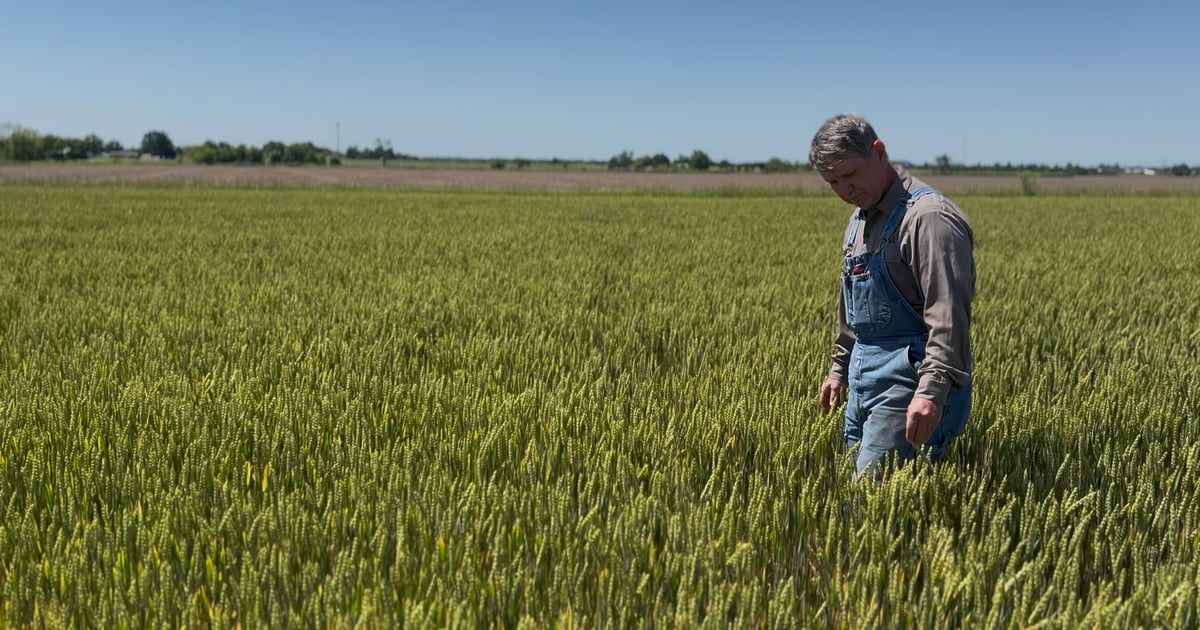
Oklahoma wheat on Rendel Farms is about two weeks ahead of normal and is nearing harvest, with soft wheat yields expected above 50 bushels per acre and hard wheat about 10 bushels lower. Dry winter conditions sped up planting and crop development, but March rains restored soil moisture and improved the outlook. The article highlights regenerative no-till practices that have boosted yields and cut costs, but the piece is farm-level and unlikely to move broader markets.
The immediate market read-through is not “better wheat supply” so much as a tighter working-capital cycle for Plains producers. Earlier harvest timing compresses the cash-conversion window, which can support local basis and reduce storage/handling costs for the best-managed farms; the marginal benefit accrues disproportionately to operators with no-till systems because they already have lower diesel, labor, and tillage exposure. The second-order winner is input efficiency: if these yields hold with less field work, the economics of regenerative acreage become a stronger template for neighboring farms, which is a slow-burn negative for equipment-intensive traditional operators.
The bigger implication is for agribusiness pricing power over the next 1-3 quarters. Stronger soil moisture after a dry winter lowers near-term crop failure risk, but it also reduces the odds of a late-season weather scare that typically tightens protein markets and lifts wheat futures vol. That means a muted upside optionality for long volatility trades in wheat unless new weather stress emerges between heading and harvest; the more likely path is range compression into delivery, then a localized quality spread between soft and hard wheat rather than a broad flat-price rally.
Contrarian angle: the market may be underestimating how much regenerative adoption can structurally lower replacement demand for fuel, tillage, and some fertilizer-linked services. If more acreage shifts toward no-till rotations, the long-run beneficiary is not just the farm balance sheet but also the input distributors with crop-specific exposure to seed traits and biologicals, while legacy tillage-focused equipment demand erodes. For near-term positioning, the risk is that one good Oklahoma crop is interpreted as a nationwide supply signal; if the Southern Plains stay benign while global Black Sea or Australian supply tightens, U.S. wheat could still drift lower even as farm economics improve.
AI-powered research, real-time alerts, and portfolio analytics for institutional investors.
Request DemoOverall Sentiment
mildly positive
Sentiment Score
0.35
