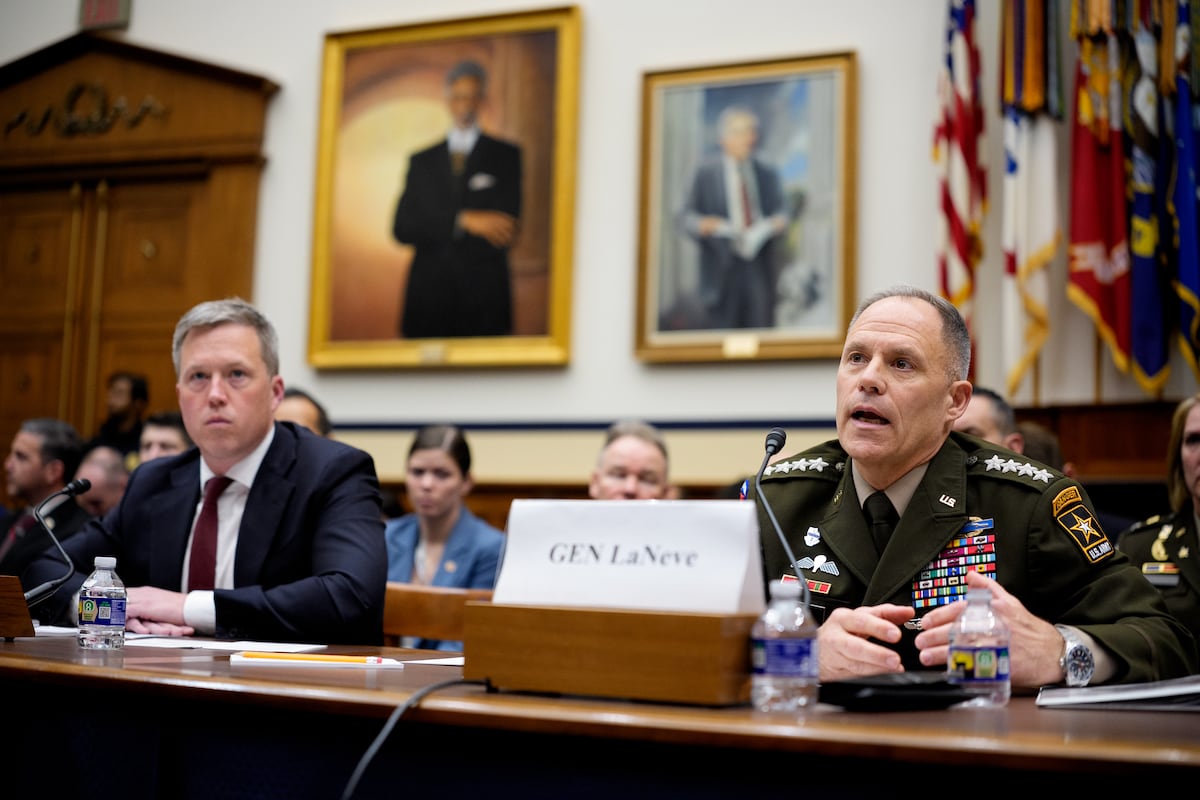
Lawmakers accused the Pentagon of illegally gutting the congressionally mandated Civilian Harm Mitigation and Response Action Plan, including defunding key parts of the program and seeking repeal of the law requiring the Civilian Protection Center of Excellence. The May Inspector General report said personnel were reassigned, meetings stopped and some funding was halted, raising compliance concerns under federal law. Army Secretary Dan Driscoll said the Pentagon remains committed to reducing civilian harm and framed the disruption as restructuring, but members said they did not trust the assurances.
This is less about near-term earnings and more about institutional credibility risk inside the defense budget process. When a congressionally mandated capability is effectively de-prioritized before repeal, the market implication is that compliance-driven programs tied to oversight, training, analytics, and contractor support can face stop-start funding even if the underlying mission remains politically protected. That usually favors primes and service providers with broader DoD exposure over niche governance/monitoring vendors, because the latter are more vulnerable to appropriation delays and program re-scoping.
The second-order effect is that civilian-harm mitigation is becoming a proxy fight over the Pentagon’s broader appetite for process overhead versus operational freedom. If Congress forces restoration, the spend likely returns, but with a lag of 1-3 quarters and potentially in a more fragmented form across commands rather than a centralized center of excellence. That creates execution risk for any contractor pipeline that depended on a single program office; the short-term winner is likely consulting, training, and data-analytics firms with modular task-order vehicles, while the loser is any specialized platform tied to the original centralized architecture.
The catalyst path is legislative, not operational: committee pressure, IG findings, and appropriations language can reverse this quickly, but only if it becomes a must-fix in the next budget cycle. Tail risk is broader than this one program—if lawmakers conclude the department is ignoring statutory guardrails, we could see spillover into other governance-heavy defense accounts and slower obligation rates across oversight-adjacent programs. Over months, that would modestly compress the attach rate for policy/compliance work inside defense IT and services.
The contrarian read is that the headline outrage may overstate cash impact in the near term because most of the spend is small relative to the Pentagon’s total budget. The tradable edge is not a pure dollar exposure but a positioning signal: Congressional friction increases the probability of delayed awards, protest risk, and reprogramming noise, which can hit sentiment in defense services names even before actual dollars move.
AI-powered research, real-time alerts, and portfolio analytics for institutional investors.
Request DemoOverall Sentiment
mildly negative
Sentiment Score
-0.20
Ticker Sentiment
