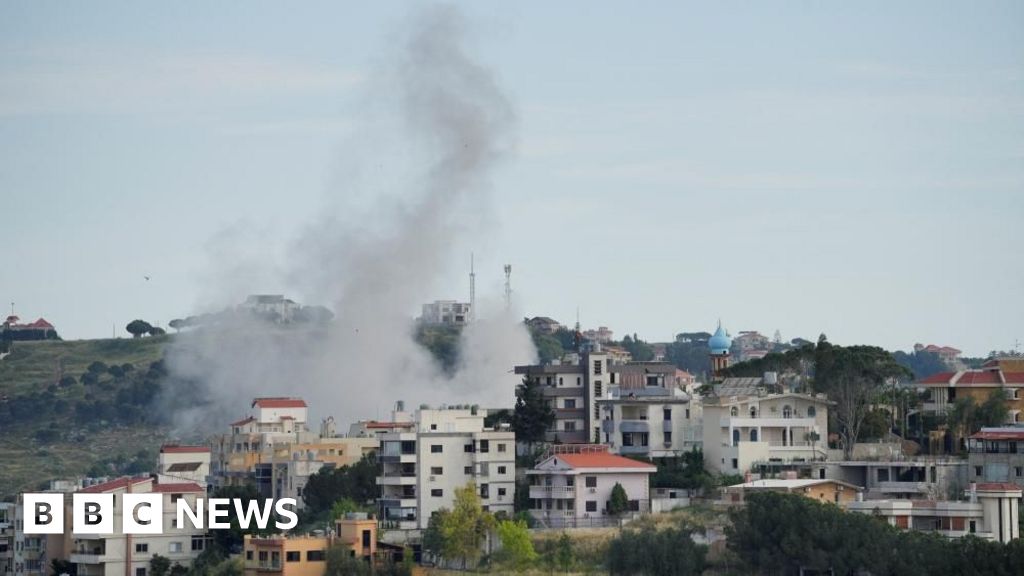
Israeli air strikes in southern Lebanon killed at least 21 people on Tuesday, including 3 children and 3 women in a single house strike in Deir Qanoun al-Nahr, while Lebanon said another 9 were killed and 29 injured in strikes on Nabatieh and Tyre districts. The escalation also left one Israeli soldier dead as Hezbollah continued attacks on Israeli forces and border defenses. The violence underscores persistent ceasefire fragility and heightened regional military risk.
The market’s first-order read is simple risk-off, but the second-order effect is a widening gap between tactical escalation and strategic containment. When civilian casualty counts rise while ceasefire language remains nominally intact, the probability of diplomatic enforcement falls and the conflict becomes more like a recurring volatility regime than a one-time shock. That matters because it keeps regional risk premia embedded in oil, air-defense, and Israeli defense procurement even if global equities shrug off the headline.
The most important spillover is not energy outright, but logistics and capital allocation in the Eastern Mediterranean. Repeated strikes in southern Lebanon increase the odds of disruption to cross-border transport, insurance rates, and reconstruction flows, which can slow even noncombat commercial activity in Lebanon and adjacent trade routes. Over months, that deepens local liquidity stress and raises the cost of importing fuel, food, and industrial inputs, reinforcing a negative feedback loop for Lebanese banks and sovereign-linked assets.
For Israel-linked defense names, the near-term benefit is sustained operational demand, but the quality of that demand is shifting toward consumables: interceptors, precision munitions, sensors, and battle-damage replacement. The risk is that inventory depletion outpaces replenishment, creating a larger 1-2 quarter procurement cycle for suppliers than the market may currently price. Conversely, any credible ceasefire extension would likely hit these names hardest because the market is paying for duration, not just headline intensity.
The contrarian angle is that the conflict may be close to maximum headline intensity but not maximum asset-price sensitivity. If markets are already discounting ongoing strikes, the asymmetry is in downside from de-escalation, not upside from further familiar violence. The cleanest way to express that is through volatility and relative value rather than outright beta: stay long defense cash-flow visibility, but avoid chasing broad Middle East risk proxies after spikes.
AI-powered research, real-time alerts, and portfolio analytics for institutional investors.
Request DemoOverall Sentiment
strongly negative
Sentiment Score
-0.85
