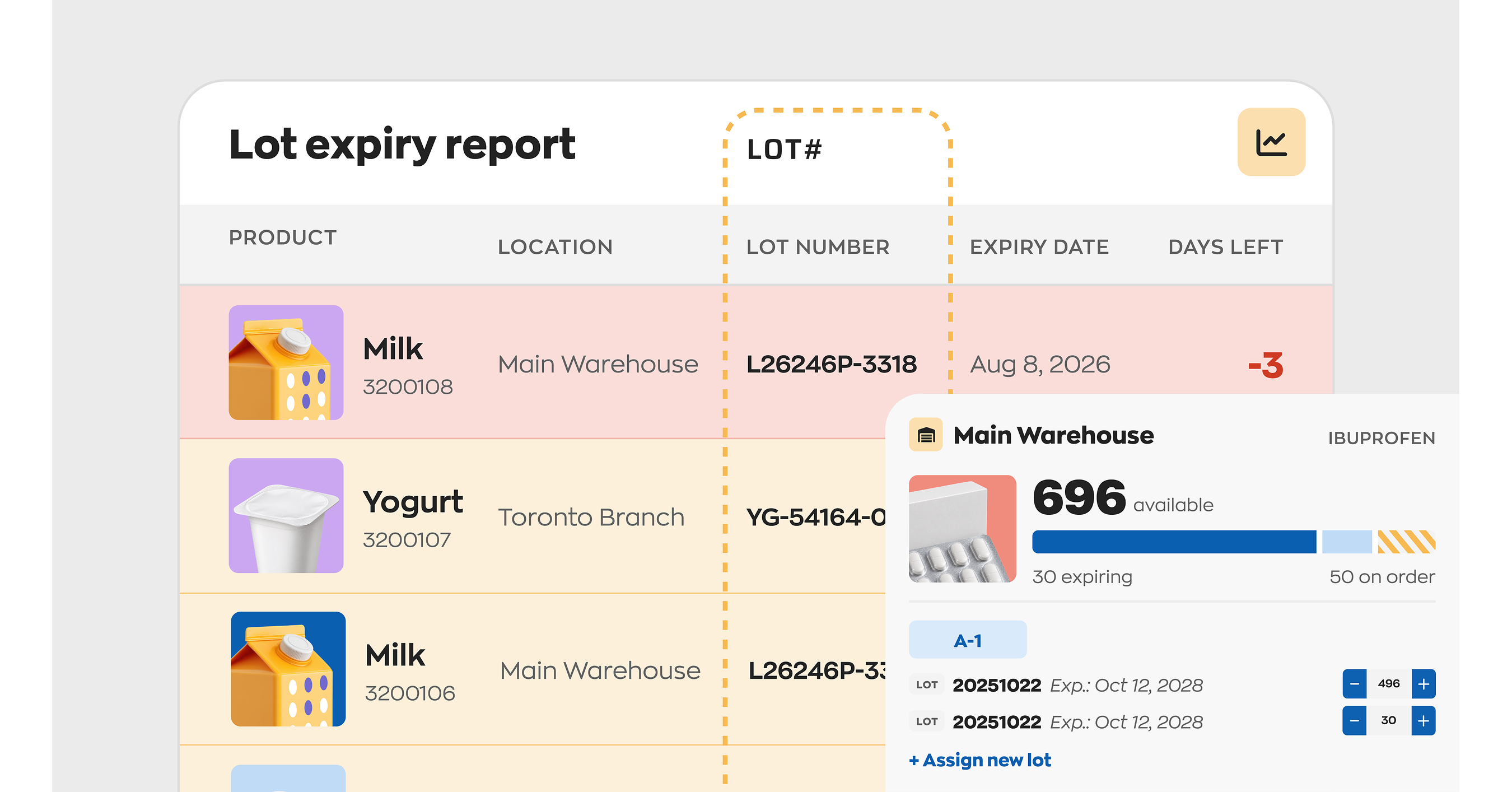
inFlow Inventory launched lot number and expiry date tracking to enable batch-level traceability from receipt to customer, targeting small and midsize food, pharmaceutical, and medical device businesses. The company positions the feature as a low-cost alternative to enterprise ERP, where implementations typically cost tens of thousands of dollars and take months, and states it runs included on Mid-Size plans and above at no additional cost. The release adds GS1 barcode/QR support, expiry reporting (expired/near expiry/past sell-by), and first-expired-first-out picking to reduce recall investigation effort and prevent expiring stock write-offs.
This is more of a retention and conversion event than an immediate revenue event. In regulated SMB workflows, the economic value is not the feature itself but the reduction in manual compliance labor and the switching-cost increase once batch history lives inside the system. That should help win rates against spreadsheet-based processes and niche point solutions, but the payoff shows up first in lower churn and better sales efficiency over 1-3 quarters, not in a fast rerating.
Competitive pressure is asymmetric. Large ERP stacks such as ORCL NetSuite and SAP are not meaningfully threatened on core enterprise accounts, but smaller vertical SaaS and legacy inventory tools face share loss where traceability is a hard requirement. The second-order effect is that customers using the software can qualify for better downstream shelf access and vendor status with larger buyers, which can reduce spoilage/write-offs and deepen stickiness.
The market may be overstating monetization from a feature that is included at no extra cost. The real tell will be usage in regulated verticals, mix shift toward mid-size plans, and whether the product reduces churn or increases ARPU through attachment. If adoption is weak or a larger suite bundles equivalent traceability quickly, this reverts to a checkbox with minimal financial impact.
On timing, expect little immediate price discovery unless management can quantify conversion lift; the real catalyst window is the next 1-2 earnings prints. Over 6-18 months, this matters only if it becomes a wedge into higher-compliance verticals and improves customer lifetime value.
AI-powered research, real-time alerts, and portfolio analytics for institutional investors.
Request DemoOverall Sentiment
mildly positive
Sentiment Score
0.18
Ticker Sentiment
