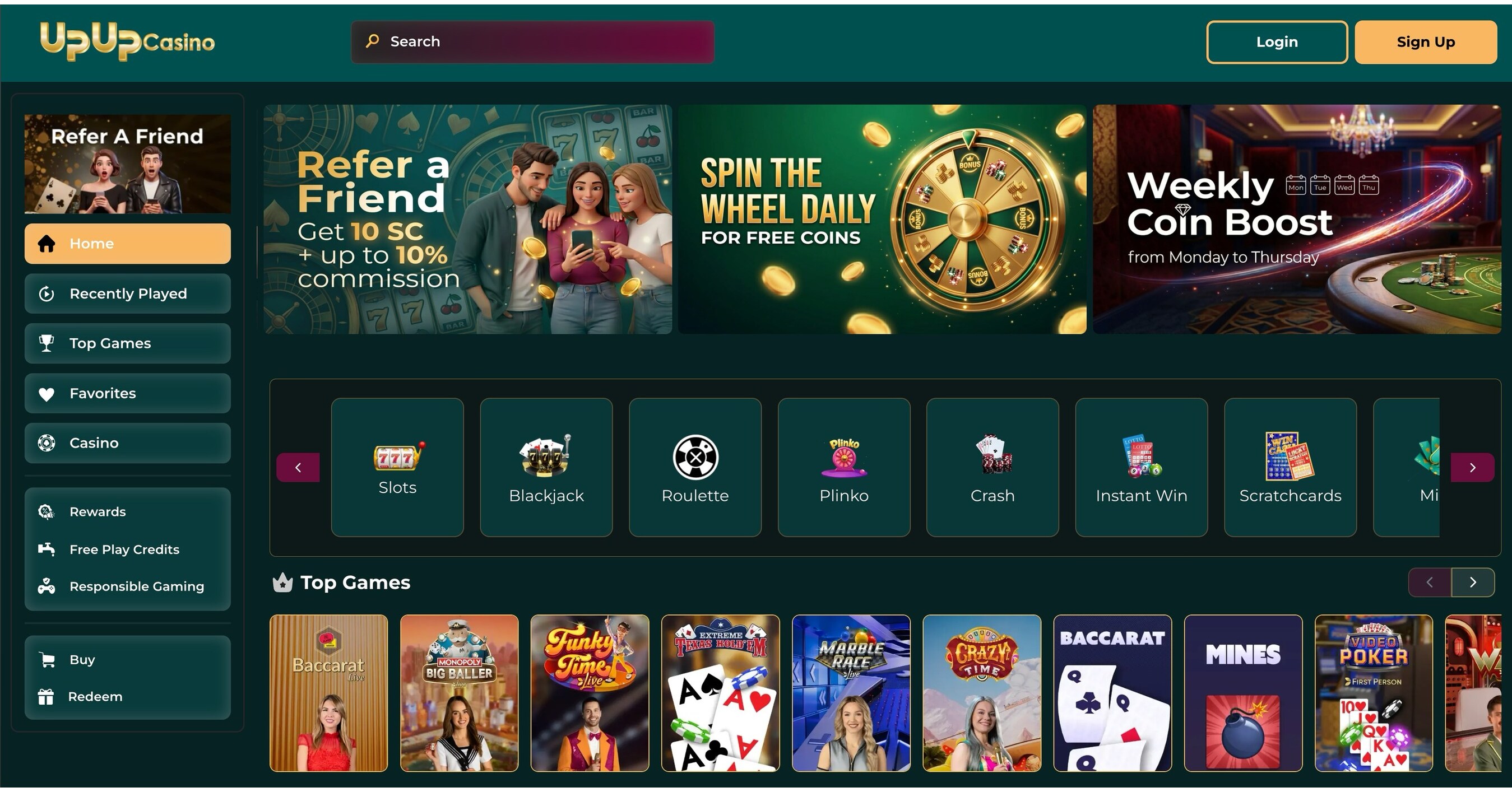
UpUp Casino launched in the U.S. at upupcasino.com as a free-to-play social sweepstakes platform, offering premium games without paywalls and faster redemptions. The model uses Gold Coins (GC) for gameplay and Sweep Coins (SC) redeemable for real cash prizes, with independently audited security/fair-play and compliance with U.S. sweepstakes regulations (no purchase or deposit required). The release emphasizes ongoing promotions (daily rewards, weekly bonuses, VIP perks) and speed/security in SC redemptions with low minimum thresholds.
This is not a direct public-equity event; the tradable angle is whether a lower-friction sweepstakes format starts siphoning discretionary gaming spend from social-casino and bonus-heavy online operators. The mechanism matters more than the launch: faster redemptions, low minimums, and free entry tend to improve conversion but also attract promo-sensitive users, which usually forces competitors to spend more on acquisition and retention. That pressure shows up first in contribution margin, not top-line, and it hits the most heavily paid-traffic-dependent names first.
Over the next 1-3 months, the key catalyst is whether usage sticks after the launch marketing burst fades. If traffic is real, expect second-order fallout in affiliate economics and in the pricing of casual-gaming inventory, with the most vulnerable names likely to be social-casino exposures such as PLTK rather than the larger regulated sports-betting platforms. If usage decays quickly, this remains a headline-only event with little fundamental spillover.
The contrarian view is that the market may be overestimating how durable sweepstakes monetization is under U.S. compliance scrutiny while underestimating how fast consumer attention can migrate if redemption is genuinely easy. The thesis is falsified by weak app/download momentum within 30-60 days or by any state-level enforcement/payment-processor friction, which would cap scaling well before the model becomes economically meaningful.
AI-powered research, real-time alerts, and portfolio analytics for institutional investors.
Overall Sentiment
mildly positive
Sentiment Score
0.12
