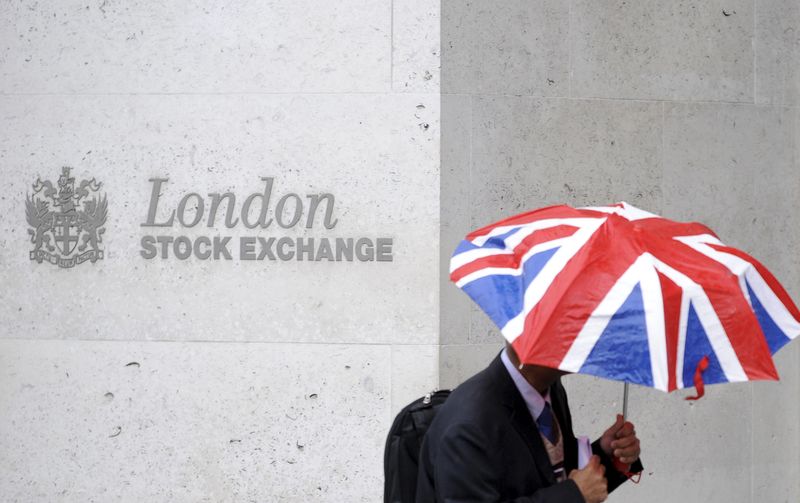
British equities slipped, with the FTSE 100 down 0.61%, Germany's DAX off 0.79% and France's CAC 40 down 0.57%, while GBP fell 0.28% to 1.3372 as Labour leadership speculation weighed on sentiment. Markets also digested a constructive U.S.-China summit in Beijing, where Trump cited 'fantastic trade deals' and both sides signaled agreement on Iran and the Strait of Hormuz. The article is largely macro and political in tone, with limited direct company-specific impact.
NVDA sits at the center of a surprisingly broad “risk-on with policy relief” setup: a constructive US-China tone lowers the probability of near-term export-control escalation, which matters more for multiple expansion than for near-term revenue at this stage. The market is likely underestimating how much of NVIDIA’s valuation is now driven by duration—if Beijing/Washington signaling keeps tariffs and chip restrictions stable for a quarter or two, the stock can rerate even without a material earnings revision.
The second-order winners are the entire AI infrastructure stack with the highest beta to incremental capex visibility: advanced packaging, networking, memory, and power/cooling suppliers. A détente also tends to reduce forced geographic bifurcation of supply chains, which is mildly negative for duplicated-capex stories but positive for names with concentrated manufacturing leverage and pricing power. The biggest near-term loser is the “AI supply chain hedge” trade—stocks that benefited from rerouting, onshoring, or China-digital-decoupling narratives may see multiple compression if policy risk fades.
The contrarian risk is that the summit outcome is being read as durable when it may only be tactical. Any renewed language around export compliance, licensing, or Taiwan-related friction would hit AI semis first because positioning is crowded and expectations are already elevated; that’s a days-to-weeks risk, not a years-out risk. Over a 6-12 month horizon, the more important question is whether softer geopolitics actually enables bigger global AI spend, or whether it simply postpones the supply-chain fragmentation premium that investors have been paying for.
For FX and Europe, a stronger U.S.-China tone plus U.K. political noise keeps dollar-sensitive, globally exposed growth assets preferable to domestically levered Europe. If the pound remains under pressure, U.K.-listed multinationals with dollar revenues should outperform domestic banks and retailers, but the cleaner trade is still in U.S. AI leadership where policy surprise can expand rather than compress the multiple.
AI-powered research, real-time alerts, and portfolio analytics for institutional investors.
Request DemoOverall Sentiment
neutral
Sentiment Score
0.05
Ticker Sentiment
