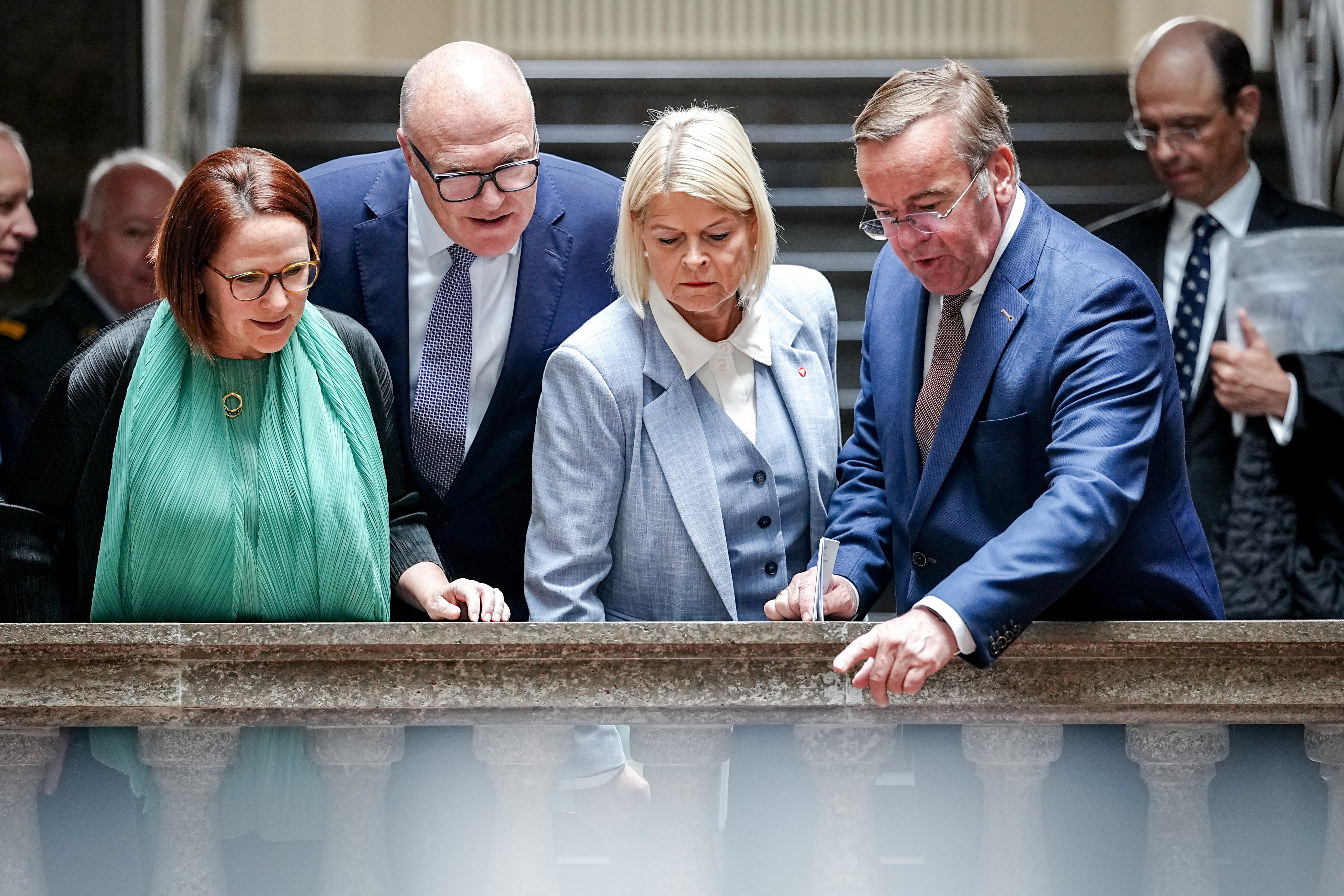
Germany is advancing a European Space Component Command as part of its €35 billion ($40.7 billion) military space push, with Austria, Switzerland and Luxembourg invited to help shape the initiative. Austria plans to launch three operational military satellites plus a test object next year, while Luxembourg highlighted its SATcom and Earth observation capabilities and Switzerland flagged Europe’s reliance on non-European space providers. The article signals deeper European defense integration and a modestly positive backdrop for defense and space-related contractors, though most projects remain conceptual.
This is less a near-term budget story than a signal that Europe is trying to build a sovereign procurement stack for space the same way it did for air defense: by bundling demand, standardizing interfaces, and locking in domestic suppliers before the market consolidates around non-European primes. The second-order winner is not only launch and satellite hardware, but the software, encryption, ground-segment, and training layers that become sticky once interoperability standards are set. That tends to favor a small set of systems integrators and specialty aerospace names with dual-use exposure, while commoditized component vendors risk getting squeezed if the initiative pushes hard on price and local content.
The most interesting implication is that “neutral” states are becoming de facto security multipliers, which expands the addressable market for European defense tech without needing headline NATO accession. If Austria and Switzerland keep moving deeper into shared space and cyber frameworks, the incremental spend may be modest in year one but large in follow-on years because once satellites, training, and data-sharing protocols are aligned, replacement cycles and service contracts recur for a decade. The market is likely underpricing how much this increases European demand for secure comms, ISR analytics, anti-jam systems, and sovereign cloud/ground infrastructure.
Catalyst timing matters: the next 3-6 months should be mostly narrative and consortium formation, but the 12-24 month window is where contract awards and industrial allocation decisions can re-rate equities. The main tail risk is political backsliding if legal neutrality constraints in Austria/Switzerland trigger domestic pushback or if Europe’s fiscal tightening forces defense ministries to choose between space and more visible kinetic programs. Another reversal risk is that a transatlantic compromise on commercial U.S. satellite access reduces urgency, but that would likely only slow the move, not stop it, because the core driver is resilience and wartime continuity rather than battlefield superiority alone.
AI-powered research, real-time alerts, and portfolio analytics for institutional investors.
Request DemoOverall Sentiment
mildly positive
Sentiment Score
0.20
