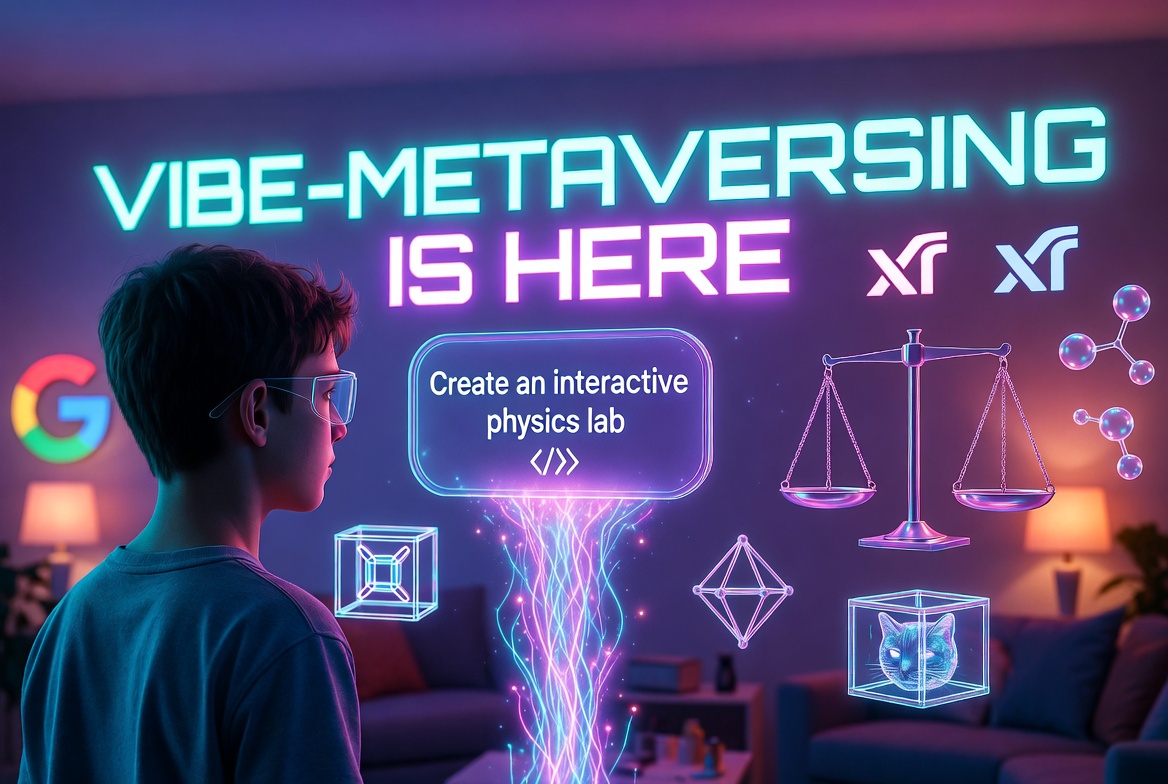
Google launched Vibe Coding XR on March 25, 2026 — a rapid-prototyping system that turns text or voice prompts into fully interactive, physics-aware AR/VR apps in under 60 seconds, powered by Gemini (in Gemini Canvas) and the open-source XR Blocks framework. The demo includes ready-to-run educational and entertainment experiences and is available via an online demo and GitHub, which could materially lower development barriers and accelerate XR content creation; near-term market impact is limited but the longer-term competitive and ecosystem effects could be meaningful for XR platforms and tools.
Google’s move is a classic platformizing play: by collapsing prototyping friction for spatial apps, it turns an addressable developer market measured in months of engineering into one measured in minutes of creative iteration. If even 1% of current mobile/web developers start experimenting with XR because onboarding cost falls by an order of magnitude, the pool of XR-first experiences could grow severalx within 12–24 months, materially raising long-term monetization optionality (ads, commerce, cloud usage, Play Store flows) even if near-term revenue is immaterial.
The biggest second-order competitive effect is commoditization of low-to-mid-tier 3D tooling and asset marketplaces. Open-source frameworks anchored to a dominant search/AI vendor compress pricing power for incumbents whose business models rely on licensing, marketplace take-rates, or paid runtimes; expect pricing pressure and migration of small studios away from paid engines over 6–18 months. Conversely, hardware and sensor suppliers (mobile SoCs, depth cameras, low-latency networking) are underlooked beneficiaries because faster prototyping raises hardware demand elasticity once content exists.
Key risks and catalysts are structural rather than technical. Short-term upside depends on headset install base growth and developer conversion (signals: GitHub forks, XR Blocks demo usage, Android XR headset activations in next 3–9 months). Tail risks that could reverse the trend include regulatory scrutiny of bundling Google’s model + runtime, intellectual property/class-action issues from generated content, and user-safety incidents from poor physics/interaction—each capable of causing adoption stalls within 60–180 days if they materialize.
AI-powered research, real-time alerts, and portfolio analytics for institutional investors.
Request DemoOverall Sentiment
strongly positive
Sentiment Score
0.75
Ticker Sentiment
