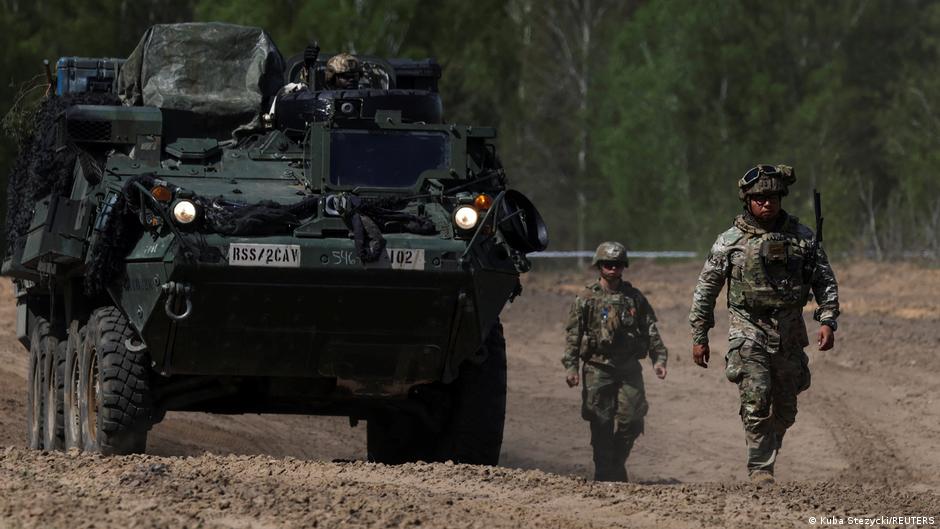
The Pentagon halted the deployment of 4,000 troops from the Army's 2nd Armored Brigade Combat Team to Poland, part of a broader US force reduction in Europe. Lawmakers from both parties criticized the move, while Polish officials said they were blindsided and sought reassurance that deterrence and security would not be directly affected. The decision comes as Russia intensifies attacks on Ukraine, raising geopolitical risk and scrutiny of US commitment to European defense.
This is less about one brigade and more about the market’s repricing of US security credibility in Europe. The second-order effect is a higher probability that allies accelerate their own procurement and pre-positioning decisions before the 2026 NATO planning cycle, which is constructive for European defense primes and select US exporters, but negative for any asset tied to the assumption of a stable US forward-deployed posture.
The key risk is not immediate battlefield deterioration; it is a gradual erosion of deterrence that shows up first in procurement behavior, then in treasury spreads, then in energy and industrial capex. If allies conclude Washington’s commitment is becoming operationally conditional, expect faster spending on air defense, artillery, secure communications, drones, and munitions over the next 6-18 months, with German, Polish, Nordic, and Baltic budgets likely to see the largest marginal uplift.
For equities, the most attractive setup is a dispersion trade rather than a blanket risk-off bet. US and European defense names with European exposure should benefit from order acceleration, while civil aviation, logistics, and European cyclicals with eastern flank revenue could face a small but persistent geopolitical discount if investors start pricing in recurring force-reduction headlines. The contrarian view is that this may be a logistics-led retrenchment rather than a policy pivot; if the White House walks back or staggers withdrawals after allied backlash, the near-term political premium could fade quickly and leave defense equities extended.
The timing matters: the market should react in days, but budget and procurement consequences compound over quarters. The best entry point is on any headline-driven pullback in defense stocks, because the underlying demand impulse is likely to survive even if the specific troop move is partially reversed.
AI-powered research, real-time alerts, and portfolio analytics for institutional investors.
Request DemoOverall Sentiment
moderately negative
Sentiment Score
-0.35
