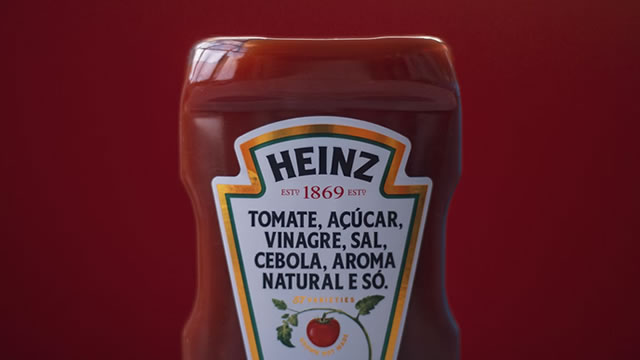
Kraft Heinz (KHC) is framed as positioned for a turnaround, with increased brand investment already showing early market share gains. Management/analysts flag 2026 earnings pressure from higher spending, but expect volumes and earnings to rebound in 2027 as investments take effect. In Emerging Markets, KHC cites 8.5% organic sales growth as a key driver for longer-term expansion.
The market is likely to underappreciate how much of this story depends on retailer behavior, not just brand spend. In packaged food, incremental investment often buys temporary share at the expense of margin, and if that share comes from promotion rather than true household penetration, the benefit is usually recaptured by private label or a cheaper competitor within 2-4 quarters. That makes the 2026 setup more of an earnings reset than a clean inflection; the stock only deserves multiple expansion if volume gains broaden beyond a few hero SKUs.
The second-order winner, if the turnaround holds, is not just KHC but the entire branded-staples cohort that can point to category elasticity and justify pricing discipline. The losers are the lowest-cost private-label suppliers and adjacent branded names with weaker trade leverage, especially those already fighting for shelf space and end-cap support. If KHC is forced to overspend to defend share, the spillover is margin compression across the aisle, which could pressure GIS, CPB, CAG, and even select snack/exposure names that rely on similar retail networks.
The EM angle is more interesting as an option on mix and local execution than as a near-term P&L driver. If growth is coming from higher-frequency categories with local sourcing, it can offset North American stagnation and support a better long-term margin stack; if it is driven by distributor incentives or FX, the headline growth will not translate into durable earnings power. The key falsifier is simple: if scanner data or management commentary in the next 1-2 quarters does not show sustained unit improvement, the turnaround thesis is probably just deferred margin pain.
Consensus may be too willing to extrapolate early share wins into a 2027 recovery. In this sector, the market usually pays for proof, not intent, so the stock could remain rangebound until investors see gross margin resilience alongside volume growth. That argues for patience rather than chasing the story today, unless there is a clear evidence point that the spending is generating net-new demand rather than subsidizing existing customers.
AI-powered research, real-time alerts, and portfolio analytics for institutional investors.
Request DemoOverall Sentiment
neutral
Sentiment Score
0.05
Ticker Sentiment
