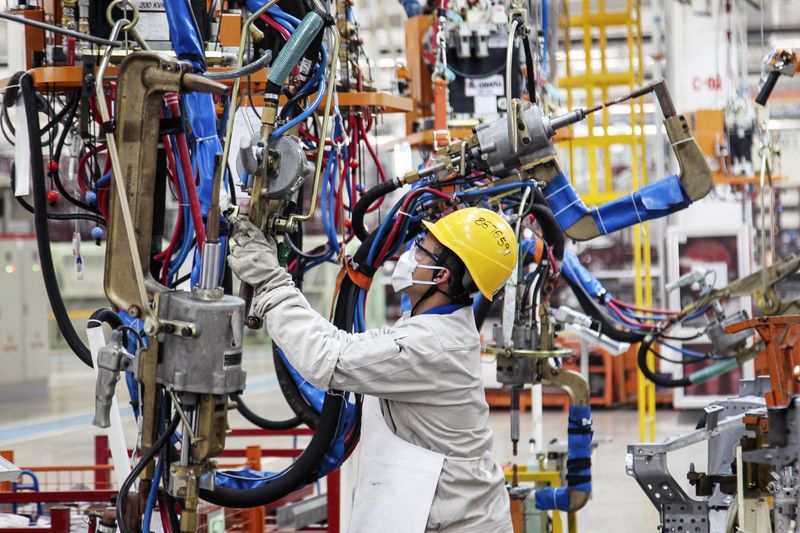
China's industrial profits rose 21.1% year over year in May, but growth slowed from April's 24.7% increase, indicating continued support from exports amid weak domestic demand. For the first five months, profits were up 18.8%, with AI-related computer and electronics manufacturers posting a 103.9% surge while auto manufacturers saw profits fall 19.8% under heavy competition. The article also flags geopolitical tensions, including Iran, as a potential near-term risk to trade and supply chains.
The key signal is not that China’s industrial sector is healthy, but that external demand is now doing the heavy lifting while domestic demand remains a drag. That creates a bifurcated earnings environment: exporters tied to AI hardware and advanced electronics keep leverage to global capex, while domestic-cycle names remain trapped in price competition and margin compression. The second-order effect is that “good” industrial data can still be equity-negative for broad China cyclicals if it reinforces capacity overbuild and delays the policy pivot toward true demand support.
The most important margin issue is that profit growth is being driven by mix, not pricing power. In autos, strong exports can coexist with falling profits when discounting and utilization pressure overwhelm unit growth; that is a warning for any China OEM or supplier exposed to the domestic market. If this pattern persists for 2-3 quarters, weaker players will likely respond with more aggressive price cuts, which can spill into batteries, semis, and industrial components via lower order visibility and tighter working capital.
Geopolitical risk is a near-term catalyst, not a background noise item. Any disruption to Middle East shipping routes would hit Chinese manufacturers through freight, insurance, and input-cost volatility before it shows up in headline export data; the market usually underprices that lagged margin squeeze. The contrarian read is that the AI-linked profit surge may already be partially crowded, but the more overlooked trade is the policy response to excess capacity: Beijing is more likely to support balance-sheet repair and consolidation than broad stimulus, which favors scale leaders and punishes marginal producers.
Over the next 1-3 months, the setup is best expressed as relative value rather than outright China beta. The earnings winners are likely to remain the export-capable hardware ecosystem, but the sustainability of those profits depends on global capex staying intact and tariffs not escalating further. If domestic weakness deepens, the eventual upside surprise would come from targeted stimulus or forced capacity rationalization; until then, broad industrial exposure remains a low-quality carry trade.
AI-powered research, real-time alerts, and portfolio analytics for institutional investors.
Request DemoOverall Sentiment
mixed
Sentiment Score
0.15
