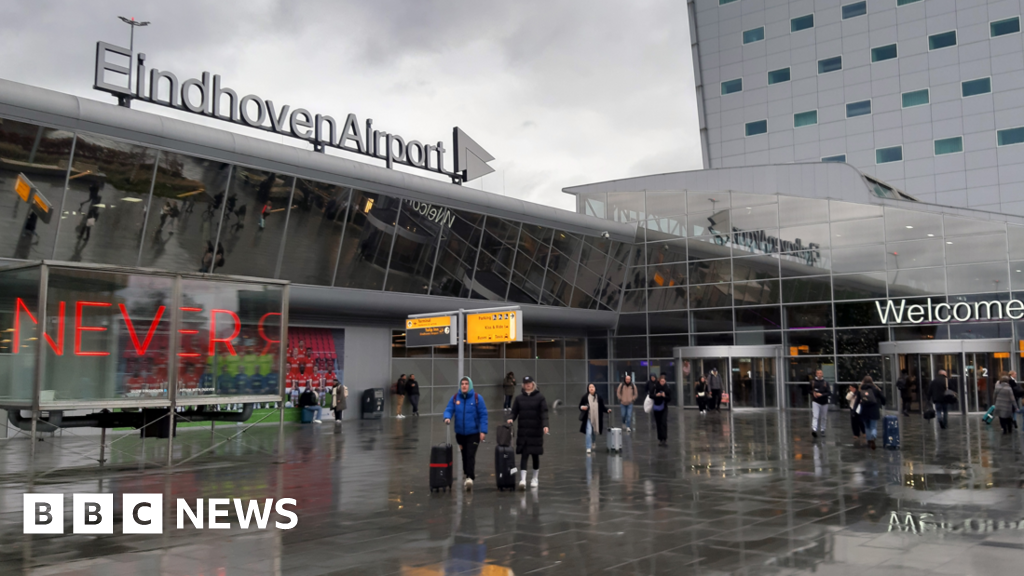
Air traffic around Eindhoven was suspended for several hours after unidentified drones—first spotted over the nearby Volkel air base, which hosts a US Air Force squadron as part of NATO—were observed on Friday and again on Saturday; authorities said weapons were deployed to try to shoot them down but the devices escaped and airspace remained closed until about 23:00 local time. The incident is the latest in a string of drone sightings at military bases and airports across the Netherlands, Belgium, Denmark and Germany since September, with investigations stymied by a lack of evidence and some officials calling the events possible "hybrid warfare" (Russia denies involvement). The episodes have prompted coordinated responses, including EU defence ministers agreeing to create a "drone wall" and individual countries stepping up anti-drone measures, highlighting heightened operational security risks to NATO assets and potential sustained demand for counter-drone capabilities.
Air traffic around Eindhoven was suspended for several hours after unidentified drones were observed late on Friday over Volkel Air Base and again on Saturday, with authorities deploying weapons to try to down the devices and keeping airspace closed until about 23:00 local time. Volkel hosts a U.S. Air Force squadron as part of NATO, which elevates the operational and strategic sensitivity of the incident relative to a civilian-only event.
The episode is the latest in a string of sightings at military installations and airports in the Netherlands, Belgium, Denmark and Germany since September, and investigations have been hampered by a lack of evidence as drones often depart before attribution can be made; some European officials characterize the pattern as potential "hybrid warfare," a position denied by the Kremlin. This persistent uncertainty increases the probability of recurrent airspace disruption and sustained defensive measures across allied infrastructure.
Market implications are sector-specific: the incident creates a clear near-term demand signal for counter-drone systems and related defense capex, while raising operational risk and potential insurance costs for airlines and airport operators in the region. The provided signals (mildly negative sentiment, market impact score 0.28) imply modest broad-market effects but meaningful idiosyncratic opportunities and risks tied to procurement announcements and further incidents.
AI-powered research, real-time alerts, and portfolio analytics for institutional investors.
Request DemoOverall Sentiment
mildly negative
Sentiment Score
-0.30
