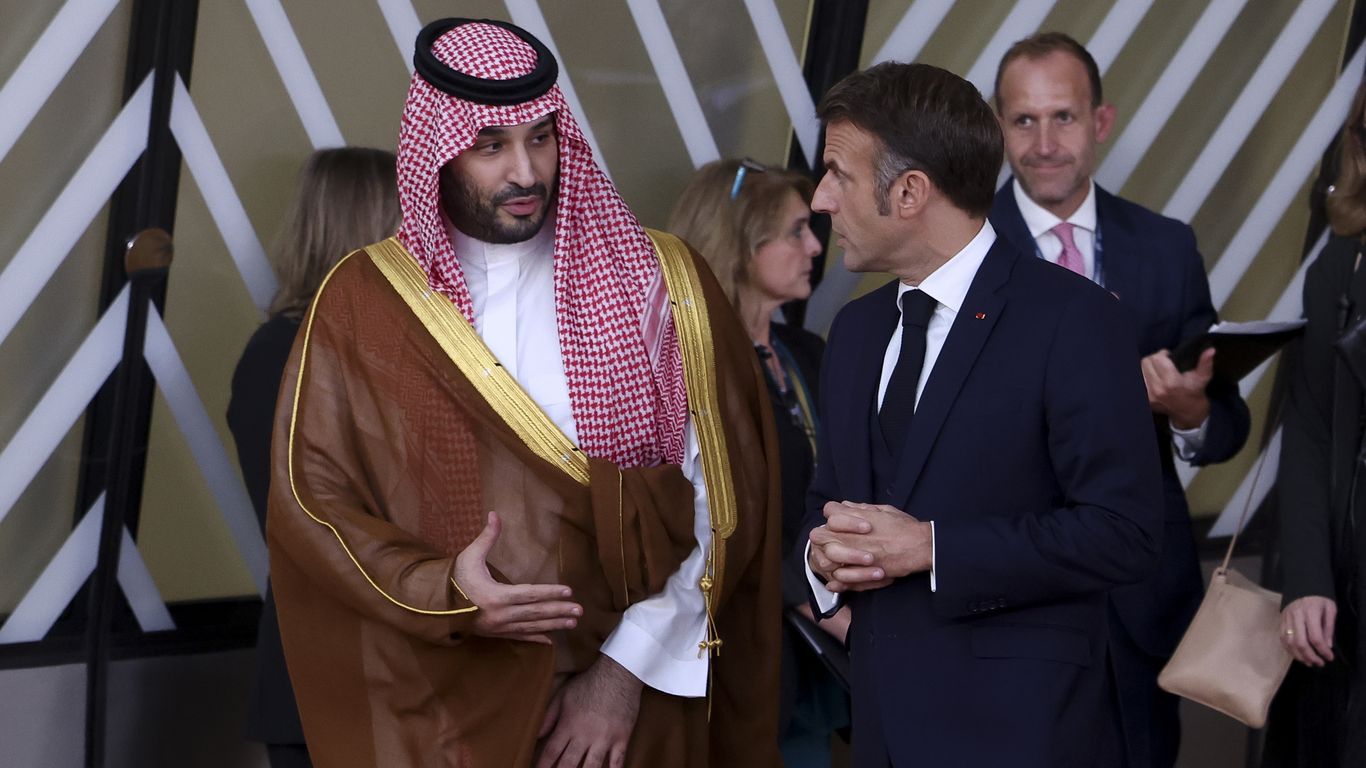
Israel has blocked a planned visit by foreign ministers from Saudi Arabia, the UAE, Egypt, Jordan, Qatar, and Turkey to the Palestinian Authority, escalating tensions with Arab neighbors. The decision, intended to prevent what Israeli officials termed a "defiant meeting" promoting a Palestinian state, signals strong opposition to Saudi and French initiatives for a two-state solution. This move further strains Israel's relationships with Arab nations, already deteriorating due to the ongoing conflict in Gaza and expansion of West Bank settlements, as evidenced by a recent rebuke from the UAE.
Israel's decision to block a planned visit by foreign ministers from Saudi Arabia, the UAE, Egypt, Jordan, Qatar, and Turkey to the Palestinian Authority marks a significant escalation in regional tensions, further straining relations between Prime Minister Benjamin Netanyahu's government and its Arab neighbors. This move, aimed at preventing what a senior Israeli official termed a "defiant meeting" to promote Palestinian statehood—a prospect Israel views as a security threat—directly counters a Saudi diplomatic initiative personally supported by Crown Prince Mohammed bin Salman. The blockage serves as a clear signal of Israeli opposition to broader international efforts, including an upcoming Saudi-French conference at the UN, to advance a two-state solution and secure recognition for a Palestinian state. This development occurs against a backdrop of deteriorating relations since the current Israeli right-wing government took office in December 2022, exacerbated by the humanitarian crisis in Gaza and ongoing expansion of West Bank settlements, including recent approval for thousands of new housing units and 22 new settlements. The incident underscores how distant the prospect of expanding the Abraham Accords, a key foreign policy goal of the previous U.S. administration, has become, as evidenced by recent diplomatic rebukes such as the UAE summoning Israel's ambassador for an "extremely tough" dressing down.
AI-powered research, real-time alerts, and portfolio analytics for institutional investors.
Request DemoOverall Sentiment
strongly negative
Sentiment Score
-0.60
