
BLUETTI, BSW-Solar, Shelly Group y Flatpeak reúnen a representantes del sector en IFA 2026
Source: PR Newswire
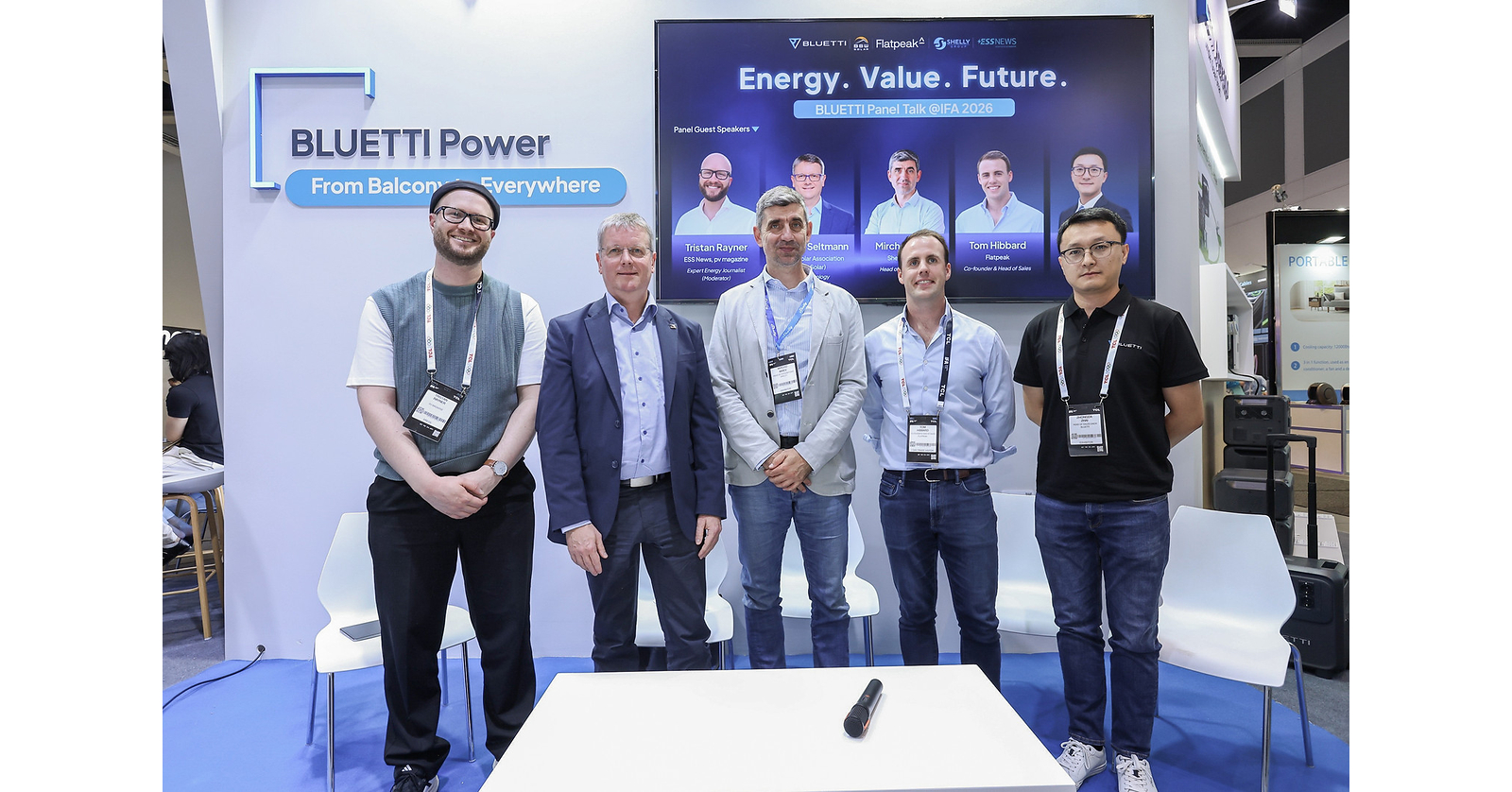
En IFA 2026, BLUETTI reunió a BSW-Solar, Shelly Group y Flatpeak para impulsar la “energía doméstica inteligente” combinando solar de balcón, almacenamiento residencial, dispositivos conectados y gestión basada en datos en tiempo real y IA. El panel enfatizó la necesidad de estándares de integración abiertos y un intercambio de datos fiable, además de marcos de mercado favorables y normas de seguridad (incluida una norma de producto para dispositivos solares enchufables prevista para finales de 2025). No se informan cifras financieras o decisiones regulatorias concretas, pero el mensaje refuerza una narrativa de adopción acelerada del ecosistema de energía doméstica y más optimización del coste/consumo para los hogares.
Analysis
The investable takeaway is not “more solar,” it is a shift in value capture toward orchestration layers that can monetize dispatch, pricing, and customer data. If home batteries increasingly respond to real-time tariffs, the hardware itself becomes a lower-moat component and the margin pool migrates to software, inverter controls, and distribution channels that own the integration layer. That is constructive for scaled ecosystem players like ENPH and Tesla Energy, but less so for standalone device vendors whose differentiation can be copied once standards are open.
Near term, this looks more like a channel-check than an earnings catalyst. The main 1-3 month risk is regulatory and installer friction: if standards, certification, or interconnection rules lag, demand may not translate into shipments, and inventory could build at the channel level. Over 6-18 months, the key variable is whether dynamic tariffs become widespread enough to turn storage from a feel-good purchase into an economically optimized asset; if retail power prices ease or policy support fades, the payback math weakens quickly.
The consensus is likely overestimating TAM expansion while underestimating commoditization. Open integrations enlarge the market, but they also reduce switching costs and compress pricing power for closed ecosystems. The hidden winner may be utilities and aggregators that can arbitrage flexibility, while the hidden loser is any residential energy OEM relying on proprietary lock-in rather than measurable customer savings.
AllMind Terminal
AI-powered research, real-time alerts, and portfolio analytics for institutional investors.
Request TrialMarket Sentiment
Overall Sentiment
mildly positive
Sentiment Score
0.15
Key Decisions for Investors
- No immediate index-level clean-tech trade: treat this as a sentiment-positive but low-conviction news item unless next-quarter installs or attach rates confirm monetization.
- Relative-value: long ENPH / short SEDG over 1-3 months if upcoming commentary shows ecosystem pricing power and software attach; exit if ENPH relative strength fails or margin guidance deteriorates.
- Watch SMA and European residential solar suppliers for a 6-18 month re-rating only if plug-in standards are finalized and installer data shows lower acquisition costs; otherwise avoid chasing the theme.
- Set an alert on EU tariff reform and interconnection rule changes: if dynamic pricing broadens, the best expression may shift from hardware to utility demand-response beneficiaries rather than pure-play solar OEMs.
More News
- Putin reportedly suggests summit with Trump and Xi to decide fate of Ukraine
- Ukraine launches over 1,000 drones at Russia, setting oil facilities ablaze
- China's CXMT sees shares drop over 6% as investors look past chipmaker's profit turnaround
- Trump defends Russian sanctions relief, lashes out at Zelenskyy
- China's economic growth quickens to 4.6% as exports surge, stimulus rolls out
- China’s Coal Output Drops as Concerns Build Over Winter Supply