
Monday 6am briefing. Earnings reviews after the next close.
You set the schedule, the rules and who each piece goes to once, and after that the work lands without anyone chasing it. The fuller earnings review waits for the next close, so it carries the analyst revisions and a full day of trading rather than the overnight reaction.

Premium data sources licensed from 100+ providers and partners, including S&P Capital IQ, FactSet, LSEG and MSCI
Documents indexed, so a small cap with two broker notes still has a file
Citations open for whoever you send the write-up to, seat or not
The Rules Live On The Automation
The market cap floor. Which analyst gets which sectors. The hour it sends. What stays out, down to dividend declarations and small insider buys. Those settings sit on the automation, so the Monday briefing and the earnings reviews arrive without anyone opening the platform. The same name can sit in two analysts' automations with different rules on each, and the first set gets built with you during onboarding.
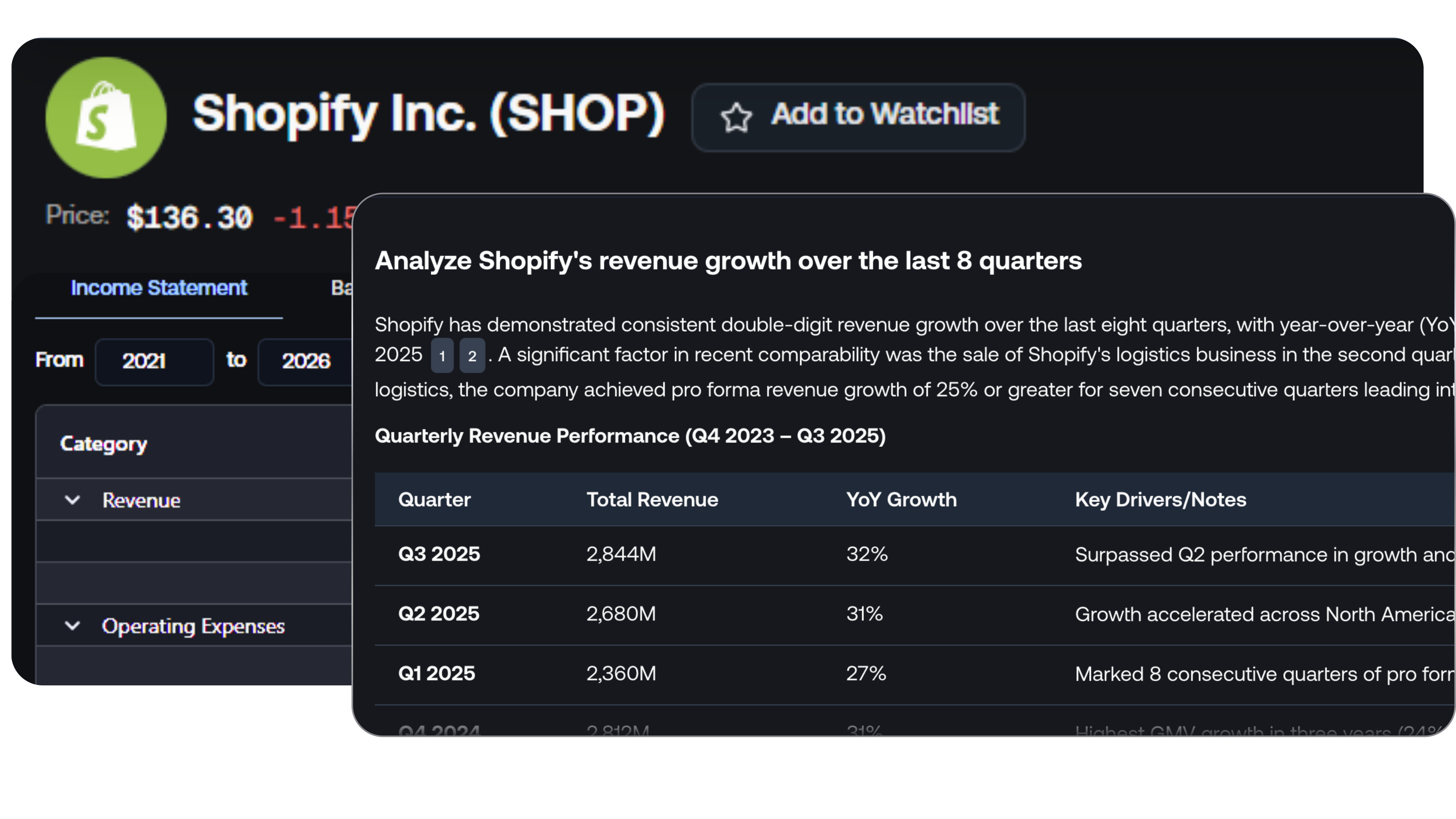
One Bounded Room Per Company
Each name gets a room holding its filings, transcripts and anything you upload, and nothing outside it gets read. Put your own white papers, frameworks and DCF conventions in there and the analysis argues from your material. It is also how sell-side opinion stays out of a view that is meant to be your own.

Your Template, Read Top To Bottom
Upload a memo you already use and the output follows its structure section by section, at the section lengths you set. Long reports come back as prose you read top to bottom, with exhibits referenced in the text and no deck-style bullets. A two-page write-up under a thousand words is the same job as a twenty-page committee memo with different rules on it.

Written For The Committee That Reads It Next
The write-up gets read by people who did not do the work: an investment committee, a compliance reviewer, a client asking why a name is still held. Ask for the working and the calculation comes back line by line. You can put a verification pass at the end of the workflow and it re-checks each figure against its source before the report goes out. It does not yet flag a field it could not fill, so if you are running it unattended, check the blanks.
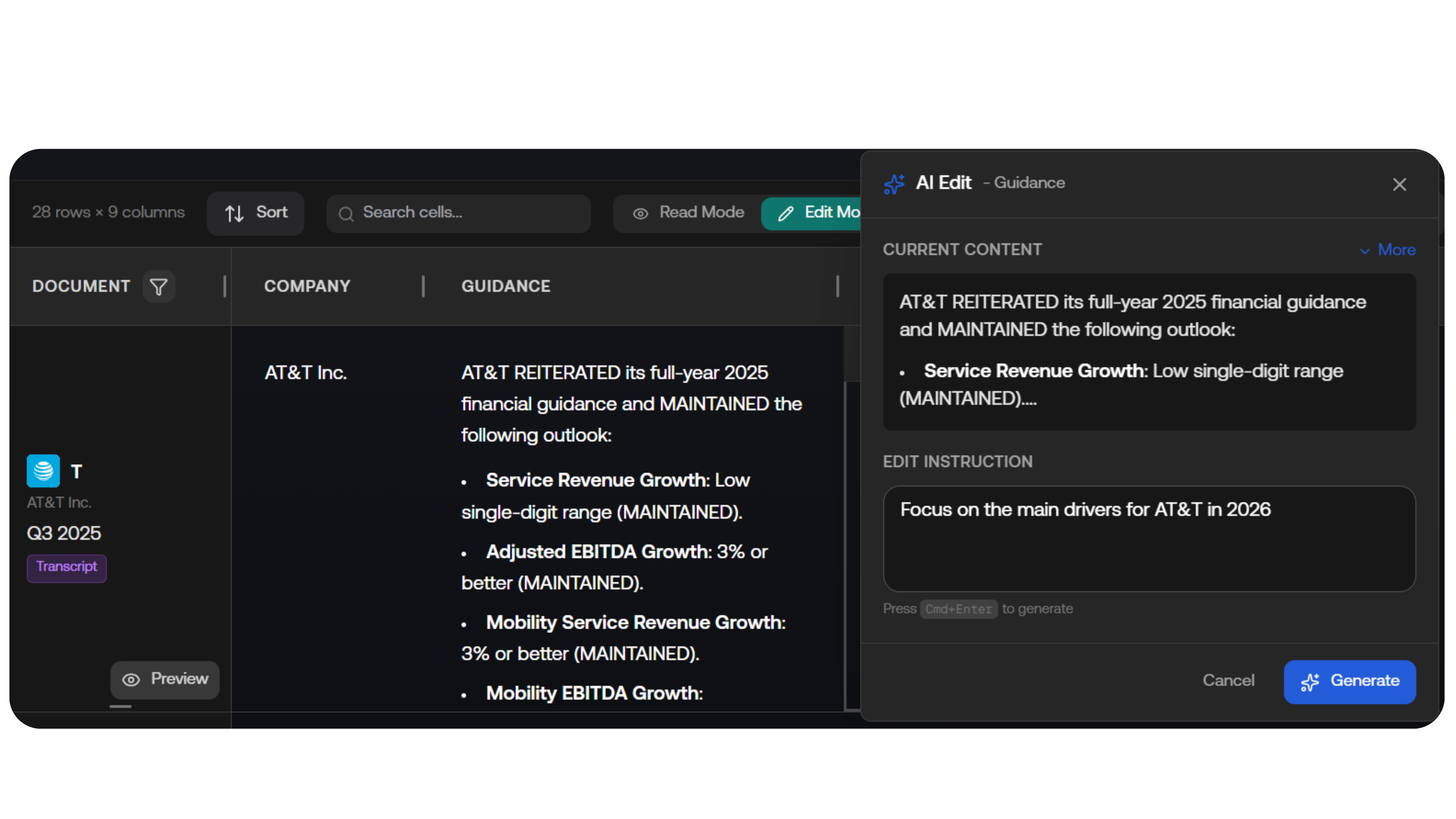
The work that comes round again.
Six jobs that repeat every week, every quarter or every print, and the assembly is the part that gets handed over.
Earnings reviews that wait for the next close
The short snapshot goes out after the call. The fuller review is set to run a day later, once the next session has closed, so it carries the analyst revisions and a full day of trading. A clean quarter with a positive reaction keeps the short version, and a miss or a material sell-off escalates to the deeper one. Both go by email to the analyst who covers the name, seat or no seat.
Refresh the sell discipline checklist, then read only the exceptions
ROIC against WACC, revenue growth against the industry, the structural deterioration triggers you wrote down when you underwrote the name. The quarterly refresh runs the whole book as the new financials come out, and what comes back is the handful of names that tripped something, with the new figure and the filing beside the old one.
One page per GICS sector, before the week starts
Every company in the sector, not only the names you hold, so a competitor's move does not reach you second-hand. You set the floor: ten billion in the US and no floor at all on the Canadian names, where the ones worth watching are smaller. Dividend declarations, small insider buys and earnings-date reminders stay out. It arrives in the covering analyst's inbox at 6am.
Know-your-product write-ups, a name at a time
Every holding needs a short product write-up on file, and doing them one name at a time is why the file is always behind. Set the write-up up once with your own template inside it, then run it per ticker across the book: two or three pages, under a thousand words, financials pulled from the filings with each figure carrying its source. New holdings get the same treatment when they go in.
Five passes, and valuation waits for the fourth
Underwriting runs in gates: the business, the competitive position, the drivers, then valuation, then the bear case against it. Each gate takes the settled version of the last one as its input, so nothing gets argued twice. Valuation is held back until the earlier passes are settled, so the number is argued up from the work.
The whole document set on a small cap
For a name two people cover, the two notes someone happens to have are not the file. Pull everything filed. SEDAR and EDGAR are both covered. TSXV is partial and CSE is not covered today, so ask before you rely on it for a venture name.
Public equity research, end to end. Four buyers, four different weeks, one platform underneath. Pick the one that looks like yours.
Built for Finance




See AllMind on your own coverage
Join leading hedge funds and institutional investors who trust AllMind.Join leading hedge funds and institutional investors who trust AllMind to accelerate their research and analysis.