
Mobile Power Solutions Launches Standard Lithium-Ion Battery Product Line and E-Commerce Portal
Source: PR Newswire
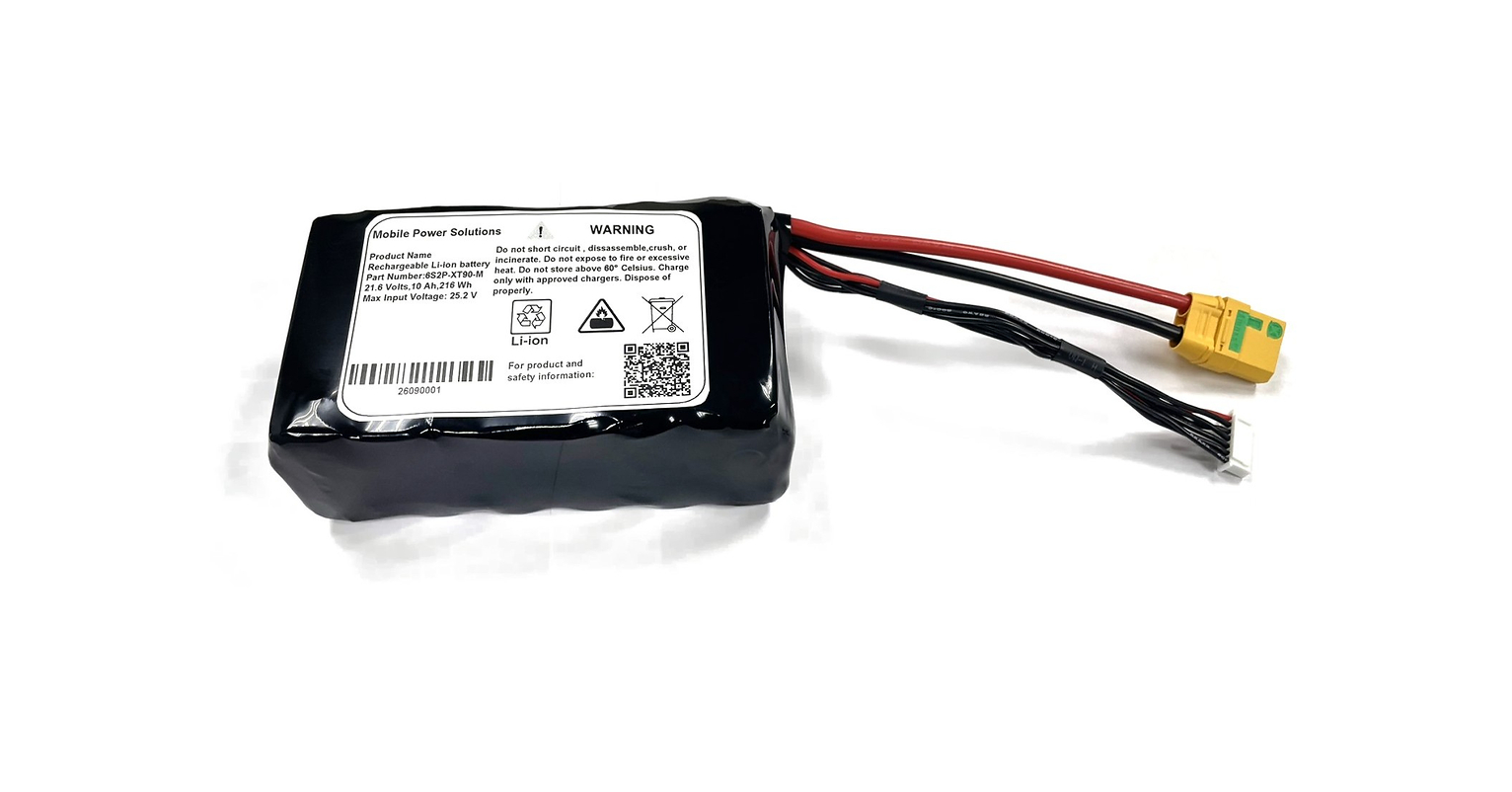
Mobile Power Solutions launched the MPS Series of off-the-shelf lithium-ion batteries and a new e-commerce portal, expanding its existing custom-engineered battery portfolio. Initial models are offered in 21.6 V and 43.2 V configurations and are manufactured in Beaverton, Oregon, with UN 38.3 transportation-regulation compliance; the facility is ITAR-registered, and the batteries are designed to support applicable NDAA requirements.
Analysis
The strategic upside is reduced friction at the first step of an OEM battery design-in, not evidence of near-term revenue acceleration. Standardized configurations and online purchasing may capture smaller or time-sensitive programs that cannot justify custom engineering; over time, that could also create a funnel into higher-value custom design and testing work. The counterweight is potential cannibalization of custom offerings and more price comparison once products are catalogued. The net effect depends on whether standard units win new accounts rather than displace bespoke work.
Defense and other regulated end markets offer a credible differentiation angle, but ITAR registration, transport compliance, and a claim that products are designed to support NDAA requirements do not establish procurement approval, platform qualification, or contract wins. OEM validation and program selection can take months or longer. Domestic manufacture may help buyers seeking supply-chain control, but cell origin and sourcing concentration are undisclosed; domestic assembly alone does not remove upstream exposure.
Near term, this is a low-information launch by a privately held company, with no disclosed orders, capacity, pricing, or revenue contribution. There is no clear public-equity catalyst. Over 1–3 months, watch for named OEM design-ins, repeat orders, product availability, and evidence that e-commerce converts into meaningful volume. Over 6–18 months, the key question is whether catalog sales expand the custom-services pipeline or pressure its economics. The announcement’s commercial thesis weakens if availability slips, buyers require materially different configurations, or standard sales merely substitute for custom programs.
AllMind Terminal
AI-powered research, real-time alerts, and portfolio analytics for institutional investors.
Request TrialMarket Sentiment
Overall Sentiment
mildly positive
Sentiment Score
0.25
Key Decisions for Investors
- No direct trade: the company is not publicly listed in the supplied identity data, and the release provides no order, pricing, capacity, or financial figures to support a public-equity read-through.
- Treat publicly traded battery and defense-equipment names as watch-list exposure, not beneficiaries: do not infer share gains for any competitor or supplier without evidence of customer wins, cell sourcing, or displacement.
- Set a 1–3 month alert for named OEM programs, repeat purchases, product lead times, and pricing. These are more informative than portal traffic or the launch announcement itself.
- For a 6–18 month thesis, verify whether catalog sales generate incremental custom-engineering and testing work, versus cannibalizing it; also verify cell origin, qualification status, and actual eligibility for relevant defense procurements.
More News
- Oman evacuates injured crew from attacked tanker in Strait of Hormuz
- Oil rises as concerns over Houthi attacks on Saudi Arabia eclipse supply recovery
- Singapore's Temasek warns of the ‘biggest risk’ facing markets right now
- Rebounding oil exports through Strait of Hormuz are vulnerable to stepped-up Iranian tanker attacks
- A 32% beat, a +6% jump: the IT solutions name our models picked in July
- What Marvell's rosy long-term guidance means for our AI chip stocks