
Advances in Digital Therapeutics and HoneyNaps AI Enhance Clinical Trial Efficiency
Source: PR Newswire
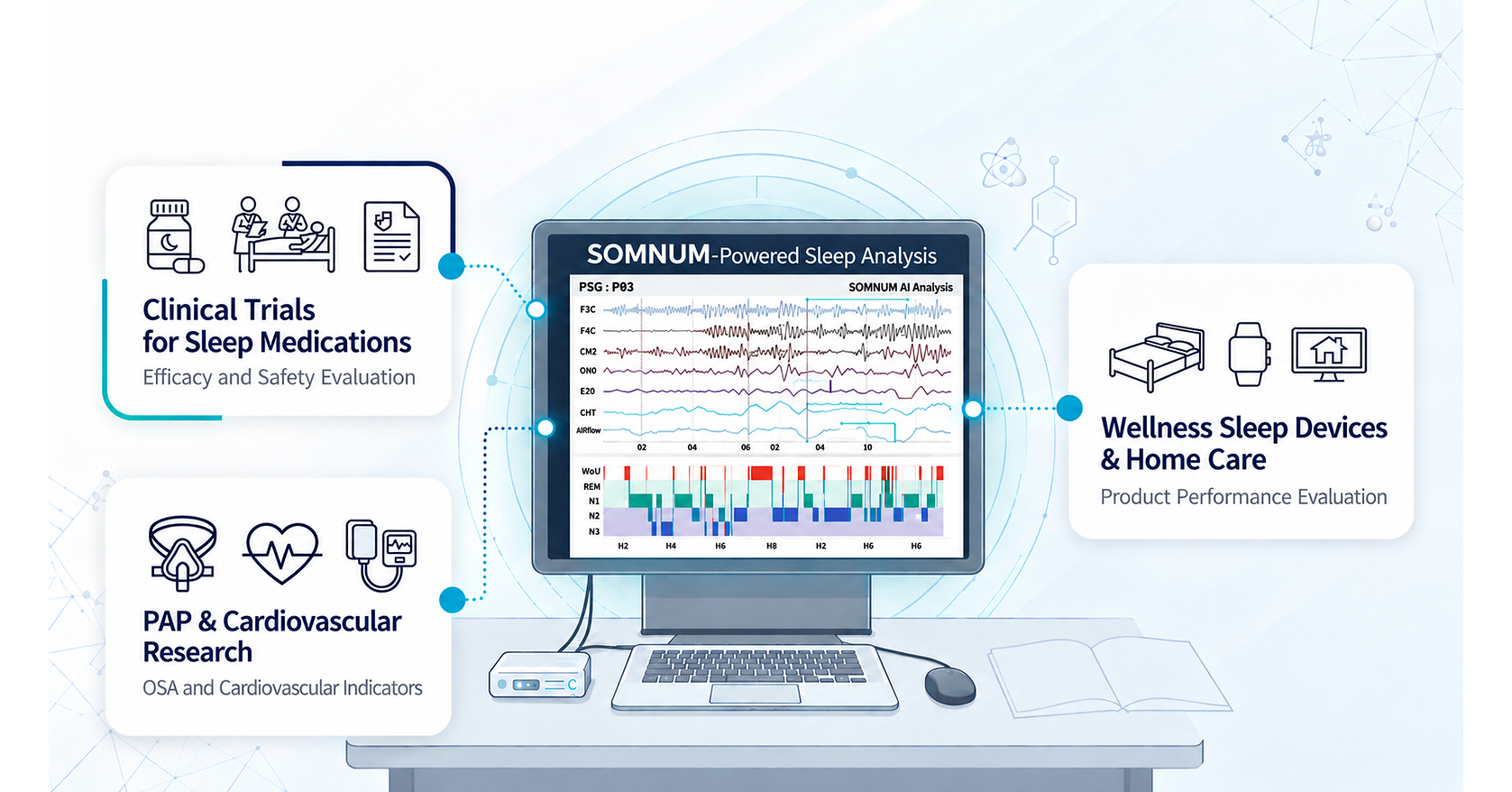
HoneyNaps is expanding its AI-based SOMNUM sleep-scoring platform into clinical analysis services for pharmaceutical, wellness and medical-device customers, supported by CRO registration with Korea's KoNECT. The company cites experience in clinical trials involving more than 10,000 participants and growing demand for standardized analysis of sleep stages, respiratory events and arousals. The expansion broadens HoneyNaps' potential revenue base and could support future digital-biomarker development, though no financial targets or customer contracts were disclosed.
Analysis
This is not yet a public-markets catalyst: the company is private, provides no contract values, backlog, validation-study performance, or evidence that its outputs are accepted as registrational endpoints. The near-term implication is therefore limited to a watch signal that sleep-centric trials and home diagnostics may be increasing outsourced data-standardization spend, rather than a basis to re-rate any listed CRO or device company.
The more investable second-order effect is pressure on labor-intensive central reading and sleep-lab workflows. If AI scoring achieves reproducibility across sites and regulators accept it in pivotal studies, specialty CROs with manual adjudication exposure could face pricing pressure over 6-18 months, while scaled CROs such as IQV, ICLR and MEDP could benefit only if they integrate comparable tools rather than lose protocol-level services to specialists. ResMed (RMD) and Inspire Medical (INSP) are potential downstream beneficiaries if standardized longitudinal sleep metrics lower evidence-generation costs and broaden reimbursement support, but neither has disclosed a material relationship or direct financial benefit.
Consensus should resist treating "AI" and CRO registration as proof of commercialization. The gating events are external validation versus human scoring, FDA/EMA acceptance of AI-derived endpoints, data-privacy interoperability, and disclosed repeat pharma contracts. A negative validation result, a regulatory requirement for manual over-read, or absence of disclosed revenue traction would keep this confined to a niche service rather than a scalable software-margin opportunity.
AllMind Terminal
AI-powered research, real-time alerts, and portfolio analytics for institutional investors.
Request TrialMarket Sentiment
Overall Sentiment
mildly positive
Sentiment Score
0.32
Key Decisions for Investors
- No directional position on this release; maintain a 1-3 month alert for disclosed partnerships, contract economics, or peer-reviewed concordance data rather than extrapolating from promotional language.
- Monitor IQV, ICLR and MEDP for commentary on central-lab automation, sleep-study volumes, and service-pricing trends during the next earnings cycle. Consider only a relative short against a better-positioned AI-enabled CRO if management identifies measurable margin pressure or lost specialty-study work.
- Keep RMD and INSP on a 6-18 month evidence-enablement watchlist. A long thesis requires independently verified evidence that lower-cost standardized sleep endpoints improve payer coverage, prescription conversion, or trial throughput; absent that, device demand remains driven by diagnosis, reimbursement and adherence trends.
- For a broader digital-health signal, track FDA guidance or clearances involving AI sleep scoring and digital biomarkers. Regulatory recognition would be the catalyst that converts a private-vendor claim into a potential multiple-expansion theme for sleep-diagnostics and remote-monitoring suppliers.
More News
- Trump launches midterms campaign blitz amid record low approval ratings
- Nvidia Faces Questions Over China AI Chip Smuggling Cases
- Fed’s Cook sees AI buildup as top inflation risk for 2027
- The September jobs report will be released Friday. Here's what to expect
- U.S. stock futures drift higher with nonfarm payrolls in focus
- Broadcom to lend Anthropic up to $42 billion to lease its chips, filing says