
Canada and the EU Want a More Serious Relationship
Source: Bloomberg
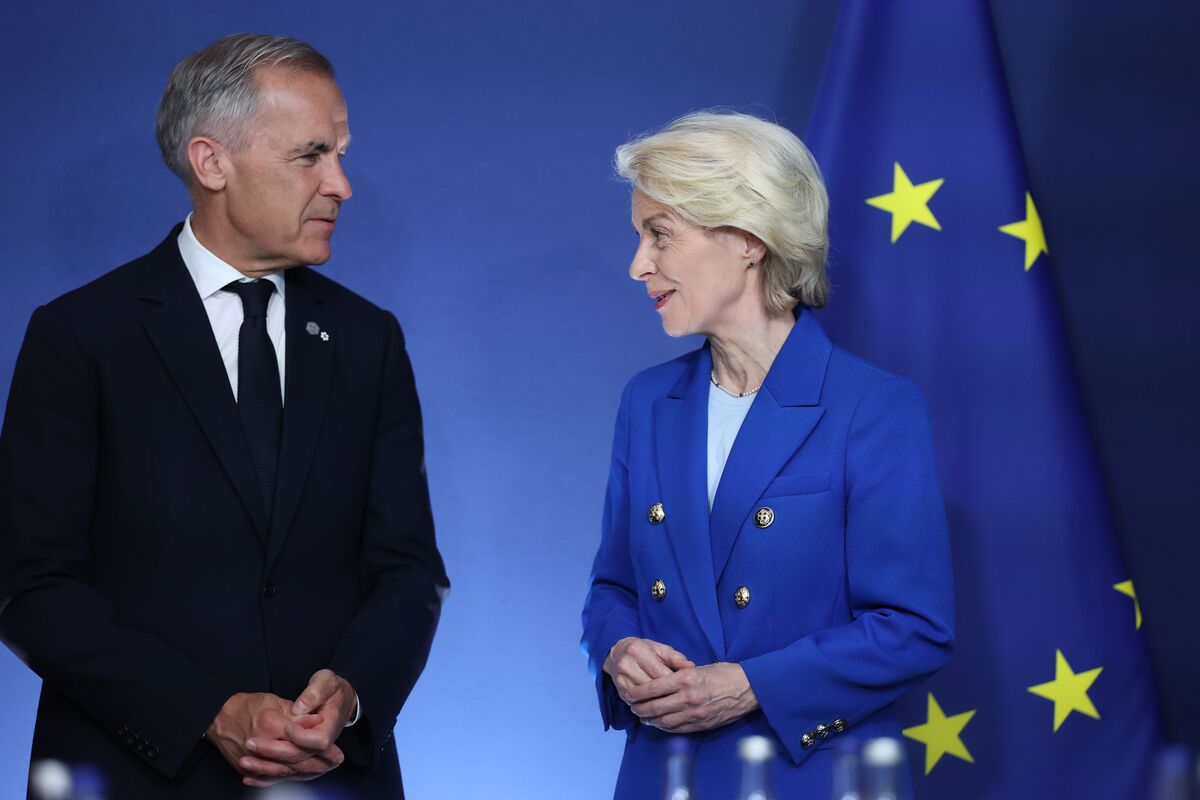
The EU and Canada are working toward a broad new partnership spanning trade and security, potentially creating a closer EU-Canada relationship than the EU's relationship with the UK. The proposed transatlantic alliance is intended to strengthen both parties' strategic position relative to major powers including the US and China, with potential implications for trade alignment and geopolitical cooperation.
Analysis
The investable implication is less bilateral trade volume than regulatory and procurement alignment. A deeper EU-Canada framework could lower qualification friction for Canadian critical-mineral, aerospace, defense and clean-power suppliers into Europe, where supply-chain localization mandates are becoming a larger determinant of contract awards than spot-price competitiveness. The immediate market impact should be limited absent funded procurement, tariff schedules, or mutual-recognition agreements; this is a 6-18 month policy optionality theme rather than a days-to-weeks catalyst.
The most asymmetric channel is critical minerals: Canadian nickel, cobalt, graphite, uranium and rare-earth projects gain strategic value if EU buyers can count their output toward de-risking targets. That would incrementally improve long-dated offtake visibility and financing access, benefiting developers more than diversified incumbents; conversely, European processors still reliant on Chinese intermediate materials remain exposed unless the agreement includes processing-capacity support. A meaningful EU procurement preference could also modestly tighten North American supply available to US battery and defense manufacturers, raising input-cost risk for downstream OEMs.
Consensus may overstate the ability of political declarations to redirect physical supply chains. Canadian mine development, permitting, indigenous consultation and transport bottlenecks make new supply a multi-year proposition, while EU industrial policy frequently favors in-region processing over imported raw materials. The thesis is falsified if no specific critical-minerals, defense-procurement, or conformity-assessment provisions emerge within 3-6 months, or if European buyers continue signing China-linked offtakes despite the diplomatic initiative.
AllMind Terminal
AI-powered research, real-time alerts, and portfolio analytics for institutional investors.
Request TrialMarket Sentiment
Overall Sentiment
mildly positive
Sentiment Score
0.25
Key Decisions for Investors
- No broad directional trade on the announcement; establish a 3-6 month policy watch for a formal agreement containing procurement eligibility, critical-mineral offtakes, or standards recognition before committing capital.
- On confirmation of EU-backed Canadian uranium or critical-mineral offtakes, favor Cameco (CCJ) over broad Canadian materials exposure: contracted Western-origin supply would support multiple expansion and long-duration pricing; exit if contract announcements fail to materialize by the next EU-Canada summit cycle.
- Monitor a relative-value setup of long CCJ / short Global X Uranium ETF (URA) after verified EU procurement commitments. CCJ has more direct Western utility-contract exposure, while URA retains meaningful exposure to higher-beta, geopolitically diverse miners; target 10-15% relative outperformance over 6-12 months, with a stop on uranium price weakness below the prior 90-day support level.
- For defense, wait for funded joint procurement rather than buying the theme preemptively. If Canadian participation in European defense programs becomes explicit, assess long CAE (CAE) versus short iShares U.S. Aerospace & Defense ETF (ITA): training and interoperability spending could be a more direct beneficiary than prime contractors, but only with disclosed order-book evidence.
More News
- Saudi Arabia intercepts missiles and drones as fighting with Houthis rages
- France’s latest debt warning describes a country where governance is breaking down — and even doing too little, too late is barely possible
- Israelis hold final rally against Netanyahu ahead of what may be the most consequential election in the country’s history
- Brookfield to open Qatar office as it expands Middle East operations
- First Russian diesel tanker heads to New York after Trump's deal with Putin to lower fuel prices
- Saudi Arabia intercepts drones and missiles as fighting with Yemen’s Houthis continues