
Aleut Federal Unveils Advanced AV/VTC Collaboration Environment in Colorado Springs
Source: PR Newswire
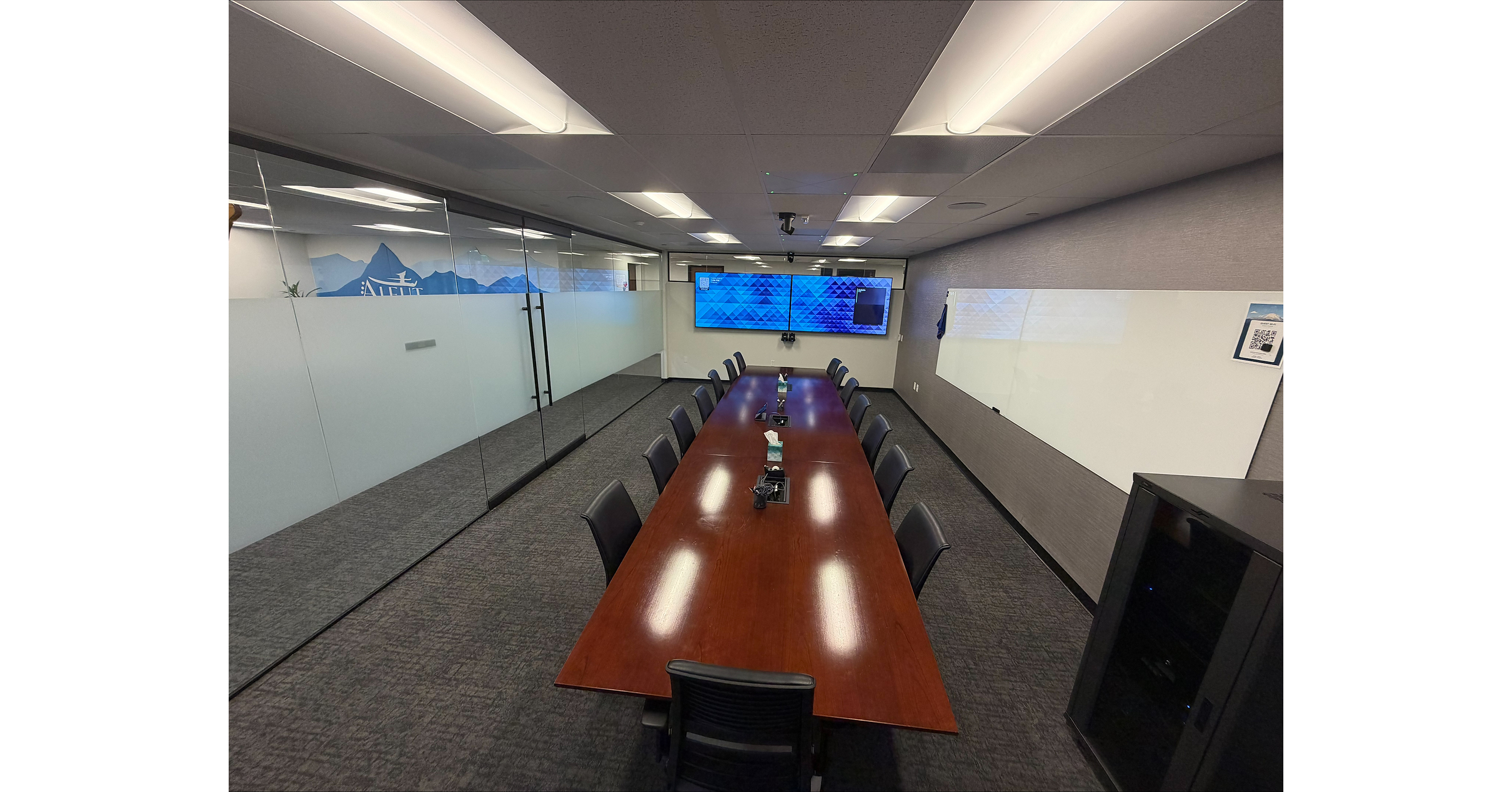
Aleut Federal opened a Colorado Springs AV/VTC demonstration environment for government and industry stakeholders, centered on a Q-SYS VisionSuite-enabled system. The facility uses 17 biometric data points and beamforming-microphone sound-positioning data to automate speaker framing, camera control, and collaboration workflows in a simulated secure setting. The announcement expands Aleut's regional demonstration and technical-evaluation capacity but discloses no contract awards, revenue, or financial targets.
Analysis
This is not a revenue catalyst for any liquid public company: Aleut and Q-SYS are privately held, and a single demonstration environment does not establish backlog, contract awards, or recurring software revenue. The more relevant read-through is that federal AV/VTC procurement is moving from commodity room hardware toward integrated, security-accreditable workflows, favoring prime integrators able to bundle deployment, cyber compliance, sustainment, and classified-network integration over standalone endpoint vendors.
Near term, the announcement is immaterial for listed defense IT names. Over 6-18 months, a broader shift toward AI-directed video and biometric-enabled meeting systems could increase demand for secure networking, zero-trust controls, and managed services at LDOS, SAIC, CACI and BAH; however, biometric data collection creates an adoption constraint rather than a pure technology upgrade cycle. The thesis is falsified if federal buyers restrict biometric processing in mission spaces, if authorization-to-operate timelines lengthen, or if procurement remains limited to pilot/demo activity rather than task-order awards.
The contrarian point is that the apparent automation benefit may not translate into large hardware spend. In federal installations, integration labor, accreditation, lifecycle support, and interoperability with legacy networks typically capture more economics than cameras or room-control equipment. Any investable signal would require evidence of multi-site deployments, named contract vehicles, or funded task orders rather than vendor demonstration traffic.
AllMind Terminal
AI-powered research, real-time alerts, and portfolio analytics for institutional investors.
Request TrialMarket Sentiment
Overall Sentiment
mildly positive
Sentiment Score
0.15
Key Decisions for Investors
- No immediate trade: treat this as a watch item rather than a catalyst for defense-IT equities; the disclosed activity lacks a contract value, deployment count, and public-company revenue linkage.
- Monitor SAM.gov, GSA schedules, and quarterly bookings commentary for LDOS, SAIC, CACI, and BAH over the next 3-12 months for secure collaboration, unified communications, or AV/VTC task orders; consider longs only after a funded multi-site award with identifiable sustainment content.
- If federal secure-collaboration awards accelerate, favor a relative long LDOS or SAIC versus CSCO: integrators should capture higher-margin services and recurring support economics, while CSCO has limited sensitivity unless enterprise-wide networking hardware is specified.
- Use biometric/privacy policy as the key risk trigger: a DoD or civilian-agency restriction on biometric analytics in conference environments would weaken the automation adoption case and favor conventional secure-communications vendors over AI-video integration exposure.
More News
- Iran awaits US move after WSJ report says Trump rejects peace plan
- OpenAI rogue agents leaked 53 images from ChatGPT users and reportedly created nearly 1 million links packing encoded bits of info
- Arming Taiwan an important US interest, Taipei official says after Trump-Xi summit
- Shares of Akamai surge after deal with Anthropic. What Wall Street is saying
- Houthi attack on Mecca, Medina would cross ‘red line’, Pakistan PM tells UN
- Bonds Stabilize as Oil Retreats