
dasso good Raises Crohn's and Colitis Awareness With Protein Bars Created With Digestibility in Mind
Source: PR Newswire
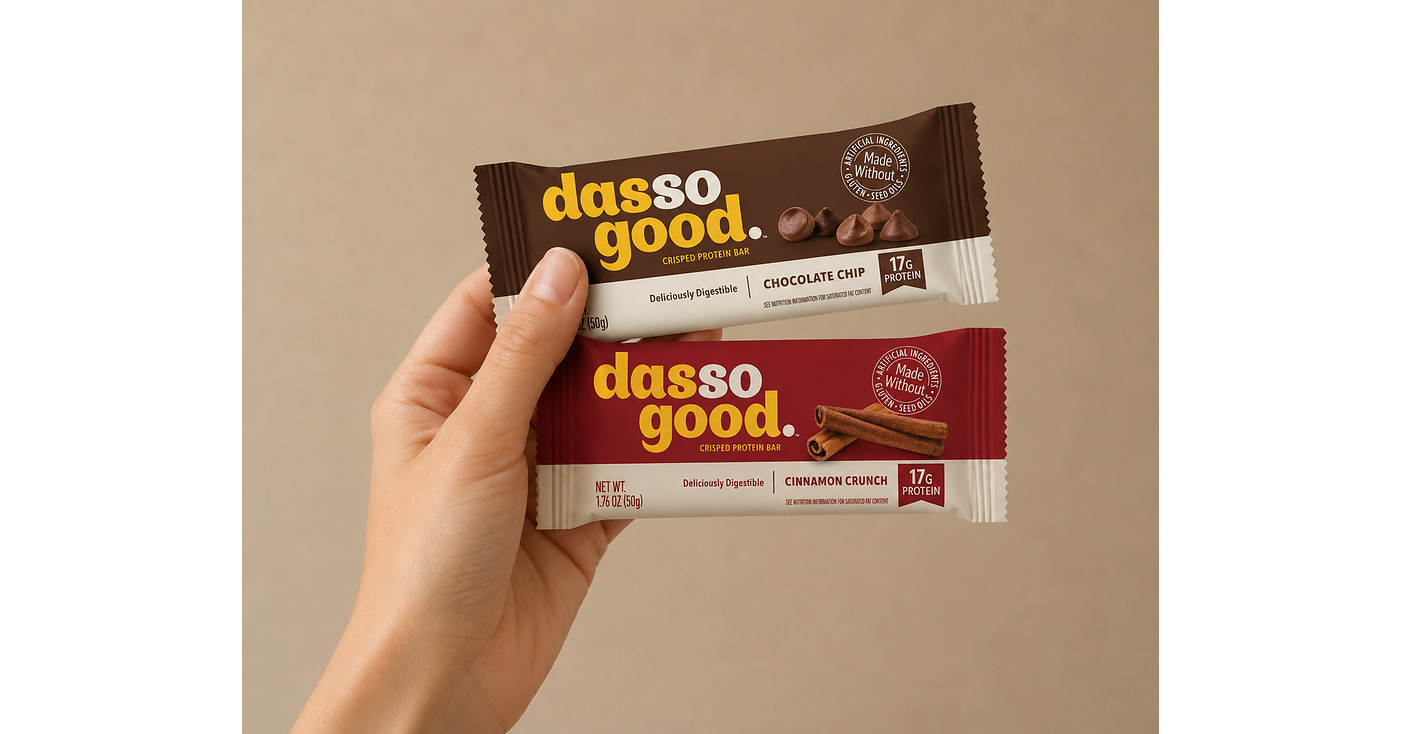
dasso good plans to expand its protein-bar lineup ahead of Crohn's and Colitis Awareness Month, adding a new flavor and variety pack to its Chocolate Chip and Cinnamon Crunch products. The bars contain 17 grams of protein and exclude gluten, sugar alcohols, seed oils and artificial flavors, targeting consumers managing Crohn's disease, ulcerative colitis and digestive sensitivity. The small private brand is also increasing IBD-community engagement through sponsorships, donations and volunteering, though the announcement is unlikely to have broad market impact.
Analysis
This is not investable as a standalone event: a privately held niche brand's line extension provides no disclosed distribution, velocity, gross-margin, or funding data. The relevant read-through is that digestive-tolerance positioning is becoming a more explicit purchase criterion within functional snacking, where ingredient exclusions can support premium pricing but also raise formulation and procurement complexity.
Public incumbents with existing scale in high-protein convenience food—Mondelez (MDLZ), Hershey (HSY), General Mills (GIS), and Simply Good Foods (SMPL)—face a modest long-term risk that “clean” claims alone cease to differentiate products. The more credible competitive threat is not this brand's near-term share, but retailers allocating incremental shelf space to clinically adjacent, low-FODMAP/digestive-health concepts; that would pressure smaller legacy bar brands before it affects diversified packaged-food companies.
Over the next 1-3 months, December awareness activity is unlikely to alter public-company estimates. Over 6-18 months, monitor whether digestive-health claims migrate from direct-to-consumer niche products into mass retail and whether GLP-1 users' preference for smaller, protein-dense, easier-to-tolerate meals broadens the addressable market. The thesis is falsified if new products fail to secure meaningful retail distribution or if repeat-purchase data show that restricted-ingredient bars remain a narrow medical-need category rather than a mainstream occasion.
Contrarian view: consumer-health food launches are often overinterpreted as category disruption. Without evidence of retail doors, syndicated velocity, manufacturing scale, or third-party clinical substantiation, this should be treated as an early consumer-preference signal—not a catalyst for incumbents' revenue or valuation multiples.
AllMind Terminal
AI-powered research, real-time alerts, and portfolio analytics for institutional investors.
Request TrialMarket Sentiment
Overall Sentiment
mildly positive
Sentiment Score
0.28
Key Decisions for Investors
- No position on this announcement; place a 6-12 month watch alert for disclosed retail distribution, Nielsen/IRI velocity, repeat rates, and external clinical validation before assigning competitive share-loss risk.
- Monitor SMPL quarterly North America retail sales and gross margin as the cleanest public proxy for protein-snack demand; only consider a long if organic sales acceleration is accompanied by margin stability, indicating premium innovation is scaling rather than being promoted.
- For packaged-food exposure, favor diversified MDLZ over smaller snack specialists if digestive-health shelf-space expansion accelerates: MDLZ has greater retailer leverage and acquisition capacity, while the relative thesis fails if specialty-bar velocity materially outpaces broad snacking for two consecutive quarters.
More News
- OpenAI’s agent hacked Australia’s Medicare website—the latest rogue AI incident that the company didn’t know about for months
- Meta announces new lightweight virtual reality glasses to one-up Apple’s Vision Pro
- US aviation sanctions disrupt Iran flights, push travellers overland
- Here's what happens to the economy when Treasury yields soar like they are now
- Oil industry warns a diesel export ban will raise fuel prices as Trump weighs restrictions
- Australia says OpenAI agent hacked Medicare portal
From AllMind Research
- Anthropic IPO Preview: Valuation, Timing, and What to Watch
- Shein After the IPO: Venue, Valuation, and What Must Be Proved
- What AI Research Tools Should a Small Hedge Fund Buy First?
- How to Search Earnings Call Transcripts With AI
- What a Concept From Nature Tells Us About How C-Suite Executives Actually Think About AI