
Elveo Mobile Announces Partnership with Apex to Establish and Scale Spacecraft Platform Production for Global D2D Network
Source: PR Newswire
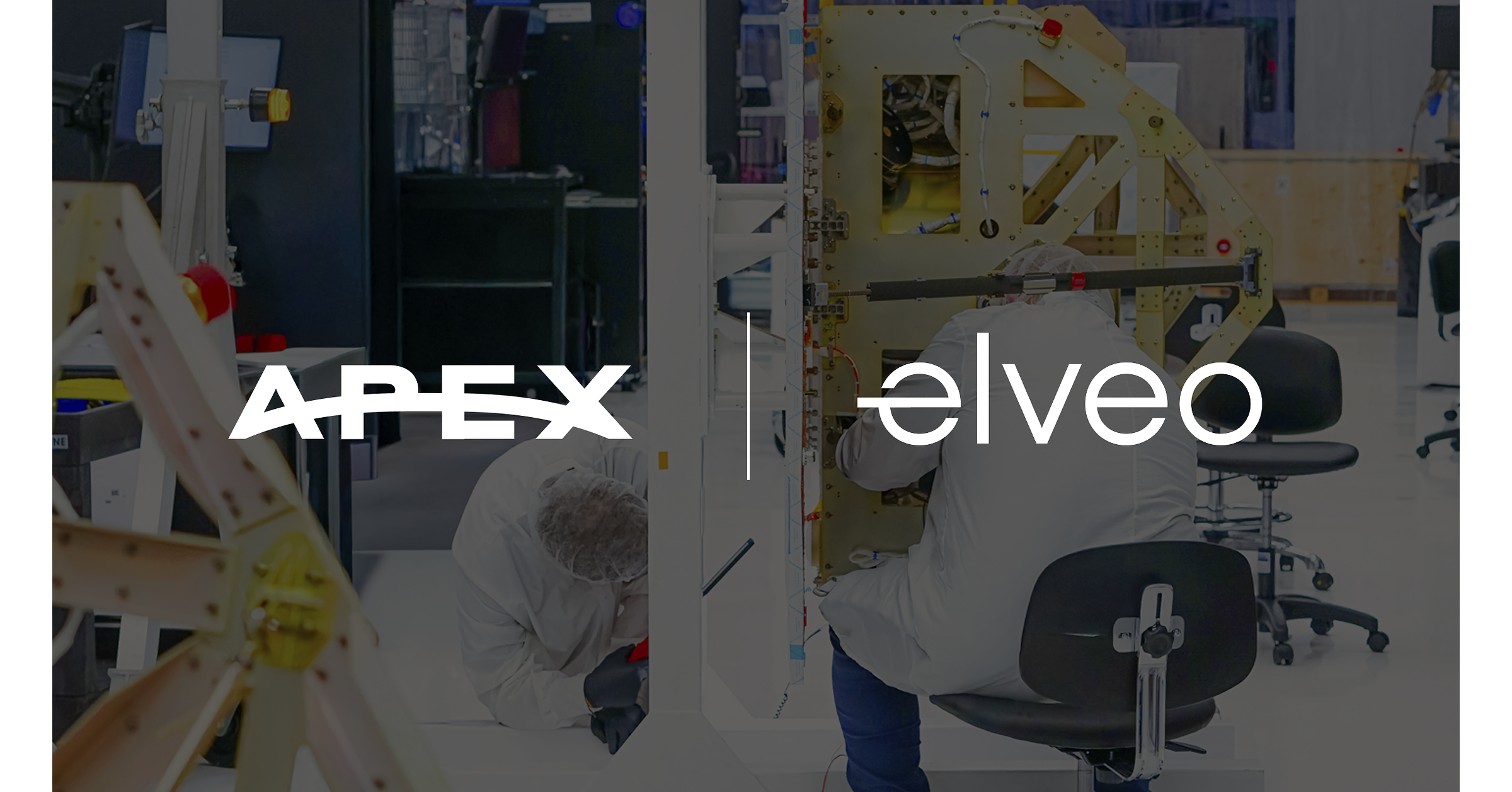
Elveo Mobile and Apex will establish a dedicated U.S. spacecraft factory to accelerate production of Elveo's direct-to-device low-Earth-orbit satellite constellation. Apex will provide its Factory X manufacturing model, standardized spacecraft platforms and high-rate production expertise, while Elveo plans to replicate the production blueprint with partners in Europe and Asia. Apex is ramping serial production toward 200 satellite buses annually in Los Angeles, potentially shortening Elveo's deployment timeline versus traditional satellite-bus suppliers.
Analysis
This is strategically more relevant as evidence that standardized satellite-bus manufacturing is becoming a competitive requirement for direct-to-device networks, rather than as a near-term revenue event for public markets. The bottleneck for D2D operators is increasingly shifting from bus availability to spectrum rights, mobile-network-operator distribution agreements, launch cadence, and the capital required to fund a full constellation; a factory announcement does not de-risk those items. Without disclosed unit volumes, contracted backlog, funding commitments, or launch dates, claims of a materially faster deployment schedule are not independently verifiable.
For listed peers, greater availability of high-rate bus production is incrementally negative at the margin for vertically integrated spacecraft suppliers such as Rocket Lab (RKLB), because it lowers a customer's switching cost versus proprietary bus architectures. Conversely, it validates the proliferation thesis supporting component suppliers and launch providers, but only if announced capacity converts into funded orders; in the current financing environment, manufacturing capacity can become underutilized well before constellation economics are proven. AST SpaceMobile (ASTS), Globalstar (GSAT), and Iridium (IRDM) should not be read through directly: their valuation drivers remain spectrum, service economics, and carrier/customer monetization rather than third-party factory announcements.
Over the next 1-3 months, the likely market effect is limited because both counterparties are private and no contract value or public supplier exposure is disclosed. Over 6-18 months, a credible production ramp could pressure spacecraft-bus pricing and strengthen the bargaining power of constellation operators against incumbents. The thesis is falsified if subsequent disclosures show low annual production commitments, reliance on nonbinding MOUs, delayed spectrum/launch approvals, or a funding gap between factory build-out and fleet deployment.
AllMind Terminal
AI-powered research, real-time alerts, and portfolio analytics for institutional investors.
Request TrialMarket Sentiment
Overall Sentiment
strongly positive
Sentiment Score
0.55
Key Decisions for Investors
- No standalone trade: treat this as a competitive-intelligence datapoint, not a catalyst, because neither party is publicly listed and the release lacks volume, contract-value, launch, and financing disclosures.
- Place RKLB on a relative-value watch versus ASTS: consider a tactical short RKLB / long ASTS pair only if Apex discloses meaningful third-party bus capacity or wins additional D2D programs, since that would more directly challenge bus-supplier pricing than ASTS's spectrum-and-carrier-led model. Reassess if RKLB reports accelerating Space Systems backlog or sustained gross-margin expansion.
- Maintain a diligence alert for public D2D names ASTS, GSAT, and IRDM: upgrade the sector signal only upon evidence of binding MNO commitments, licensed spectrum access, financed satellite orders, and launch manifests. A factory ramp without these milestones should be discounted as pre-revenue capacity creation.
- For defense/space exposure, prefer diversified contractors over speculative constellation read-through until funded procurement emerges; use the next two earnings cycles to monitor whether RKLB's bus backlog, unit pricing, or gross margin reflects new competitive pressure.
More News
- What investors need to know about Alphabet's stock-busting earnings report
- Budget 2026 speech
- The UK cuts energy bills, taxes banks and boosts defense in high-stakes budget
- Microsoft's Big Bets on AI Start to Pay Off
- Google's Gemini 4 Carbon looks like a diamond in the rough
- Microsoft’s strong quarter backs up its stock rebound. Here's our new price target