
DLTR Falls 17.9% in the Past Month as Margin Risks Test Its Rebound
Source: zacks.com
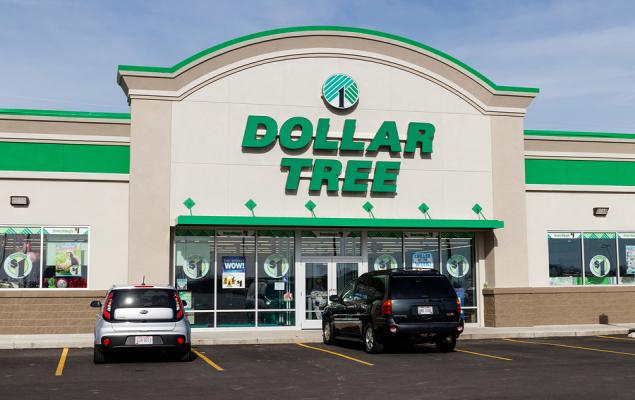
Dollar Tree's fiscal Q2 2026 sales rose 7% to $4.89 billion and comparable sales increased 3.7%, supported by a 3.3% increase in average ticket and 0.4% traffic growth. Gross margin expanded 850bps to 42.9%, although 680bps came from tariff refunds; the company received $383 million in refunds and plans to reinvest about $210 million. Dollar Tree raised FY2026 adjusted EPS guidance to $7.70-$8.05, including a $0.60 net tariff-refund benefit, while maintaining sales guidance of $20.5-$20.7 billion; sustained margins remain at risk from reinvestment, inflation, fuel and consumables mix.
Analysis
DLTR's near-term earnings setup is less clean than the headline guidance raise implies: a meaningful portion of the uplift is non-recurring, while management is deliberately converting part of the windfall into operating expense and price investment. The key underwriting variable for the next 1-3 months is whether incremental traffic persists after price investment moderates; ticket-led comp growth with only modest traffic improvement does not yet prove durable share capture. A weaker-than-expected Q3 gross-margin bridge or any reduction in the implied ex-refund earnings trajectory would likely prevent multiple re-rating despite the apparent valuation discount.
The multi-price rollout is strategically constructive over 6-18 months because it expands assortment, raises basket capacity, and may improve fixed-cost absorption. But it also erodes the simplicity of the legacy price-value proposition and moves DLTR closer to DG's everyday-consumables model, where consumables mix structurally caps merchandise margin and logistics intensity is higher. DG is the more direct read-through loser if DLTR's price investments generate sustained traffic gains in overlapping small-box trade areas; ROST is comparatively insulated, with its demand driven by branded discretionary value rather than consumable basket economics.
Consensus may be treating the selloff as a straightforward value entry, but the more relevant question is whether normalized EBIT margin can recover after temporary benefits disappear. The bullish case requires multi-price mix to lift gross profit dollars faster than reinvestment, shrink, freight and liability costs; the bear case is that sales gains are bought through pricing and marketing, producing a lower-quality revenue base. Falsification for caution: sequential traffic acceleration and stable gross margin excluding unusual items in the next earnings release; conversely, a renewed traffic decline or SG&A deleverage would support downside revisions.
AllMind Terminal
AI-powered research, real-time alerts, and portfolio analytics for institutional investors.
Request TrialMarket Sentiment
Overall Sentiment
mixed
Sentiment Score
0.08
Ticker Sentiment
Key Decisions for Investors
- Maintain a neutral-to-underweight DLTR stance into the next earnings print; do not underwrite the raised annual EPS midpoint without a disclosed normalized margin bridge. Reassess long exposure only if traffic improves sequentially and management demonstrates stable ex-unusual gross margin.
- Establish a 3-6 month relative-value watch: long DLTR / short DG only after evidence that DLTR's pricing investments are taking share in consumables. Target a 10-15% relative move; exit if DG comp trends accelerate or DLTR traffic fails to improve.
- For existing DLTR longs, use a defined-risk collar through the next report rather than adding common equity: the event risk is asymmetric because a margin-guide reset could compress the valuation discount further, while a beat depends on execution evidence not yet independently verified.
- Keep ROST as the cleaner value-retail exposure if the objective is consumer trade-down participation without DLTR's tariff-normalization and consumables-margin risk; validate with off-price inventory availability and discretionary comp trends over the next 1-3 months.
More News
- Dollar holds near 2-month high as markets weigh rate hikes, Iran diplomacy
- South Korean solar stocks jump as curbs on Chinese sector expected to remain in place
- Trump Says US Team Met With Iranians at UNGA
- Paramount will need to release way more movies to make this merger work
- Sullivan: Wall Street admits it doesn't know where oil is headed. There's one stock they do agree on
- How Kevin Warsh’s rate hike exposed a 2-speed U.S. economy, with AI and housing at the poles