
Dow futures plunge 250 points: 5 things to know before Wall Street opens
Source: invezz.com
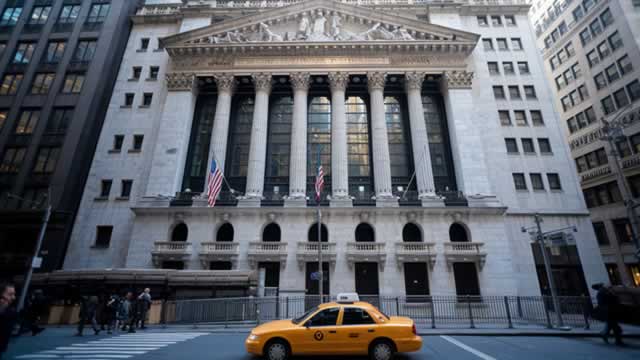
US equity futures declined as oil prices surged, the 10-year Treasury yield reached 5%, and investors questioned the durability of the AI-led market trade. Dow futures fell about 250 points (0.65%), while S&P 500 and Nasdaq 100 futures lost roughly 0.5% and 0.6%, respectively. The combination of higher energy costs and elevated yields signals a risk-off backdrop for equities, particularly growth and technology stocks.
Analysis
The relevant mechanism is a simultaneous discount-rate and input-cost shock: higher real yields compress long-duration equity multiples while energy inflation undermines the disinflation path needed for policy easing. The first-order vulnerability is concentrated in high-multiple AI infrastructure and software—SMH, QQQ, MSFT, NVDA, AVGO—where elevated capex expectations require both sustained earnings revisions and a benign cost of capital. A rise in energy prices also raises the odds that nominal yield pressure reflects inflation compensation rather than improving growth, a materially worse mix for equities.
Near term, the market is likely to de-risk crowded secular-growth exposure before it meaningfully revises earnings estimates. The more durable relative-value opportunity is energy cash-flow beneficiaries versus rate-sensitive growth: XLE and select low-debt E&Ps should retain better earnings support if crude remains firm, while utilities, REITs and leveraged small caps face a higher refinancing hurdle. Second-order pressure falls on airlines, chemicals and consumer discretionary, but only if fuel costs persist long enough to overwhelm hedges and force margin-guide cuts over the next 1-3 months.
Consensus may be too quick to treat this as a generic risk-off episode. If yields are driven by term premium and fiscal supply rather than stronger activity, banks do not automatically benefit: unrealized securities losses, deposit competition and weaker loan demand can offset modest NIM support. Conversely, a rapid retreat in oil or a softer inflation print would create a sharp short-covering rally in QQQ; the thesis is therefore conditional on rates remaining restrictive rather than merely touching a headline threshold.
Falsification is a sustained decline in oil alongside a lower 10-year yield without deteriorating credit spreads, which would restore the soft-landing/multiple-expansion setup. Escalating HY spreads, upward inflation-surprise revisions, or further long-end yield increases would instead validate a broader deleveraging phase over the next several weeks.
AllMind Terminal
AI-powered research, real-time alerts, and portfolio analytics for institutional investors.
Request TrialMarket Sentiment
Overall Sentiment
mildly negative
Sentiment Score
-0.38
Key Decisions for Investors
- Initiate a 1-3 month relative-value position: long XLE / short QQQ in equal volatility weights. The trade captures energy earnings support versus duration-sensitive multiple compression; reassess if the 10-year yield falls materially and oil weakens simultaneously.
- Reduce tactical exposure to high-beta AI semiconductors through SMH or SOXX rather than abandoning core single-name holdings. Use a 4-8 week hedge horizon; downside is a rapid yield reversal that reignites the AI multiple trade.
- Screen for short exposure in rate-sensitive, highly leveraged real estate and small-cap proxies—such as IYR and IWM—only if credit spreads begin widening. Absent spread confirmation, this is an alert rather than a recommendation because higher yields alone can reverse quickly.
- Maintain an earnings-risk watchlist on airlines and chemicals, including DAL, UAL, LUV, DOW and LYB. Add shorts only after fuel-cost persistence is corroborated by higher commodity curves or guidance commentary; existing hedges can delay the margin impact by a quarter.
- Use inflation and rates releases as catalyst gates: add to the XLE/QQQ relative trade after an upside inflation surprise or renewed long-end yield breakout; cut exposure if disinflation resumes and long yields retreat while HY spreads remain contained.
More News
- U.S. 10-yr Treasury yields cool below 5% as Fed rate decision approaches
- Latest Oil Market News and Analysis for Sept. 16
- BOJ expected to hike rates by 25 basis points to fresh three-decade high: CNBC survey
- Exclusive-SK Hynix in talks with Intel about deal to make memory chips in the US for the first time, sources say
- Saudi coalition says Houthi drone destroyed near Mecca
- Three Big Central Bank Decisions Loom: Evening Briefing Americas
From AllMind Research
- Anthropic IPO Preview: Valuation, Timing, and What to Watch
- Shein After the IPO: Venue, Valuation, and What Must Be Proved
- What AI Research Tools Should a Small Hedge Fund Buy First?
- AlphaSense vs Hebbia vs AllMind: Choose by Workflow
- AllMind Discusses Ontario's AI Economy with Minister Stephen Crawford and Supply Ontario CEO James Wallace