
Advanced Micro Devices Is Spending $8.2 Billion to Learn What AI Needs Next
Source: marketbeat.com
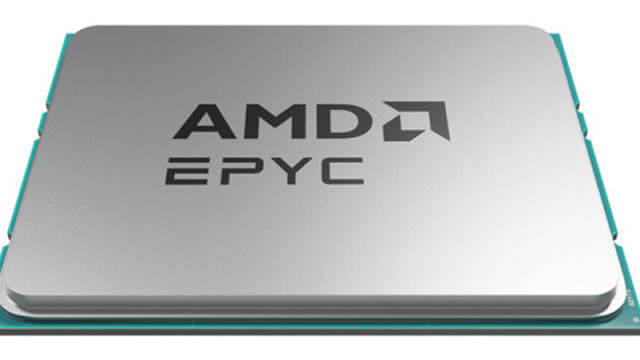
The article frames AMD as having long operated in the shadow of larger rival Nvidia, which is valued at roughly $1 trillion. AMD shares were up 0.96% intraday at $617.63, but the provided text contains no earnings, guidance, product, or strategic announcement that would materially alter the investment case.
Analysis
The input contains no incremental fundamental datapoint—no shipment, pricing, customer-win, margin, or regulatory development—and the displayed AMD valuation fields appear internally inconsistent. This is therefore not a tradeable catalyst by itself; treating a generic competitive-comparison narrative as evidence of an AMD rerating risks buying a high-expectations AI proxy without confirmation that accelerator revenue is converting into durable gross-margin and free-cash-flow gains.
The relevant competitive hinge over the next 1-3 quarters is not peak AI demand but whether AMD can reduce the effective cost of switching from NVIDIA’s ecosystem. AMD upside requires independently verifiable evidence of MI-series deployments expanding beyond limited hyperscaler pilots, improving software utilization, and gross-margin accretion; otherwise NVIDIA retains the higher-quality earnings stream and AMD’s valuation discount is justified. A second-order risk for both is that custom ASIC adoption at hyperscalers can cap merchant-GPU pricing power even if aggregate AI capex remains strong.
Contrarian framing: consensus may overstate the binary nature of GPU share gains. AI infrastructure budgets can support AMD revenue growth while NVIDIA remains the preferred high-end training platform, producing an outcome where AMD grows rapidly but still suffers multiple compression if its mix is lower-margin or its sales require aggressive pricing. The clean falsifier is a material upward revision to AMD data-center revenue and gross-margin guidance accompanied by disclosed broad-based customer deployments, rather than management commentary alone.
AllMind Terminal
AI-powered research, real-time alerts, and portfolio analytics for institutional investors.
Request TrialMarket Sentiment
Overall Sentiment
neutral
Sentiment Score
0.00
Ticker Sentiment
Key Decisions for Investors
- No new directional position on this item alone; require the next AMD earnings release to show data-center growth and consolidated gross-margin guidance above consensus before underwriting a long thesis.
- For AI exposure over the next 1-3 months, retain NVDA over AMD as the quality leg until AMD demonstrates software-enabled deployment breadth; reassess on customer disclosures, backlog conversion, and gross-margin trajectory.
- Watch for AMD/NVDA relative-performance dislocation after earnings: consider long AMD / short NVDA only if AMD delivers a clear data-center guidance beat plus margin expansion while NVDA’s forward revenue estimates stop rising. Without both conditions, the pair lacks a catalyst.
- Monitor hyperscaler capex commentary and custom-silicon disclosures from MSFT, GOOGL, AMZN, and META. A shift toward internally designed accelerators is a medium-term multiple risk for both merchant-GPU names and would favor reducing sector-beta exposure rather than rotating between AMD and NVDA.
More News
- Nvidia Faces Questions Over China AI Chip Smuggling Cases
- $8.2B acquisition validates AI-picked chip stock: +20% since June
- Broadcom to lend Anthropic up to $42 billion to lease its chips, filing says
- These charts show how volatile the last quarter was for stocks and bonds
- One of our most recent defensive buys cleared a hurdle and its stock jumped
- AI’s biggest players promise to police themselves at the White House