
CDTL präsentiert auf der IAA Transportation 2026 E-Drive- und EMB-Technologien für Nutzfahrzeuge
Source: PR Newswire
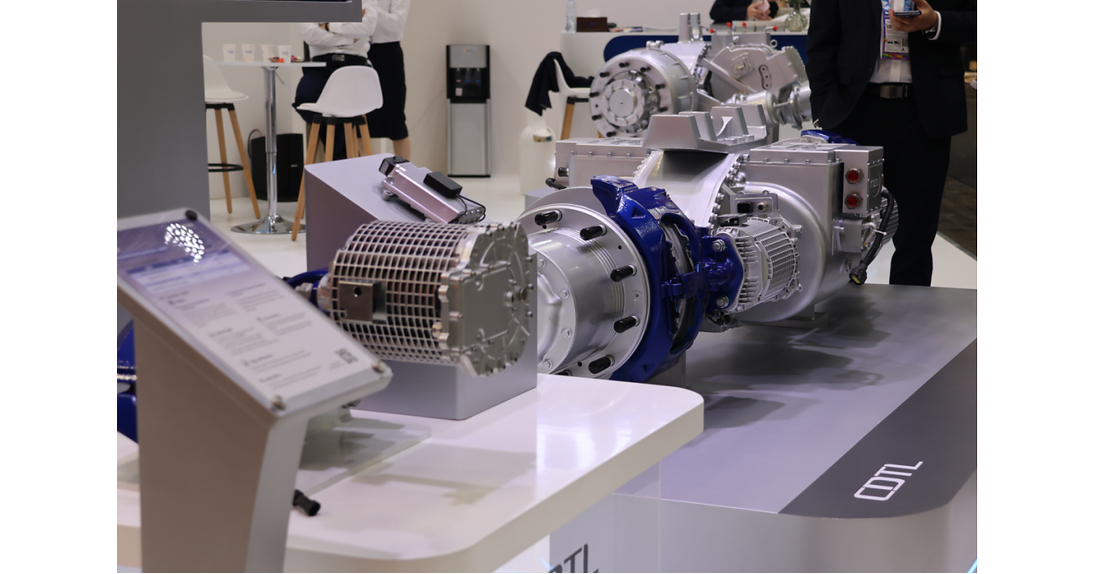
CDTL showcased commercial-vehicle electrification and brake-by-wire technologies at IAA Transportation 2026, led by its 800V EA5000NP e-axle platform with up to 660 kW nominal and 900 kW peak power, already deployed in more than 3,000 vehicles. Its EMB electromechanical braking system, now in small-series vehicles, can reduce vehicle weight by more than 100 kg, shorten braking distance by about 10%, and lower brake-system energy use by up to 85.4%. The company highlighted growing industry demand for efficient e-drives, centralized vehicle controls and autonomous-ready commercial-vehicle systems.
Analysis
This is not yet an investable company-specific catalyst: CDTL is not identified by a liquid listed ticker, and the release provides no customer awards, pricing, backlog, homologation status, or unit economics. The relevant read-through is that commercial-vehicle OEMs are moving from component electrification toward software-controlled chassis architectures, where the value pool shifts from mechanical assemblies to integrated power electronics, controls, validation, and functional-safety content. Listed incumbents with legacy pneumatic/mechanical brake exposure—notably Knorr-Bremse (KBX.DE)—face a longer-duration mix risk, although their installed base, certification expertise, and service networks remain formidable barriers to rapid displacement.
Over 6-18 months, the highest sensitivity should sit with OEMs whose battery-electric truck and bus programs need differentiated payload, turning radius, and autonomy-ready controls: Daimler Truck (DTG.DE), Volvo AB (VOLV-B.ST), and Traton (8TRA.DE). Yet adoption will be constrained less by demonstrated component performance than by OEM willingness to assume product-liability and redundancy-validation risk; brake/steer-by-wire penetration can lag technical showcases by several model cycles. The likely near-term beneficiaries are established system integrators and semiconductor/power-electronics suppliers such as Aptiv (APTV), BorgWarner (BWA), and Infineon (IFX.DE), provided they secure design wins rather than merely supplying a growing but fragmented prototype ecosystem.
Consensus may overstate the immediate disruption to incumbent brake suppliers. Commercial fleets monetize uptime, repairability, and residual value, so an unproven integrated architecture can increase fleet switching costs despite lower theoretical operating costs. A meaningful bearish inflection for KBX.DE requires independently disclosed production contracts at major European OEMs and evidence that electromechanical braking is displacing, rather than supplementing, incumbent braking content; absent that, this is a technology-validation watch item rather than a directional signal.
AllMind Terminal
AI-powered research, real-time alerts, and portfolio analytics for institutional investors.
Request TrialMarket Sentiment
Overall Sentiment
moderately positive
Sentiment Score
0.42
Key Decisions for Investors
- No immediate standalone trade: treat the announcement as an alert until CDTL discloses named OEM production awards, annualized unit volumes, and certification/homologation milestones. Trade only after those data establish whether the technology is revenue-generative rather than demonstrative.
- Maintain a 6-18 month watchlist on DTG.DE, VOLV-B.ST, and 8TRA.DE for electric-truck platform launches that specify integrated e-axle or by-wire architectures; favor the OEM with disclosed component cost reduction and unchanged gross-margin guidance. Falsifier: BEV order intake remains fleet-pilot scale or OEMs cite validation delays.
- Monitor KBX.DE relative to APTV over the next 2-3 earnings cycles as a structural-content spread, but do not initiate solely on this release. A long APTV/short KBX.DE pair becomes actionable only if a major truck OEM confirms electromechanical-brake production sourcing and KBX.DE fails to offset it with equivalent software/content wins; stop on incumbent contract retention or delayed regulatory approval.
- For diversified exposure, prefer BWA over pure mechanical-driveline suppliers only following confirmed heavy-duty e-axle design wins. The upside requires commercial-vehicle electrification volumes to convert from pilots into serial production; downside is OEM insourcing and slower charging-infrastructure deployment.
More News
- Italy to deploy warships to protect shipping through Bab al-Mandeb
- Oil prices fall for 3rd day as supply concerns ease, diplomacy in focus
- Saudi Pivots Oil Routes After Pipeline Attack
- This AI-picked stock jumps 18% on Amazon’s $8 billion power deal
- Asian stocks rise as oil retreat eases inflation fears, BOJ in focus
- How record diesel prices will rip through the U.S. economy. Trucks and rails are only the start
From AllMind Research
- Anthropic IPO Preview: Valuation, Timing, and What to Watch
- Shein After the IPO: Venue, Valuation, and What Must Be Proved
- What AI Research Tools Should a Small Hedge Fund Buy First?
- Weekly Update: Options, Earnings Call Transcripts, AI Chat, Bookmarks & More
- AI Tools for Family Offices: A Stack by Decision Type