
AutoFlight Completes World's First 5-eVTOL Formation Flight
Source: PR Newswire
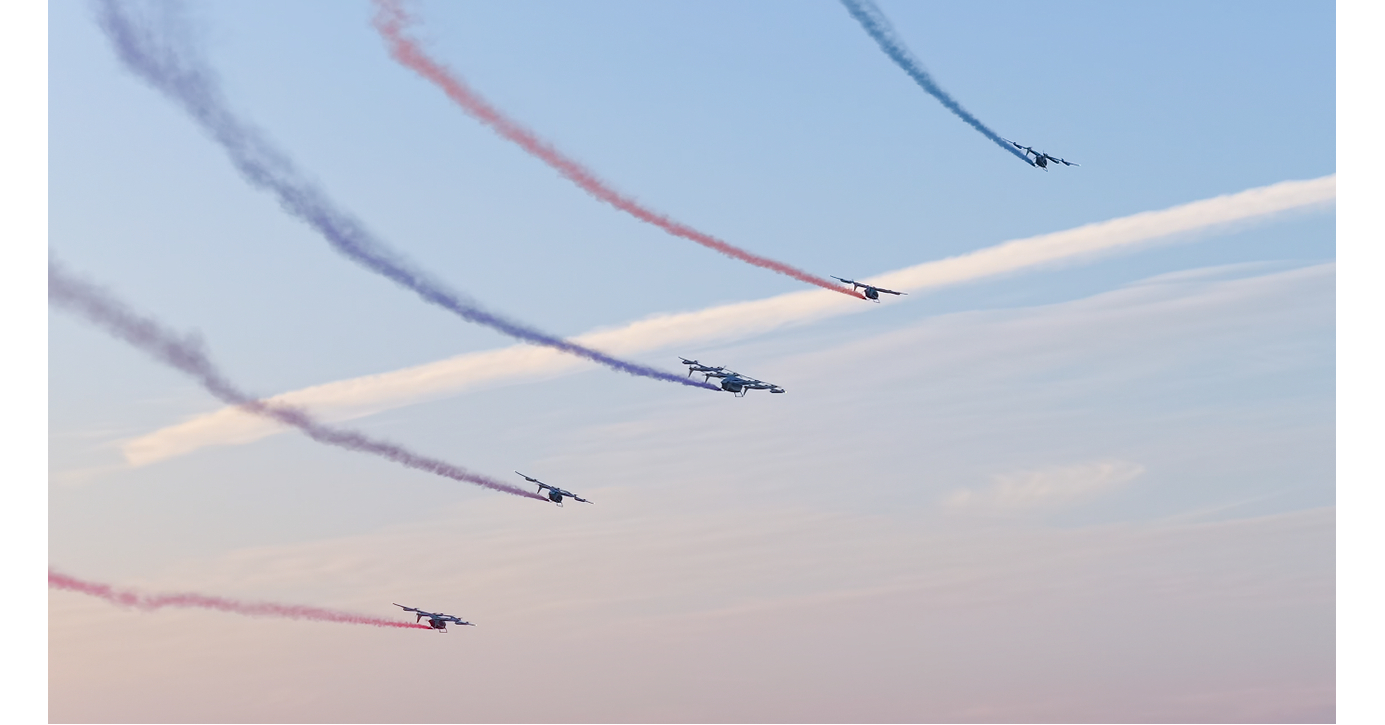
AutoFlight completed what it describes as the world’s first five-eVTOL formation flight, combining one 5-ton V5000 Matrix with four 2-ton aircraft across three models. The aircraft flew autonomously for 47 minutes, with the lead V5000 covering more than 133 km; the formation maintained stable flight and safe separation despite strong winds. The demonstration builds on AutoFlight’s three-aircraft formation flight in May 2026 and advances its technical work on autonomous multi-aircraft operations.
Analysis
The demonstration lowers a narrow technical uncertainty—coordinating autonomous aircraft across configurations—but does not yet establish a commercially certifiable operating system. Formation control is not the same as safely managing dense, mixed traffic: regulators will focus on detect-and-avoid, communications failure, emergency diversion, human oversight and repeatability across weather and routes. Those requirements, plus vertiport throughput, are more likely to constrain deployment than the ability to fly a coordinated test.
For AutoFlight, the strategic upside is a possible software-and-operations layer spanning cargo, firefighting and passenger transport; mixed-model coordination could improve fleet utilization if it works outside controlled trials. The offset is complexity: heterogeneous aircraft increase maintenance, training and dispatch burdens, potentially eroding utilization economics. The event is a modest competitive signal for eVTOL developers such as Joby Aviation, Archer Aviation and EHang, but not evidence that any peer’s certification or commercial timeline has changed.
Near term, this is a narrative catalyst, not an earnings catalyst; absent independently verifiable certification progress, customer commitments or operating data, a valuation response is vulnerable to reversal. Over 1–3 months, watch for regulatory milestones and repeat demonstrations with disclosed interventions, weather limits and safety procedures. Over 6–18 months, the decisive evidence is certified autonomy, dispatch reliability and cost per mission. The contrarian point: investors may overvalue formation as a proxy for scale, when it could instead expose the harder airspace-integration problem.
AllMind Terminal
AI-powered research, real-time alerts, and portfolio analytics for institutional investors.
Request TrialMarket Sentiment
Overall Sentiment
mildly positive
Sentiment Score
0.35
Key Decisions for Investors
- No trade on this announcement alone: AutoFlight is not represented in the supplied ticker mapping, and the release provides no verifiable revenue, certification or unit-economics impact.
- Treat any near-term eVTOL peer rally as a sentiment move; do not extrapolate this test to Joby Aviation, Archer Aviation or EHang certification timelines.
- Put the sector on watch for disclosed regulator approvals, customer contracts, repeat operations and intervention/safety data; upgrade the thesis only if these demonstrate progress beyond controlled flight tests.
- Falsification trigger: a regulatory setback, a safety incident, or evidence that autonomy requires substantial manual intervention would undermine the claimed path to scalable multi-aircraft operations.
More News
- Magnificent 7 loses $1 trillion. The most eye-popping stats from Thursday's tech stock plunge
- Tech stocks are suffering their biggest selloff since Covid, as investors see premature end to AI datacenter boom
- Wall Street’s best post-midterm rally in 44 years lasted just one day—then $3 trillion vanished as chip stocks plunged over AI fears
- AI stocks plunge after election, driving down US markets
- Iran says tankers struck in Hormuz amid fears of new US attack
- The Iran war has cost U.S. households nearly $2,000 each. New strikes could keep the bill climbing