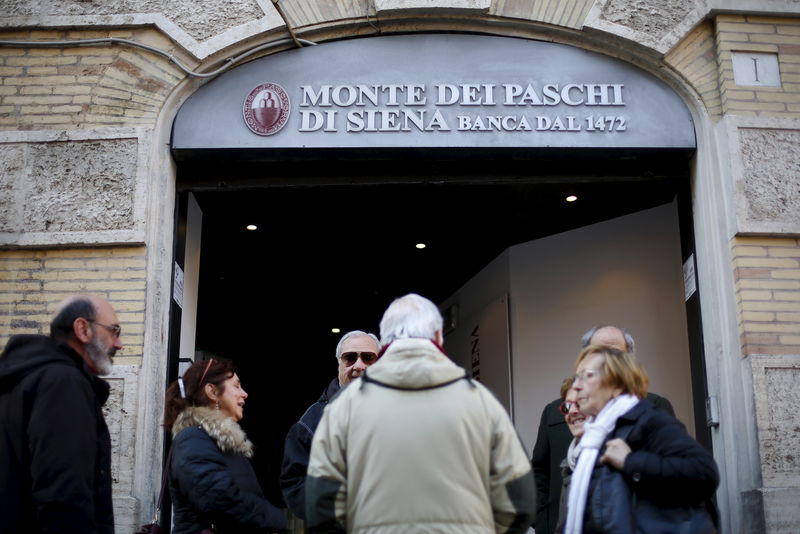
Intesa Sanpaolo launched a 30.6 billion euro bid for Banca Monte dei Paschi di Siena, offering 1.6 new Intesa shares plus 1 euro in cash per Monte Paschi share and valuing the target at 10.09 euros per share, a 12.5% premium to the June 5 close. The deal would create Europe’s second-largest listed financial group by market value and is expected to generate about 2.9 billion euros of annual pre-tax synergies, but it still requires regulatory approval and at least 66.67% shareholder acceptance. Intesa also agreed to divest a banking business with 635 Monte Paschi branches to address antitrust concerns.
This is less a pure M&A headline than a forced rerating of European bank capital structures. The key second-order effect is that Intesa is effectively using its higher-quality equity currency to buy duration, scale, and branch density at a time when Italian retail banking is still structurally under-earning its cost of equity; that should compress the valuation gap between the strongest domestic franchises and the rest of the sector. If the market believes the synergies are real, the deal also raises the bar for standalone banks across Southern Europe, because “too small to compete” becomes a live equity story again rather than just an earnings story.
The immediate winner is likely the broader Italian banking complex, not just the acquirer, because consolidation tends to validate the re-rating of deposit franchises and fee-generating networks. The loser is any bank that depends on legacy branch economics or stale cost bases, since the implied blueprint here is ruthless branch rationalization and product cross-sell. On a second-order basis, insurance and wealth management partners tied to branch distribution could see improved monetization if the merged platform can push higher attach rates, while fintech/payment disintermediation becomes a longer-term loser if this strengthens incumbent balance-sheet reach.
The main risk is execution rather than financing: regulatory approval is one hurdle, but the larger issue is whether political scrutiny and labor pushback force the synergy timetable out beyond 12-24 months. Another tail risk is that the premium paid in stock becomes self-defeating if the acquirer’s multiple compresses during integration, making the deal look expensive even if it is economically sound. If European rates fall faster than expected, the earnings uplift from NII could fade just as integration costs peak, reducing the market’s patience with the deal.
Consensus may be underestimating how much this changes M&A optionality across Europe. If Intesa can pull this off, the market may start pricing a scarcity premium into the strongest cross-border and domestic consolidators, while punishing subscale lenders that lack a clear merger path. The move is probably underdone for quality banks and overdone for purely headline-driven merger targets until antitrust and shareholder approval visibility improves.
AI-powered research, real-time alerts, and portfolio analytics for institutional investors.
Request TrialOverall Sentiment
moderately positive
Sentiment Score
0.55
