
JMU Becomes Virginia's First R2 Research University to Join VIPC's Statewide Lab-to-Launch Partnership
Source: PR Newswire
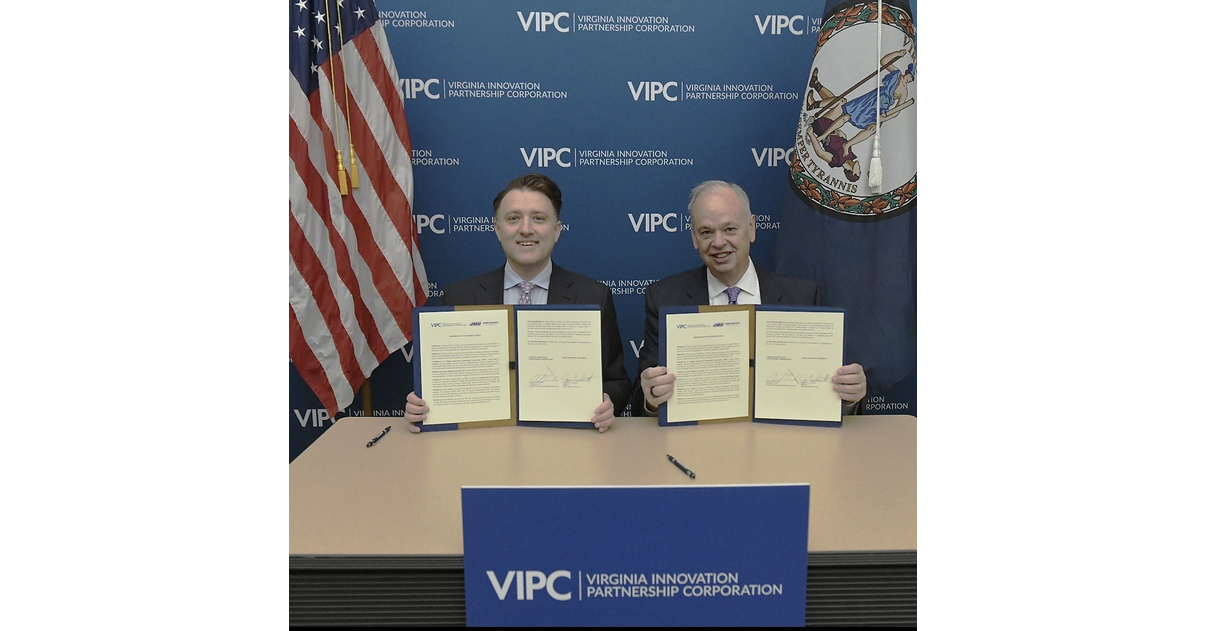
James Madison University will become the first Virginia R2 research university to join VIPC’s Lab-to-Launch partnership, gaining access to a standardized Fast-Track License, Entrepreneurs-in-Residence, and commercialization resources. Virginia’s research universities collectively represent more than $2.5 billion in annual R&D; the initiative aims to help move JMU discoveries into startups and products, particularly in the Shenandoah Valley.
Analysis
This is ecosystem infrastructure, not a near-term earnings catalyst: the agreement creates no direct listed-company exposure, and the announcement provides no committed capital, licensing targets, or commercialization milestones to underwrite. The potentially valuable mechanism is lower transaction friction. Standardized licensing and embedded entrepreneurial support could increase the share of university discoveries that reach company formation, but only if founders can secure follow-on capital, customers, and technical talent. Otherwise, faster licensing mainly shifts the bottleneck downstream.
A second-order tradeoff is that founder-friendly terms may improve startup formation while lowering near-term university licensing proceeds; economic value would then depend on uncertain, long-dated equity or royalty outcomes. Added capacity at JMU could also intensify competition for Virginia’s limited pool of experienced operators and early-stage investors, rather than automatically enlarging it. The statewide research base is a potential sourcing advantage, not evidence of investable returns.
Impact is negligible over days and not actionable for public equities. Over 1–3 months, execution evidence matters more than the MoU: actual licenses completed, time-to-license, startups formed, and third-party capital raised. Over 6–18 months, successful companies could support regional hiring and demand for specialized services, but that is too indirect to price now. The thesis weakens if the program produces announcements without funded startups, or if licensing volume rises while follow-on financing and customer traction do not.
AllMind Terminal
AI-powered research, real-time alerts, and portfolio analytics for institutional investors.
Request TrialMarket Sentiment
Overall Sentiment
mildly positive
Sentiment Score
0.30
Key Decisions for Investors
- No direct public-market trade: VIPC and JMU are not mapped to listed securities, and the announcement does not establish material revenue exposure for a public company.
- Treat this as a private-market sourcing watch, not a venture allocation signal. Reassess after evidence of completed licenses, startup formation, and independent follow-on financing.
- Monitor whether the Fast-Track License reduces time-to-license without weakening downstream founder economics; verify actual agreement terms and conversion rates before attributing value to the model.
- Falsification/alert: if licensing activity grows but startups fail to raise outside capital or secure paying customers over the next 6–18 months, the claimed commercialization benefit is not translating into durable economic value.
More News
- Why is SK Hynix stock gaining today?
- Elon Musk blames Indian 'oligarchs' for stalling Starlink launch
- Stock Rally Fades on Higher Oil Prices; SpaceX in Talks to Buy Nvidia Chips
- FCC to vote on auctioning 25MHz of 'prime spectrum' in move that could benefit Amazon, SpaceX
- Hashi Mainnet to Launch With $500M in Capital Backing, Adds Anchorage Digital to Coalition
- Microsoft shows off new Windows software, revamped for agentic AI