
Bezpieczeństwo oparte na inteligentnych technologiach dla Makau: CTM i Huawei wspólnie wzmacniają bezpieczeństwo sieci w erze AI
Source: PR Newswire
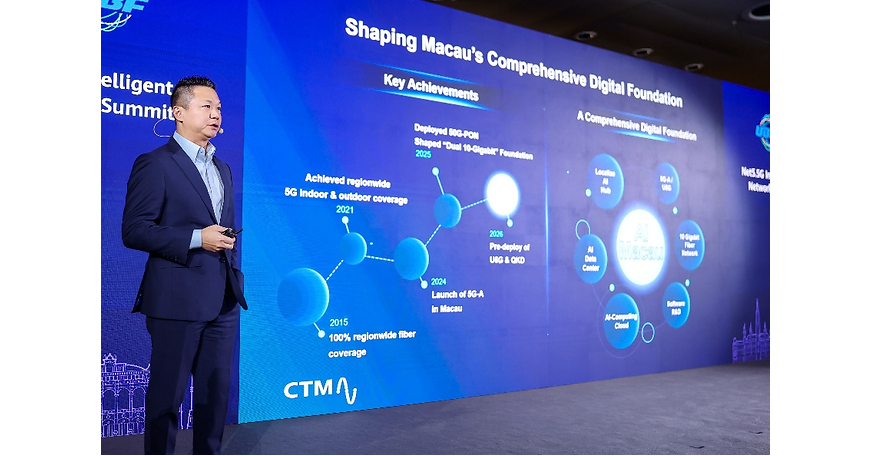
At Network X 2026, CTM outlined plans to use AI-enabled gateways and network telemetry to automate optimization, improve service quality, and support higher-value services in Macau. CTM and Huawei also described a target IP architecture integrating quantum key distribution (QKD), alongside proposals for embedded threat detection and security-as-a-service. The article reports no quantified financial results or deployment timetable; the potential benefits are presented as plans and capabilities.
Analysis
Investment view: This is a strategic product narrative, not evidence of material near-term earnings. CTM could benefit if AI-led traffic management measurably lowers international-capacity costs and if government and enterprise customers pay for security and differentiated service levels. The counterweight is implementation and operating complexity: automation, telemetry integration and security-service delivery may require investment before incremental revenue is visible. No adoption, pricing, savings or contract data are provided, so neither margin uplift nor customer demand is yet established.
Competitive effects: Huawei gains a reference deployment that may support its pitch to other operators; the opportunity is tempered by procurement and geopolitical restrictions in some markets. If the model scales, it could pressure incumbent network-security vendors such as Cisco, Fortinet and Palo Alto Networks where operator-bundled services substitute for customer-premises products, while creating integration opportunities for network suppliers including Nokia and Ericsson. The substitution risk is conditional: operator services may complement rather than replace enterprise security stacks.
Timing and contrarian read: Any CTM revenue or cost impact is likely to emerge over quarters, not from the conference announcement. AI-driven traffic optimization is the nearer-term economic case; QKD is a long-dated, specialized use case, not proof that quantum-resistant security is commercially imminent. QKD should not be conflated with post-quantum cryptography. The market may overread the quantum-security language while underweighting the more testable bandwidth-efficiency and service-uptake metrics.
What changes the view: Verify deployment scope, customer contracts, incremental capex/opex, realized bandwidth savings and security-service revenue. Weak uptake or rising implementation costs would negate the monetization thesis; repeat deployments and measurable savings would strengthen it.
AllMind Terminal
AI-powered research, real-time alerts, and portfolio analytics for institutional investors.
Request TrialMarket Sentiment
Overall Sentiment
mildly positive
Sentiment Score
0.25
Key Decisions for Investors
- No event-driven trade: the announcement supplies no listed-company mapping, quantified economics or evidence of customer commitments.
- Put CTM’s enterprise-security and AI-network monetization on watch; reassess only with disclosed paid deployments, service revenue, or measurable international-capacity savings.
- Track Huawei’s subsequent operator wins and procurement outcomes. Treat pressure on Cisco, Fortinet, Palo Alto Networks, Nokia and Ericsson as a conditional competitive risk, not an immediate earnings call.
- For any future listed-vendor exposure, use deployment announcements and reported order/revenue contribution as catalysts; falsify the thesis if adoption remains pilot-scale or operating costs rise without paid uptake.
More News
- Why did CoreWeave stock get crushed this week? Look to this corner of the debt market for clues
- AI stock sell-off ramps up over debt-fueled data center spending fears: ‘Full-blown crisis of confidence'
- Dow falls 189 points as AI stocks slide and oil prices surge
- Wall Street Anxiety Spreads as AI Rout Meets $110 Oil Shock
- Wall Street's fear gauge is ripping. Traders see it going even higher
- All the news about the iPhone Duo
From AllMind Research
- Anthropic IPO Preview: Valuation, Timing, and What to Watch
- Shein After the IPO: Venue, Valuation, and What Must Be Proved
- What AI Research Tools Should a Small Hedge Fund Buy First?
- AI Tools for Independent Research Firms: A Publishing System
- Weekly Update: Options, Earnings Call Transcripts, AI Chat, Bookmarks & More