
SK hynix: Memory Supercycle Isn't Peaking Yet
Source: seekingalpha.com
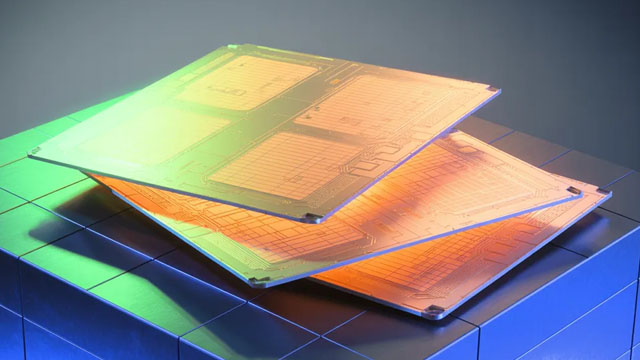
SK hynix is maintaining leadership in high-bandwidth memory (HBM), outperforming Samsung's expansion efforts despite Micron's strong DRAM revenue. Its U.S.-listed shares trade at a forward P/E approaching Micron's, narrowing the valuation discount. Capacity additions through 2029, potential U.S. and Japan manufacturing projects, and a possible Intel partnership support continued HBM volume growth and competitive leadership.
Analysis
The relevant question is no longer whether SK hynix can monetize HBM, but whether it can preserve a premium mix as supply catches up. HBM carries materially better economics than commodity DRAM because qualification cycles, packaging yield, and customer validation constrain substitution; that supports SKHY gross-margin resilience through the next 2-3 earnings cycles even if conventional DRAM pricing softens. The valuation convergence with MU removes the simplest multiple-expansion leg, making execution on HBM3E/HBM4 yields and customer allocations the key incremental drivers.
MU remains the cleaner liquid proxy for memory upcycle exposure, but it has greater sensitivity to broad DRAM/NAND pricing and less insulation if AI capex broadens unevenly. A capacity race could become a 2027-29 issue rather than an immediate earnings problem: overlapping Korean, U.S., and Japanese projects raise the probability that HBM eventually follows the historical memory pattern of oversupply, particularly if hyperscaler accelerator demand normalizes. Equipment and advanced-packaging bottlenecks should defer that risk, benefiting suppliers such as ASML and AMAT more reliably than memory producers over the next 12-18 months.
The potential INTC linkage should not be capitalized before a defined volume commitment, packaging arrangement, or customer program emerges; Intel has historically had execution slippage precisely where leading-edge manufacturing coordination matters. Near term, the more important falsification is evidence that Samsung has closed qualification and yield gaps at major accelerator customers, which would pressure SKHY's mix premium before reported revenue weakens. Consensus may be underestimating this competitive risk while overestimating the standalone value of geographically diversified capacity announcements.
AllMind Terminal
AI-powered research, real-time alerts, and portfolio analytics for institutional investors.
Request TrialMarket Sentiment
Overall Sentiment
moderately positive
Sentiment Score
0.58
Ticker Sentiment
Key Decisions for Investors
- Maintain a 3-6 month long SKHY / short MU relative-value position only if SKHY's HBM revenue mix and gross-margin trajectory continue to exceed MU's memory-margin guidance; target 10-15% relative upside, with exit on Samsung qualification wins or a meaningful SKHY HBM margin miss.
- Do not chase SKHY outright after valuation convergence. Add on post-earnings weakness only if management confirms HBM3E/HBM4 allocation visibility through 2026 and does not signal incremental capacity spending ahead of contracted demand; risk is a 15-20% de-rating if the market begins discounting 2027 supply additions.
- Use INTC as an event-driven watch rather than a core AI-memory expression: initiate only following disclosed commercial terms that quantify foundry, packaging, or memory-volume economics. A partnership headline without revenue, customer, or wafer-volume detail is unlikely to change Intel's earnings power.
- For a lower single-name-risk expression of sustained AI memory and packaging constraints, favor a 6-12 month overweight in ASML and AMAT versus a broad semiconductor ETF; reduce if hyperscaler capex guidance decelerates materially or memory producers announce synchronized HBM capacity additions beyond contracted demand.
More News
- UBS now expects AI capex to reach nearly $1tn this year and around $1.4tn by 2027
- Time for Cyclical Sector ETFs?
- BYD, CATL, Xiaomi executives may join Xi’s US visit, sources say
- AI trade rebound sparks flurry of unusually bullish options activity
- Exclusive-China’s CXMT eyes flash-memory push amid global shortage; firm to take on Samsung, YMTC
- Micron Turned $10,000 Into About $130,000 in 5 Years. Most of It Came in the Past 12 Months.
From AllMind Research
- Anthropic IPO Preview: Valuation, Timing, and What to Watch
- Shein After the IPO: Venue, Valuation, and What Must Be Proved
- What AI Research Tools Should a Small Hedge Fund Buy First?
- How to Evaluate AI Report Writers for Financial Analysis
- Weekly Update: Sector Analysis, Improvements on Research Data, and Performance Enhancements