
Canadian National Announces 2026-2027 Winter Operations Plan
Source: zacks.com
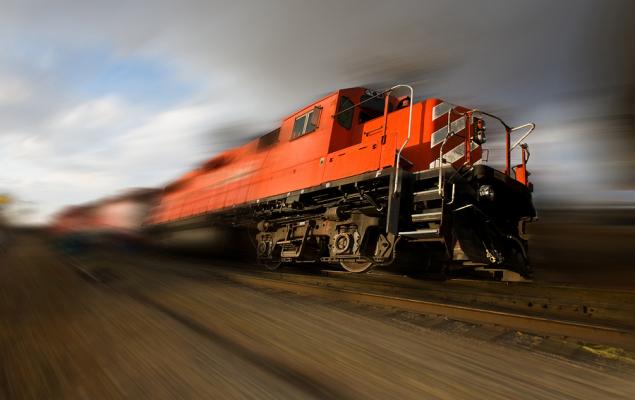
Canadian National Railway unveiled its 2026-2027 Winter Plan, centered on network fluidity, equipment reliability and rapid-response staffing to protect operations during extreme cold. CNI has invested nearly $64 million in distributed air-braking technology for a fleet of more than 100 cars, including replacement of 21 engines and compressors, while operating under U.S. and seeking Canadian regulatory allowances for higher-flow brake systems. The preparedness measures support operational resilience, though the announcement is unlikely to materially alter near-term earnings expectations; CNI shares have risen 17.3% over six months versus 12.9% for the rail industry.
Analysis
This is not a near-term earnings catalyst: the incremental maintenance and preparedness spend is small relative to CNR's cost base, while the operational payoff depends on winter severity rather than management intent. The relevant mechanism is reduced volatility in train velocity, terminal dwell and service failures; if executed, that protects yield, lowers overtime/recovery costs and improves asset turns during the seasonally most disruption-prone period. Given CNR's recent relative outperformance, the market is unlikely to award a multiple premium before independently observable operating data confirm better resilience.
The non-obvious read-through is competitive. More reliable cross-border Canadian service could shift time-sensitive freight from truckload and intermodal alternatives, marginally pressuring SNDR's winter spot-pricing opportunity while benefiting freight forwarders such as EXPD only if reliability improves shipment velocity rather than merely reducing delays. Regulatory approval of higher-flow braking technology is the real 6-18 month option value: a permanent exemption could enable longer or more efficiently operated consists, but safety scrutiny after any cold-weather incident would turn this from an efficiency story into a regulatory liability. The contrarian view is that an unusually mild winter makes the investment economically invisible, leaving CNR with higher maintenance expense and no measurable service differentiation.
AllMind Terminal
AI-powered research, real-time alerts, and portfolio analytics for institutional investors.
Request TrialMarket Sentiment
Overall Sentiment
mildly positive
Sentiment Score
0.30
Ticker Sentiment
Key Decisions for Investors
- No standalone CNR trade on the announcement. Monitor weekly train-speed, terminal-dwell and carload data through the first major cold-weather event; consider adding CNR only if service metrics outperform CP and UNP without a corresponding deterioration in operating ratio.
- Use CNR/CP as a relative-value watch rather than directional rail exposure over the next 1-3 months: go long CNR versus short CP only after CNR demonstrates sustained velocity improvement during adverse weather. Exit if CNR's operating-ratio guidance rises or Canadian regulators delay/deny permanent braking approval.
- For existing SNDR longs, treat a severe winter as a potential tactical catalyst for truckload pricing rather than a reason to sell now; reassess if CNR's cross-border service metrics improve enough to pull expedited freight back to rail. The required confirming data are lane-level intermodal volumes and SNDR spot-rate commentary.
- Do not extrapolate the article's favorable EXPD earnings framing into a weather trade. Initiate or add only on evidence of improving global air/ocean forwarding volumes and gross-profit-per-shipment; rail winter reliability has limited direct sensitivity to EXPD's earnings.
More News
- Stock Market News for Sep 30, 2026
- South Korea’s exports hit record high on AI boom
- US judge approves settlement allowing Paramount to acquire Warner Bros
- RAM supply set to worsen, says Micron, as CEO celebrates ‘much higher’ prices
- Tencent leases 100,000 chips from Oracle for $7 bln- FT
- Tighter New Zealand election race stokes investor fears on policy backflips