
LeanDNA Launches Demand Scenario Modeling in APEX, Replacing Spreadsheet Guesswork With Real-Time Production Feasibility
Source: PR Newswire
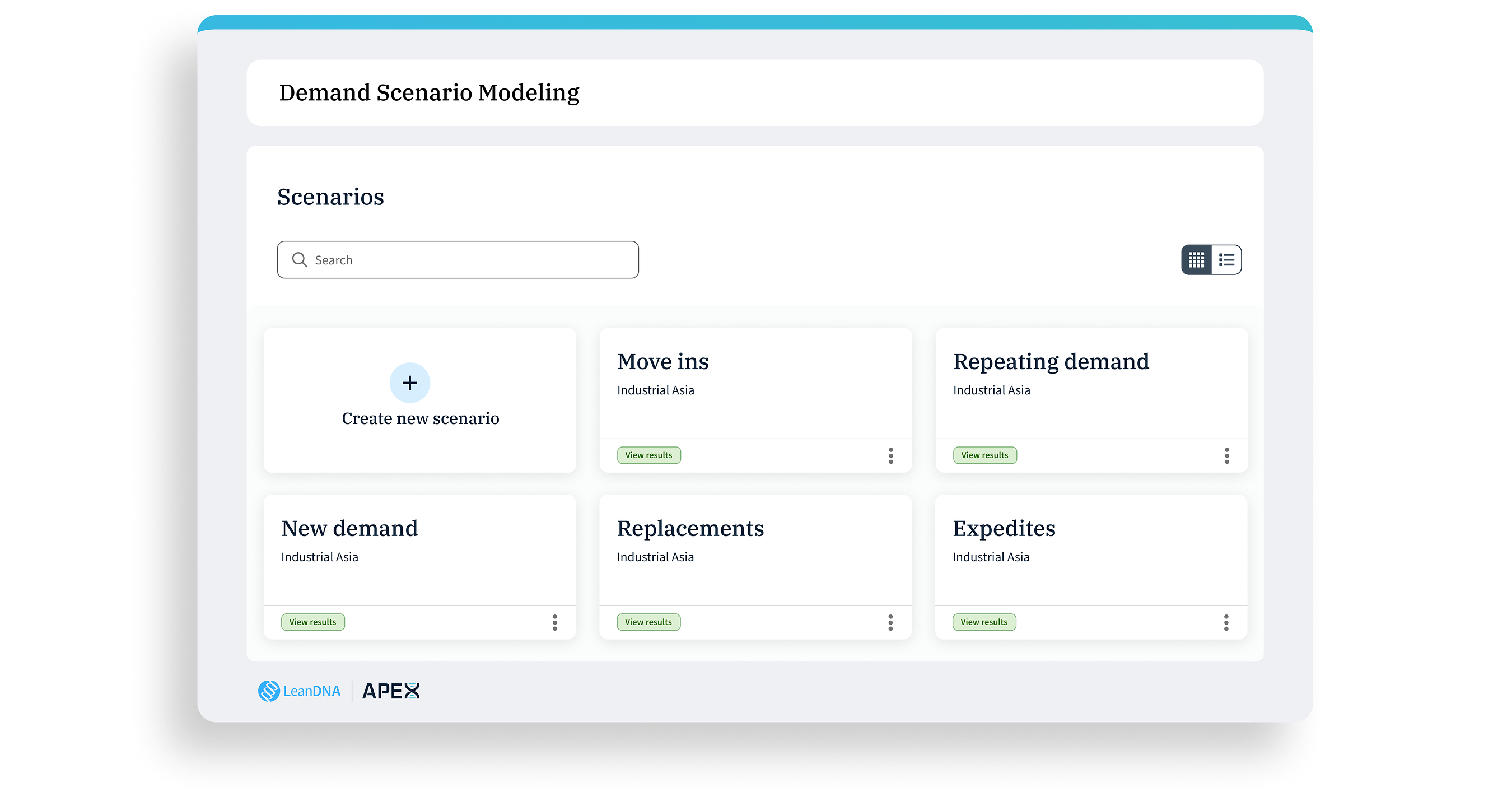
LeanDNA launched general availability of Demand Scenario Modeling (DSM) in its APEX platform, enabling planners to run what-if demand changes against live ERP and Bill of Materials (BOM) data in minutes. The company claims DSM eliminates slow, spreadsheet-based processes and reduces errors/false shortages by identifying true component constraints and recalculating instantly in a sandbox without altering live records. The news is product-focused with limited direct evidence of financial impact, but it supports a positive outlook for operational efficiency.
Analysis
This is an execution-efficiency release, not a demand shock. The monetizable impact is lower planning latency and fewer expedites/safety-stock errors, which should help working capital and schedule adherence more than it moves revenue. For CAT, SAFRY, and SIEGY, the upside is incremental: a better ability to promise builds, trim premium freight, and avoid false shortages can show up in 1-3 quarters as modest inventory-day improvement and slightly cleaner gross margin conversion.
The bigger second-order effect is on decision quality in long-lead, multi-level BOM businesses. Aerospace and complex industrials benefit most because a small planning error propagates through suppliers and customer commitments; commodity-heavy or make-to-stock manufacturers get less out of the tool. The public-market loser is not the named customer set but the budget share of manual planning, spreadsheet work, and some legacy point solutions, though that only becomes investable if a vendor can prove durable seat expansion or retention gains.
The key risk is data hygiene and adoption friction: if master data are messy, scenario modeling just accelerates bad conclusions. Treat this as a 6-18 month operating lever, not a current-quarter earnings catalyst. What would falsify the thesis is no improvement in inventory turns, OTIF, or premium-freight expense in upcoming quarterly prints, or commentary that the feature remains a pilot rather than scaled into planning cadence.
AllMind Terminal
AI-powered research, real-time alerts, and portfolio analytics for institutional investors.
Request TrialMarket Sentiment
Overall Sentiment
mildly positive
Sentiment Score
0.12
Ticker Sentiment
Key Decisions for Investors
- No immediate standalone trade in CAT, SAFRY, or SIEGY; treat this as a watch item for the next 1-2 quarters, and only add if management quantifies lower inventory days, better OTIF, or reduced expedite costs.
- Initiate a modest long CAT position on pullbacks over a 3-6 month horizon versus XLI: CAT has the clearest FCF sensitivity to working-capital efficiency, but the expected upside is modest, so keep sizing small and exit if the next earnings cycle shows no margin or inventory benefit.
- Use SAFRY and SIEGY as higher-beta operational-improvement watchlist names for 6-12 months; consider adding only after confirmed evidence that planning speed is translating into lower premium freight or tighter build commitments.
- Do not pay up for an 'AI supply-chain' basket here; the vendor is private and the public-equity effect is indirect. If the market overreacts, fade any multiple expansion in industrials that is not backed by hard inventory or margin data.
More News
From AllMind Research
- Anthropic IPO Preview: Valuation, Timing, and What to Watch
- Shein After the IPO: Venue, Valuation, and What Must Be Proved
- What AI Research Tools Should a Small Hedge Fund Buy First?
- How to Evaluate Consensus Estimates Platforms With AI
- Weekly Update: Adding Live MBO Level 3 Data - Liquidity Heatmap, OFI Charts, and More