
MTR Bets $5 Billion on a Hong Kong City That Doesn’t Exist Yet
Source: Bloomberg
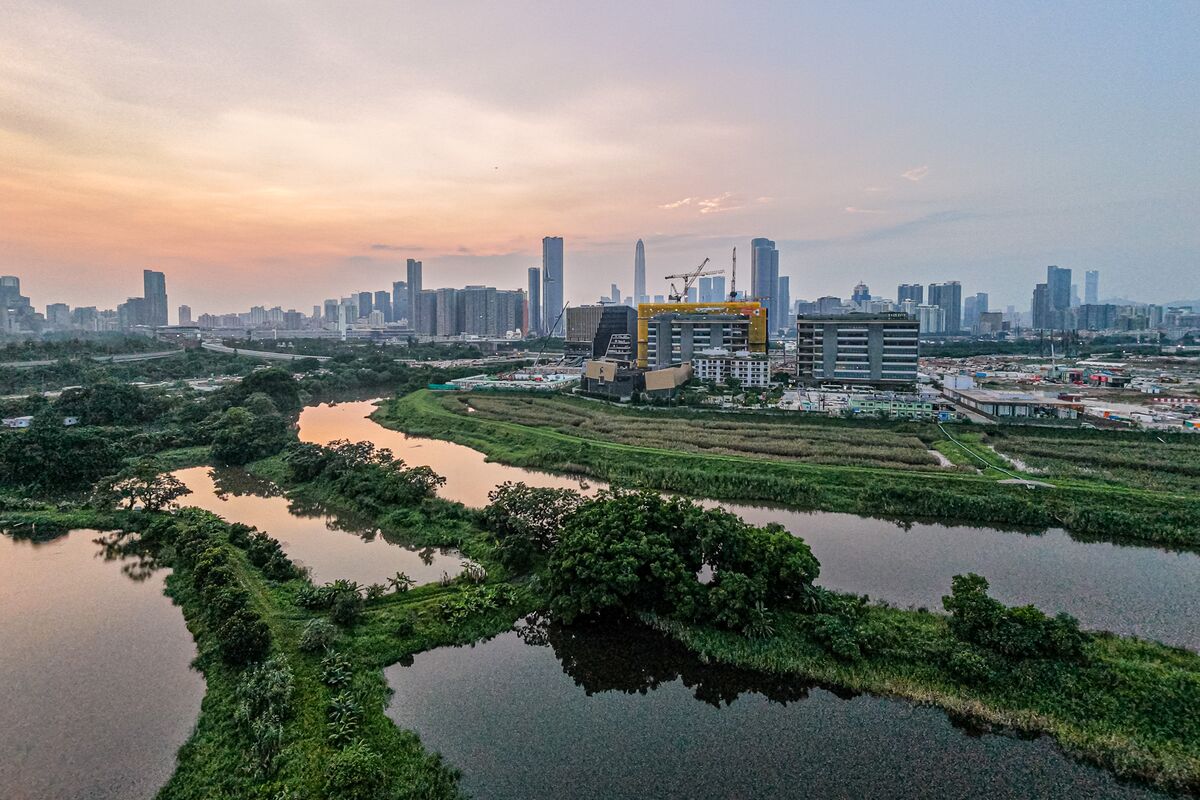
MTR Corp. is committing at least HK$38.9 billion ($5 billion), funded partly through borrowing, to build railway lines for Hong Kong’s Northern Metropolis. Unlike its previous railway funding models, MTR will wait years to learn whether the land it receives in return is worth the construction cost; the model has not been tested at this scale.
Analysis
The key risk is not simply construction cost: it is that MTR’s return now depends on converting future development rights into realizable value after committing capital. That shifts exposure from relatively observable project funding toward Hong Kong land prices, planning and delivery risk, and the timing of new housing demand. If the Northern Metropolis is delayed or land values weaken before monetization, leverage can rise well before the project contributes cash flow; if development is phased successfully, the model could deepen MTR’s long-run network and property franchise.
The near-term market test is financing and disclosure, not the headline commitment. Watch incremental borrowing, project milestones, land valuation assumptions, and whether the government provides risk-sharing or changes the funding terms. Over 1–3 months, any evidence of cost escalation or weaker-than-expected land economics could weigh on MTR’s credit perception; over 6–18 months, delivery and land-sale progress matter more than announced build plans. Hong Kong developers could face additional future land and housing competition, while engineering and construction firms may benefit from procurement, conditional on contract awards and margins. The contrarian point: the commitment is not automatically value-destructive—new rail access may create land value—but that value is distant and exposed to the same property cycle that determines when it can be captured. The article does not provide debt capacity, valuation methodology, or project-level return hurdles, so conviction in either direction is limited.
AllMind Terminal
AI-powered research, real-time alerts, and portfolio analytics for institutional investors.
Request TrialMarket Sentiment
Overall Sentiment
mildly negative
Sentiment Score
-0.20
Key Decisions for Investors
- Do not trade the headline alone. Keep MTR on a credit-and-equity watchlist pending disclosure of funding terms, incremental debt, phasing, and project-level return hurdles; those are necessary to assess whether the land compensation plausibly covers capital and carrying costs.
- For the next 1–3 months, monitor MTR financing announcements and any revision to the government’s contribution or land arrangement. Treat rising funding needs without clearer risk-sharing as a negative catalyst; evidence of capped exposure or staged commitments would weaken that concern.
- For a 6–18 month relative-value screen, compare MTR’s financing and project execution updates with Hong Kong property developers’ land supply and pricing signals. Avoid a directional developer short until the pipeline, timing, and likely competitive impact are independently verified.
- Falsifiers: credible project-level economics showing adequate returns under downside land values, limited incremental balance-sheet strain, and on-schedule delivery would challenge the cautious view. Cost overruns, delayed development rights, or weaker land values would strengthen it.
More News
- Gartner analyst behind tech rout: AI returns are not yet large enough to justify neocloud build-out
- X-Energy CEO on Amazon, AEP Nuclear Data Center Deal
- FreightCar cuts 2026 outlook after removing tank car order
- Egyptian parliament delays vote on military support for Saudi Arabia
- Ukraine’s drones lose their Starlink link above 100 mph. Musk, Rubio and Trump all say it wasn’t them
- The French are rioting as inflation hits 3.4% while wage growth and GDP remain stagnant. It’s higher in Trump’s America
From AllMind Research
- Anthropic IPO Preview: Valuation, Timing, and What to Watch
- Shein After the IPO: Venue, Valuation, and What Must Be Proved
- What AI Research Tools Should a Small Hedge Fund Buy First?
- 2026 Global Markets Outlook: Asset Allocation After the Great Disconnect
- Fintool Alternatives After the Microsoft Acquisition