
Cameco to Gain as Korea-U.S. Framework Supports Westinghouse
Source: zacks.com
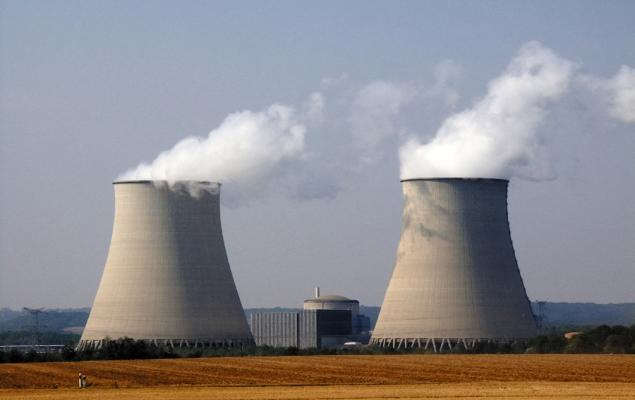
A non-binding U.S.-South Korea framework contemplates up to $120 billion of investment for as many as eight U.S. nuclear reactors, including six Westinghouse AP1000 units and up to two APR1400 units. Cameco, which owns 49% of Westinghouse, could benefit materially: each APR1400 reactor could provide roughly $2 billion of value through IP licensing, engineering, procurement, subcontracting and fuel-fabrication services. Separately, the DOE has conditionally committed up to $17.5 billion to procure long-lead items for up to 10 AP1000 reactors, potentially accelerating construction by as much as three years, though both initiatives remain subject to financing, regulatory and execution conditions.
Analysis
The market is likely to capitalize Cameco's Westinghouse exposure before it can underwrite the cash flow: the cited per-reactor figure is a gross commercial-value construct spanning licensing, EPC and fuel services, not disclosed equity EBITDA or free cash flow. CCJ/CCO has the cleanest optionality because it couples reactor-OEM economics with fuel-cycle exposure, while BAM and BEP/BEPC receive a more diluted, asset-management-style look-through benefit. The more investable second-order beneficiaries are domestic nuclear-component and fuel-cycle bottlenecks—BWXT for nuclear-grade components and LEU for enrichment capacity—where qualified supply is scarce and order visibility can re-rate multiples well before plants generate power.
Near term, a framework without named sites, signed EPC terms, construction guarantees, or final financing should not justify a full project-NPV rerating. The catalyst path over 1-3 months is definitive contracting, site selection and long-lead procurement awards; 6-18 months requires evidence that the government financing converts into draws and that owners accept construction-cost risk. The key falsifier is not uranium spot price but a failure to secure binding notices-to-proceed, or a cost/schedule reset resembling prior U.S. large-reactor builds; either would shift value from technology owners toward risk-bearing contractors and utilities.
Contrarian point: CEG is not a direct construction winner. Its existing fleet benefits from tight power markets today, but successful incremental baseload supply could eventually moderate the scarcity premium embedded in long-dated power prices in affected regions. KEP is similarly ambiguous: incremental U.S. project participation expands addressable market, but its economics depend on the ultimate allocation of IP, warranty and delay liabilities rather than reactor count alone.
AllMind Terminal
AI-powered research, real-time alerts, and portfolio analytics for institutional investors.
Request TrialMarket Sentiment
Overall Sentiment
strongly positive
Sentiment Score
0.58
Ticker Sentiment
Key Decisions for Investors
- Accumulate CCJ/CCO only on confirmation of binding project awards or DOE loan drawdowns; target a 6-18 month catalyst window. Size modestly until Westinghouse discloses expected equity EBITDA, cash timing and guarantee exposure—those are required to convert headline contract value into valuation support.
- Establish a 3-6 month basket long BWXT and LEU versus a short XLU hedge. This expresses domestic nuclear supply-chain scarcity while reducing exposure to broad utility-rate and interest-rate moves; exit if long-lead procurement is not awarded within two quarters or enrichment policy support weakens.
- Use BAM rather than BEP/BEPC for diversified Westinghouse optionality: BAM has upside from fee-bearing capital and strategic ownership, whereas BEP/BEPC could face a higher cost of capital if nuclear development is funded with incremental equity or project-level leverage. Reassess after financing terms reveal which entity bears capital commitments.
- Avoid adding CEG on this catalyst alone; retain only as a data-center power-demand position. Hedge or trim if forward power curves in its core markets weaken materially following announced nuclear capacity additions, since the long-duration supply response is a valuation headwind even if it is years away.
- Monitor KEP for a binding commercial agreement that specifies IP compensation and liability allocation before taking a directional position. A signed structure with limited fixed-price/warranty exposure would be bullish; cost-overrun guarantees or adverse IP terms would make KEP a potential short against CCJ.
More News
- The sector in the cross hairs of the bond sell-off looks poised for a bounce, says Mike Khouw
- Massachusetts governor asks Trump administration to speed natgas pipeline review
- Mark Ruffalo says Paramount’s $111 billion Warner Bros. deal ‘Will stifle creativity, weaken free speech, and cost people their jobs’
- States, cities sue U.S. agencies over weaker vehicle fuel economy rules
- Anthropic warns government attitudes may hurt customer ties, IPO prospectus shows: Reuters
- New aircraft carrier, 10,000 US troops: Is the Iran war about to escalate?
From AllMind Research
- Anthropic IPO Preview: Valuation, Timing, and What to Watch
- Shein After the IPO: Venue, Valuation, and What Must Be Proved
- What AI Research Tools Should a Small Hedge Fund Buy First?
- Weekly Update: Sector Analysis, Improvements on Research Data, and Performance Enhancements
- Choosing an AI Copilot for Equity Research