
CARKU presentó productos de iones de sodio de última generación en Automechanika Frankfurt 2026
Source: PR Newswire
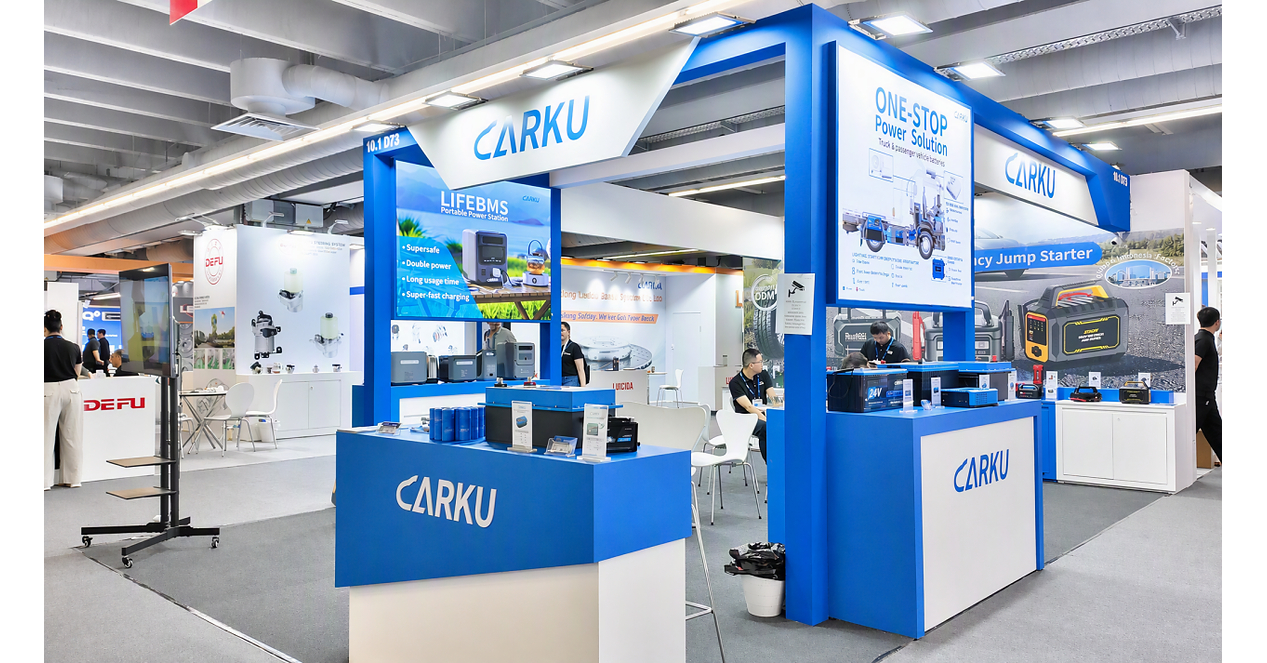
CARKU unveiled its JS-617N sodium-ion 12V/24V jump starter and two 24V commercial-vehicle starter batteries at Automechanika Frankfurt 2026, expanding its sodium-ion and LiFePO4 portfolio. The JS-617N is claimed to start vehicles at temperatures as low as -40°C, while the CBN50-G51-24V targets commercial vehicles and the CBL230D-24V combines engine-starting and auxiliary-power functions. Jump starters account for about 30% of CARKU revenue, and its 24V battery series is already in large-scale production in Southeast Asia.
Analysis
This is not yet a listed-equity catalyst: CARKU is private, the performance claims are internally generated, and no pricing, fleet qualification, warranty data, or production economics are disclosed. The relevant market signal is that sodium-ion is moving from stationary-storage discussion into a demanding, high-cycle automotive-adjacent use case where cold-weather cranking and 24V commercial uptime matter more than energy density. Broad adoption would pressure lead-acid replacement demand before it materially challenges lithium-ion EV batteries.
Near term, the likely beneficiary is the sodium-ion supply chain rather than vehicle OEMs. CATL and BYD are the most credible listed Chinese scale proxies, while Altris and Natron are not readily investable public alternatives; however, a single aftermarket launch does not establish chemistry-level demand. The more immediate competitive risk falls on lead-acid incumbents such as Clarios (private), EnerSys (ENS), and Exide-related suppliers: commercial starting batteries carry recurring replacement economics, and low-temperature reliability could support premium pricing for sodium products in Northern Europe if independently validated.
Over 6-18 months, the key second-order issue is raw-material substitution. Sodium-ion reduces exposure to lithium and, depending on architecture, may displace some lead demand; it is therefore directionally negative at the margin for pure lead-acid replacement economics but not a near-term lithium-demand bear case. The thesis is falsified if fleet trials show inferior calendar life, reserve capacity, charging-system compatibility, or warranty costs versus AGM/lead-acid—metrics that matter more to truck operators than a successful one-time engine start.
AllMind Terminal
AI-powered research, real-time alerts, and portfolio analytics for institutional investors.
Request TrialMarket Sentiment
Overall Sentiment
mildly positive
Sentiment Score
0.32
Key Decisions for Investors
- No immediate position on the release; set a watch item for independently disclosed European fleet contracts, unit pricing, cycle-life/warranty terms, and named cell suppliers over the next 3-6 months.
- Maintain ENS as a relative underweight versus diversified industrial battery exposure if sodium-ion commercial-starting deployments gain OEM or fleet validation; reassess only after evidence of replacement-market share loss or weaker aftermarket pricing, not trade-show announcements.
- For sodium-ion thematic exposure, monitor CATL and BYD for formal 24V commercial-battery supply agreements rather than buying on this signal. A scalable supplier contract would be a 6-18 month catalyst; lack of disclosed volume economics should prevent a directional trade.
- Watch lead prices and European commercial-vehicle replacement demand: a decline in lead-acid demand without sodium-ion qualification traction would more likely reflect macro freight weakness, invalidating a technology-substitution interpretation.
More News
- US military claims Strait of Hormuz remains open amid ongoing blockade
- Oil prices extend losses as fears of Middle East supply disruptions ease
- US official says upcoming spectrum auctions could generate more than $100 billion
- Shares tick higher as Fed hikes rates, dollar jumps with short-term yields
- Investors react to Fed hike and market sell-off: Brace for 'higher for longer' rates
- Gold slips as Fed hike, hawkish outlook strengthen dollar
From AllMind Research
- Anthropic IPO Preview: Valuation, Timing, and What to Watch
- Shein After the IPO: Venue, Valuation, and What Must Be Proved
- What AI Research Tools Should a Small Hedge Fund Buy First?
- The $4.7 Trillion Bet: When Does AI Capex Become AI Revenue?
- Equity Research Automation Statistics: A 2026 Evidence Check