
United Adds 10 International Cities for 2027; Largest Expansion in Airline's History
Source: PR Newswire
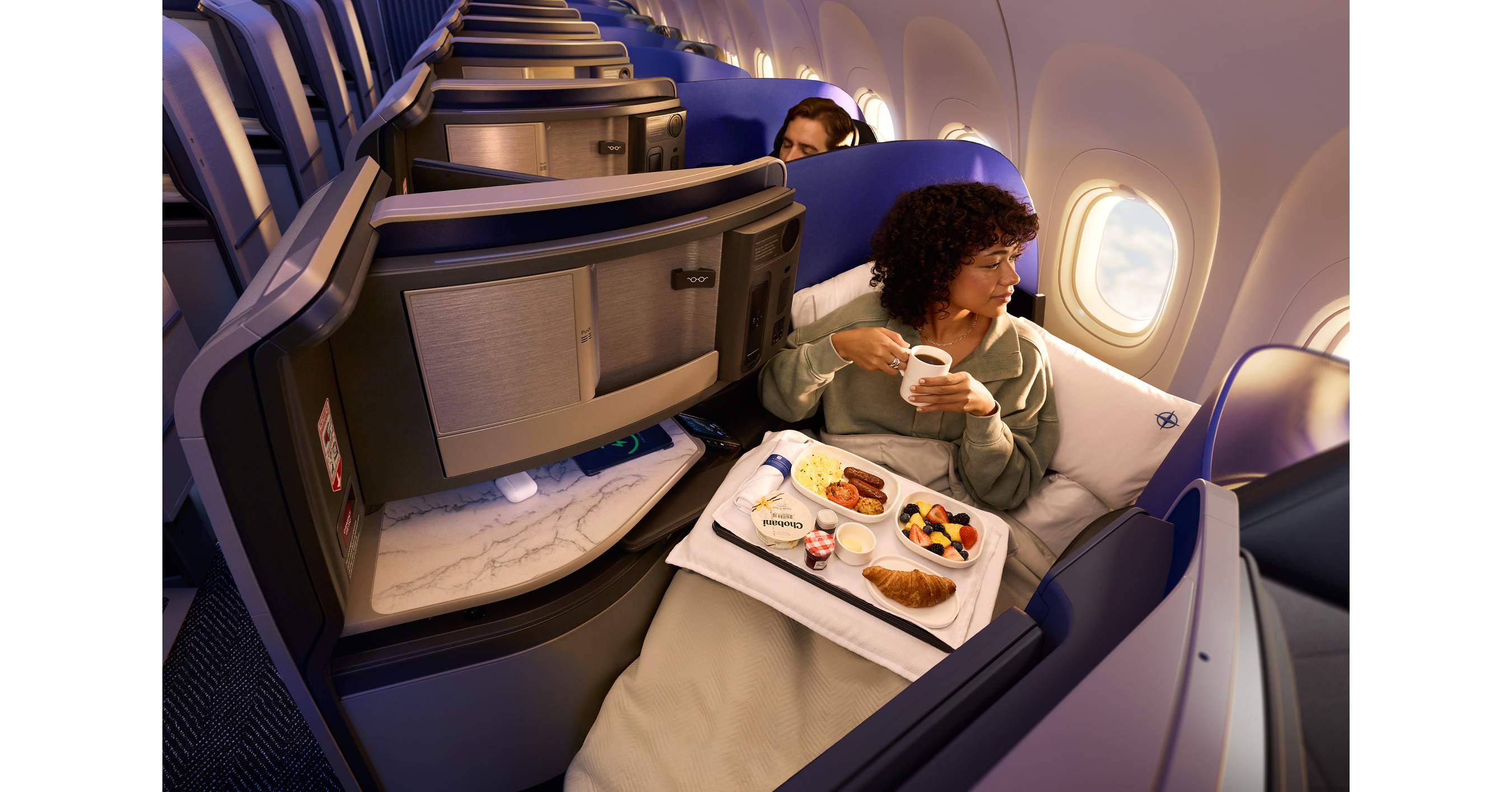
United Airlines announced its largest-ever international network expansion with 10 new international cities starting as early as Mar. 27, 2027 (including SFO–Okinawa 3x weekly, EWR–Luxembourg daily, and EWR–Marseille daily) and added nearly 60 new international destinations since 2017. The carrier also debuted its “Born to Explore” A321XLR, featuring lie-flat United Polaris suites and extra-room Economy Plus seating, with initial international service beginning Dec. 1, 2027. Additional route adds include LAX–Osaka (Mar. 27), IAD–Milan (May 28), DEN–Paris (May 27), and a restart of SFO–Tel Aviv (Mar. 28).
Analysis
This is less about headline capacity and more about United monetizing a product/asset mix that rivals cannot replicate quickly: long-range narrowbody flying plus premium-heavy cabin configuration. That combination should expand UAL’s addressable nonstop market without forcing widebody economics onto thinner routes, which is the right way to defend margins if transatlantic demand normalizes from post-pandemic peaks. The strategic loser is not just legacy competitors on the same city pairs; it is any carrier dependent on connecting traffic or older widebody fleets that cannot match unit costs on secondary Europe/Asia routes.
Near term, the stock reaction should be modest because the revenue impact is delayed into 2027 and approvals remain a gating item. The real catalyst path is 1-3 months of forward booking data and management commentary on premium mix, load factors, and transatlantic yield; if those weaken, the announcement becomes a capacity story rather than a moat story. Six to eighteen months out, this could support a higher multiple if UAL proves it can grow international ASMs without diluting RASM, but that requires fuel stability and continued operational reliability at Newark.
Contrarian view: the market may be overpricing route-count as an earnings driver. The durable value comes only if these routes pull premium demand away from competitors and lift network spillovers; otherwise they are capital-intensive brand theater. Airbus is the quiet beneficiary via the A321XLR validation, while Boeing remains structurally disadvantaged until it offers a competitive long-range narrowbody solution, but that is more a strategic share issue than an immediate earnings event.
AllMind Terminal
AI-powered research, real-time alerts, and portfolio analytics for institutional investors.
Request TrialMarket Sentiment
Overall Sentiment
mildly positive
Sentiment Score
0.25
Ticker Sentiment
Key Decisions for Investors
- Long UAL on any 2-4% pullback; 3-6 month horizon into spring booking season. Upside case is a rerating if international premium RASM holds above peers; falsify if management guides to softer transatlantic yields or load factors.
- Pair trade: long UAL / short AAL for 1-2 quarters. UAL has the better premium-heavy international mix and new aircraft optionality; AAL is more exposed if these routes siphon high-yield traffic. Cover if AAL narrows the premium-revenue gap or fuel declines sharply.
- No immediate outright EADSY trade; the A321XLR is supportive but largely already reflected in backlog. Revisit only if delivery cadence or pricing data shows incremental upside to commercial aircraft margins.
- Use UAL vs JETS as a relative-value hedge if entering long exposure: long UAL, short JETS to isolate network-share gains from broader airline beta. Thesis breaks if industry capacity discipline deteriorates or macro demand weakens.
More News
- American Airlines to equip over 1,000 aircraft with SpaceX’s Starlink Wi-Fi
- American Airlines extends Starlink Wi-Fi roll-out to entire mainline fleet
- NASA taps DoE to help it build nuclear space reactors
- Jim Cramer says he's in a buying mood. Here are some stocks he's considering
- United Airlines: The Delta Air Lines WiFi Gift
- Trump bought up to $25 million in Meta and millions in SpaceX debt in August