
GENISOM AI Showcases Embodied Intelligence and Debuts World's First Industry-Grade Educational Quadruped at IROS 2026
Source: PR Newswire
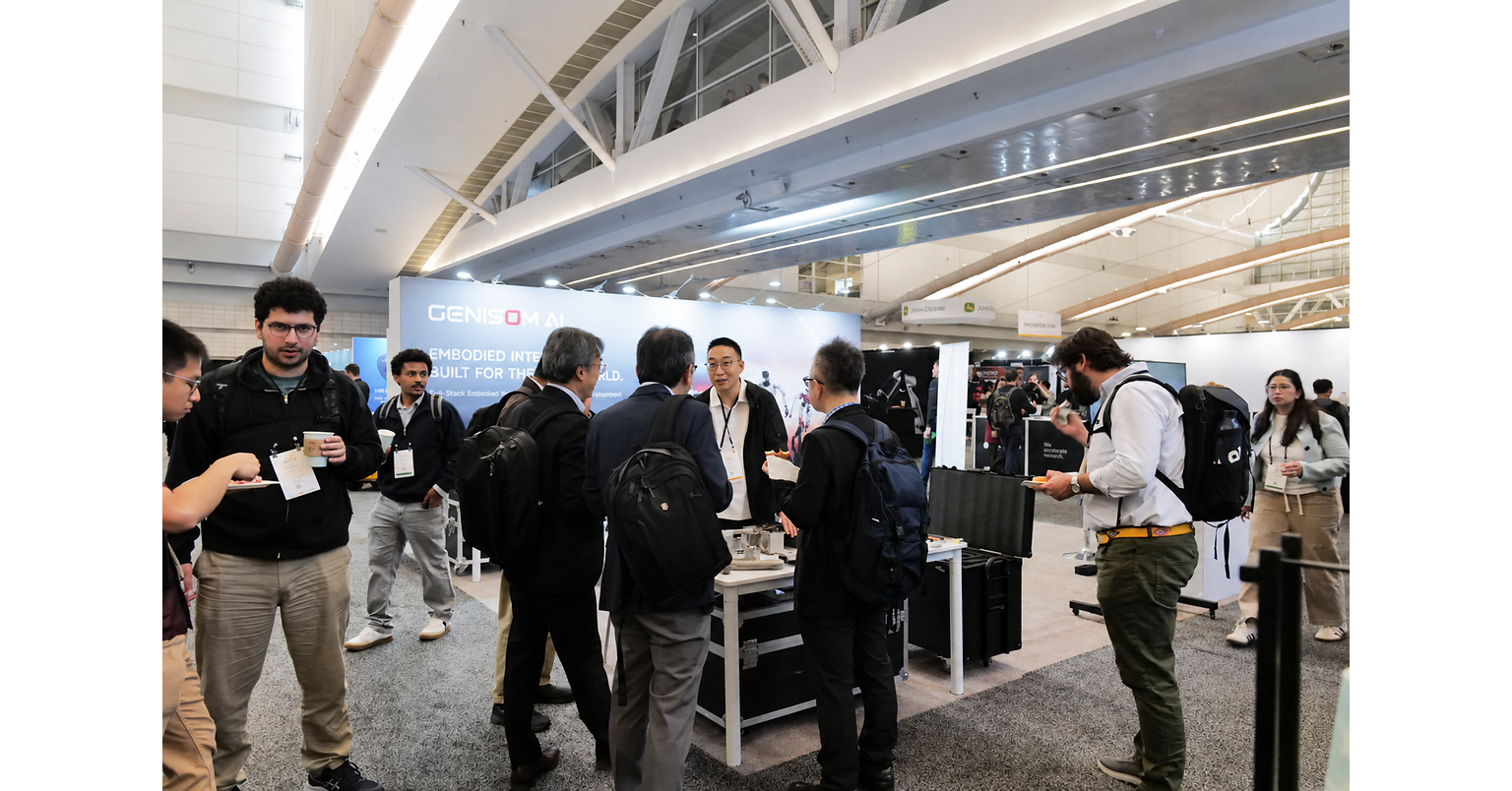
GENISOM AI debuted the Genisom L1 Maker, which it describes as the world's first industry-grade educational quadruped, featuring 12 degrees of freedom, 8 kg payload capacity and 40° climbing capability. The company also showcased multi-robot collaboration technology and its open-source MATRiX 2.0 simulation platform; its M1 quadruped supported Nanyang Technological University's autonomous-category win at the 2026 IROS Legged Robot Challenge. GENISOM had produced more than 15,000 robots and partnered with over 500 ecosystem participants as of June 2026, and recently completed a Series B round worth hundreds of millions of RMB to fund international expansion and embodied-AI investment.
Analysis
This is not directly tradable public-equity news, but it reinforces a competitive pressure point in legged robotics: low-cost, vertically integrated Chinese platforms can commoditize the research and education layer before enterprise deployment scales. The strategic value is less the hardware unit itself than developer lock-in: an open simulation-to-physical stack can accumulate training data, third-party applications and component-volume advantages. That is a medium-term threat to premium-priced platforms and a potential accelerant for price competition in inspection and security robotics.
For public markets, the relevant read-through is selective rather than broad AI bullishness. NVIDIA (NVDA) remains a likely compute beneficiary if multi-agent simulation workloads and edge inference deployments grow, while component suppliers with differentiated actuators, sensors or industrial-grade vision retain bargaining power only if they avoid being designed out by integrated OEMs. Teradyne (TER) faces indirect competitive risk through Universal Robots if customer automation budgets increasingly prioritize mobile/legged systems over fixed collaborative arms, although that substitution is likely a 12-24 month issue rather than an immediate earnings event.
The press-release claims do not establish commercial utilization, recurring software revenue, unit economics, or safety-certified deployment—variables that determine whether robotics valuations can sustain current expectations. The contrarian view is that research competition wins are a weak proxy for enterprise ROI: labor integration, fleet uptime, remote operations and liability costs remain the binding constraints. Watch for disclosed paid fleet deployments, renewal rates, and evidence that industrial customers move from pilots to multi-site orders; absent these, the news is ecosystem signaling rather than a sector catalyst.
AllMind Terminal
AI-powered research, real-time alerts, and portfolio analytics for institutional investors.
Request TrialMarket Sentiment
Overall Sentiment
moderately positive
Sentiment Score
0.58
Key Decisions for Investors
- No directional trade on this release; treat it as a private-market competitive-data point rather than a public-equity catalyst over the next 1-3 months.
- Maintain a 6-18 month watchlist long bias on NVDA only if quarterly data-center guidance shows incremental simulation/physical-AI demand rather than merely generative-AI demand; use a 10-15% pullback for entry and reassess if gross-margin guidance falls below consensus by more than 200 bps.
- Monitor TER versus NVDA as a long NVDA / short TER thematic pair only after evidence of sustained capital-budget substitution from fixed cobots to mobile autonomy emerges in TER orders or bookings. Do not initiate on this announcement; the missing variable is verifiable customer spending.
- Set an alert for public evidence of large industrial fleet awards or a financing/IPO filing from major Chinese legged-robot vendors. Such disclosures would sharpen the downside case for premium robotics hardware pricing and could create a more actionable relative-value opportunity in automation suppliers.
More News
- US job growth expected to slow in September; unemployment rate likely steady
- SoftBank completes final phase of $30 billion investment in OpenAI
- Trump launches midterms campaign blitz amid record low approval ratings
- Amazon seeks to offload $8 billion of Nvidia chips to investors, FT reports
- Amazon seeks to offload $8 bln of Nvidia chips to investors- FT
- Fed’s Cook sees AI buildup as top inflation risk for 2027